
Call us
301-363-4651 (Available 9 a.m. to 5 p.m. CST from Monday to Friday)

| Code | CSB-RA571199A0HU |
| Size | US$210 |
| Order now | |
| Image |
|
| Have Questions? | Leave a Message or Start an on-line Chat |
| Application | Recommended Dilution |
|---|---|
| WB | 1:500-1:2000 |
| IHC | 1:50-1:200 |
| IF | 1:50-1:200 |
| FC | 1:50-1:200 |
Nucleophosmin (NPM1) serves as a multifunctional nucleolar phosphoprotein with critical roles in ribosome biogenesis, centrosome duplication, and genomic stability. Its involvement in regulating the ARF-p53 tumor suppressor pathway makes it particularly significant in cancer research, where NPM1 mutations are among the most frequent genetic alterations observed in acute myeloid leukemia. Understanding NPM1 expression, localization, and post-translational modifications provides valuable insights into cell proliferation mechanisms and oncogenic transformation.
This recombinant monoclonal antibody, generated against a synthetic peptide from human NPM1, offers the reproducibility and consistency that demanding experimental workflows require. As a sequence-defined reagent produced through recombinant technology, it eliminates the lot-to-lot variability that can compromise longitudinal studies or multi-site collaborations. The rabbit IgG format ensures compatibility with widely available secondary detection systems.
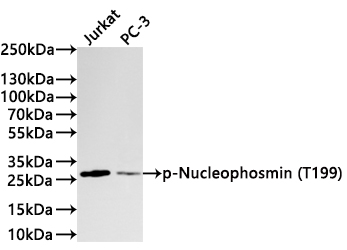
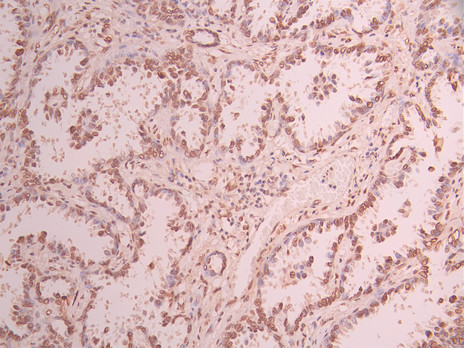
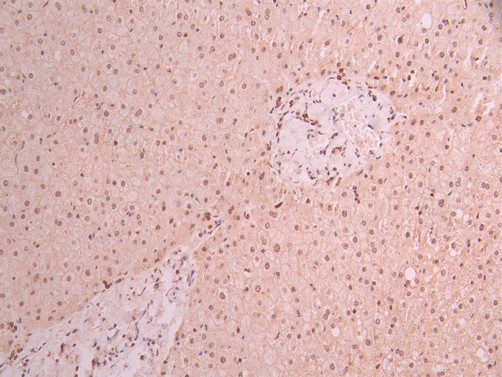
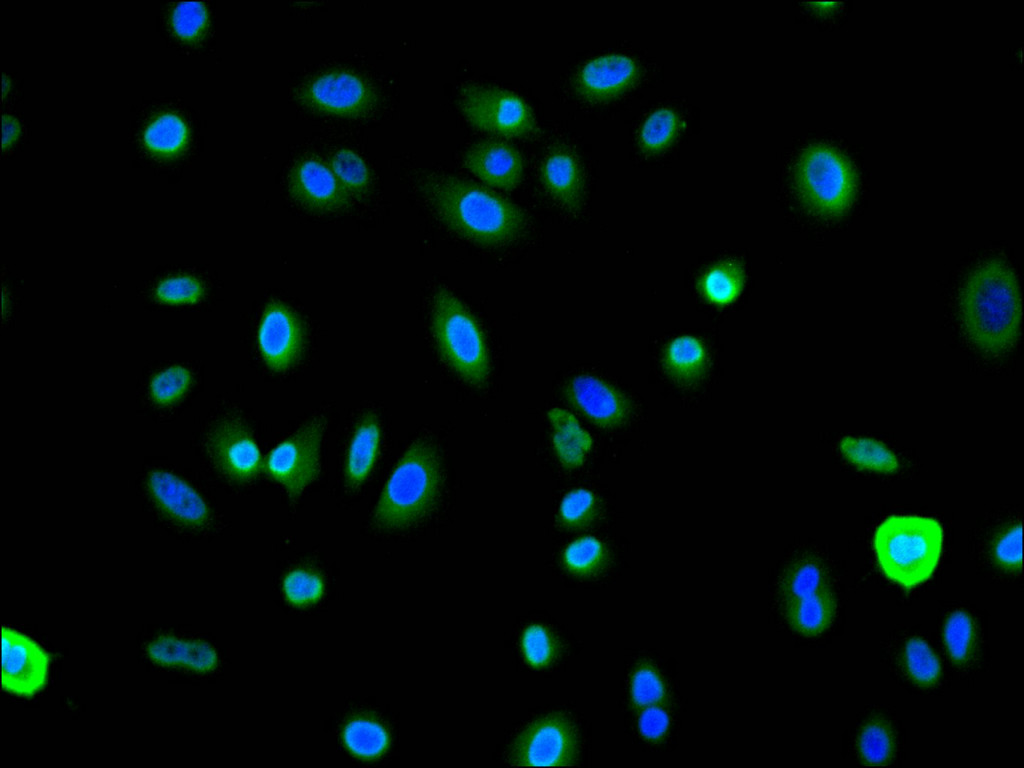
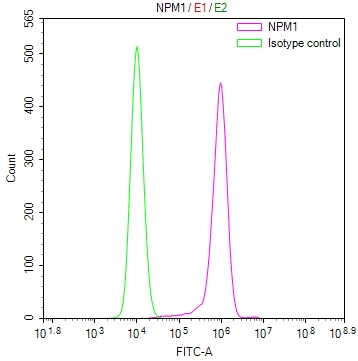
Validation across multiple platforms demonstrates genuine experimental flexibility. Western blot analysis in Jurkat and PC-3 whole cell lysates reveals specific detection, with the observed band at 28 kDa running slightly below the predicted 33 kDa molecular weight, a difference commonly attributable to protein processing or conformational factors affecting gel migration. Immunohistochemistry performance has been confirmed in human lung cancer and liver tissue sections using citrate buffer antigen retrieval, while immunofluorescence staining in A549 cells clearly demonstrates the expected nucleolar localization pattern. Flow cytometry validation in Raji cells further extends the antibody's utility for single-cell analysis applications.
Whether investigating NPM1's role in leukemogenesis, exploring nucleolar stress responses, or examining cell cycle regulation, this antibody provides a reliable tool for researchers studying this essential nuclear chaperone across protein expression, tissue localization, and cell-based assay platforms.
There are currently no reviews for this product.





