
Call us
301-363-4651 (Available 9 a.m. to 5 p.m. CST from Monday to Friday)

| Code | CSB-RA170404A0HU |
| Size | US$210 |
| Order now | |
| Image |
|
| Have Questions? | Leave a Message or Start an on-line Chat |
| Application | Recommended Dilution |
|---|---|
| WB | 1:500-1:5000 |
| IHC | 1:50-1:200 |
| IF | 1:50-1:200 |
| FC | 1:50-1:200 |
Nucleophosmin (NPM1) is a multifunctional nucleolar phosphoprotein that plays essential roles in ribosome biogenesis, centrosome duplication, and genomic stability. Phosphorylation at serine 125 represents a critical regulatory modification that influences NPM1's subcellular localization and its interactions with key cellular machinery, making this site particularly relevant for researchers investigating cell cycle regulation, DNA damage responses, and oncogenic transformation pathways.
This recombinant rabbit monoclonal antibody, clone 12B1, specifically recognizes the phosphorylated serine 125 residue of NPM1. As a recombinant antibody generated from a defined sequence, it offers the consistency and reproducibility that demanding experimental workflows require, eliminating the lot-to-lot variability that can complicate longitudinal studies or multi-site collaborations.
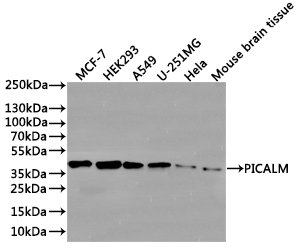
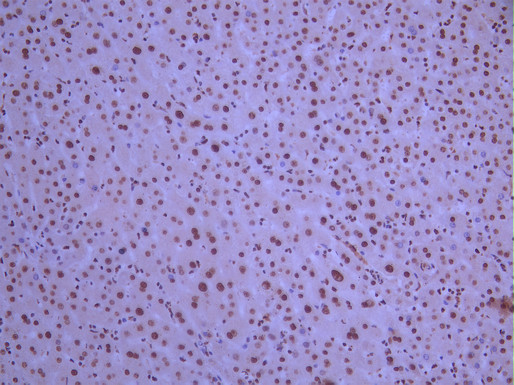
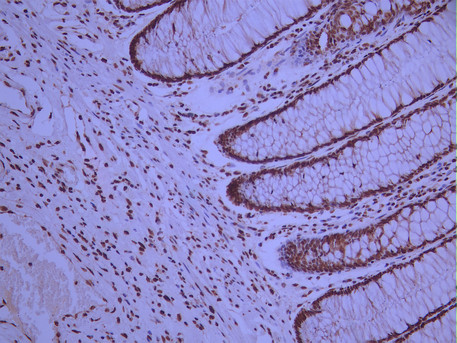
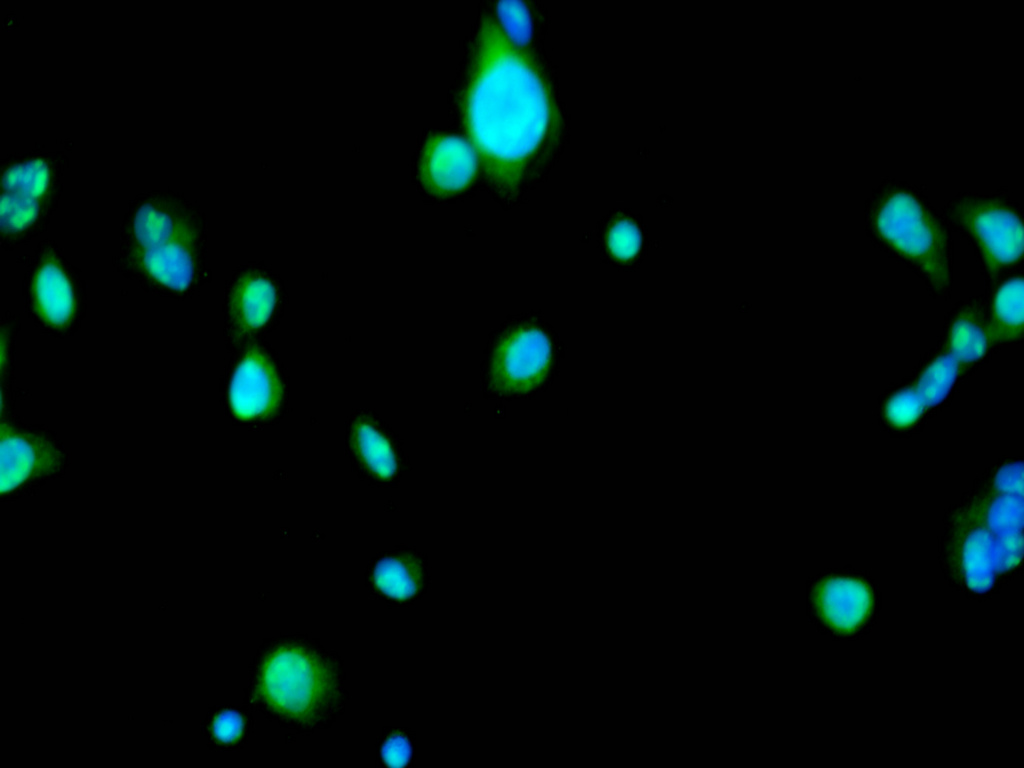
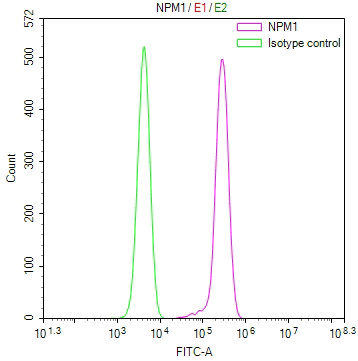
Validation across multiple platforms demonstrates the antibody's experimental versatility. Western blot analysis confirms detection in human cell lines including MCF7, HEK293, A549, U251, and HeLa, as well as mouse brain tissue, supporting cross-species reactivity for comparative studies. The observed band at 38 kDa, slightly higher than the predicted 33 kDa molecular weight, likely reflects post-translational modifications such as glycosylation that are characteristic of this heavily modified protein. Immunohistochemistry staining has been validated in human liver and colorectal cancer tissue sections, while immunofluorescence studies in HepG2 cells reveal the expected nuclear localization pattern. Flow cytometry analysis using Jurkat cells further extends the antibody's utility for single-cell phosphorylation studies.
Whether you're examining NPM1 phosphorylation dynamics in cancer biology, exploring nucleolar stress responses, or investigating epigenetic signaling mechanisms, this antibody provides a reliable tool for detecting this functionally significant modification across diverse experimental systems.
There are currently no reviews for this product.





