
Call us
301-363-4651 (Available 9 a.m. to 5 p.m. CST from Monday to Friday)

| Code | CSB-RA106449A0HU |
| Size | US$210 |
| Order now | |
| Image |
|
| Have Questions? | Leave a Message or Start an on-line Chat |
| Application | Recommended Dilution |
|---|---|
| WB | 1:500-1:2000 |
| IHC | 1:50-1:200 |
| IF | 1:50-1:200 |
| FC | 1:50-1:200 |
PIAS1 functions as an E3 SUMO-protein ligase that plays a central role in regulating transcriptional activity through SUMOylation of target proteins. As a protein inhibitor of activated STAT1, PIAS1 serves as a critical negative regulator of cytokine signaling pathways, making it an important target for researchers investigating immune responses, inflammatory processes, and cancer biology. Its involvement in modulating transcription factor activity positions PIAS1 at the intersection of multiple signaling networks relevant to disease mechanisms.
This recombinant monoclonal antibody, clone 9B11, offers the reproducibility and consistency that demanding experimental workflows require. Generated against a synthetic peptide derived from human PIAS1, the recombinant format ensures sequence-defined specificity and eliminates the lot-to-lot variability that can complicate long-term studies or multi-site collaborations. Affinity purification further enhances signal clarity across applications.
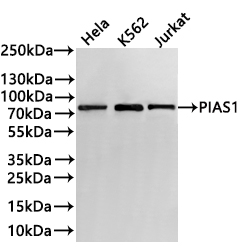
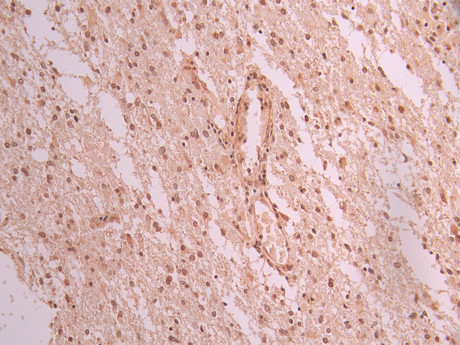
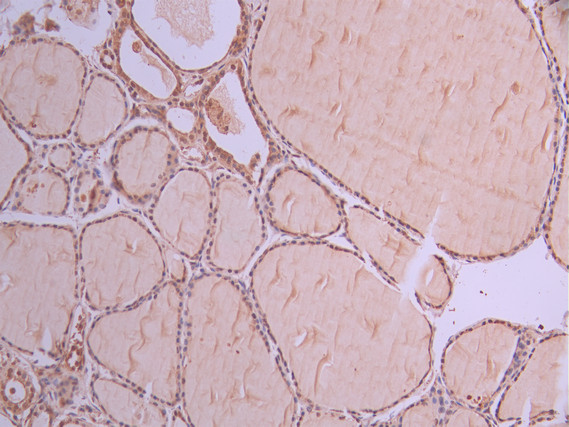
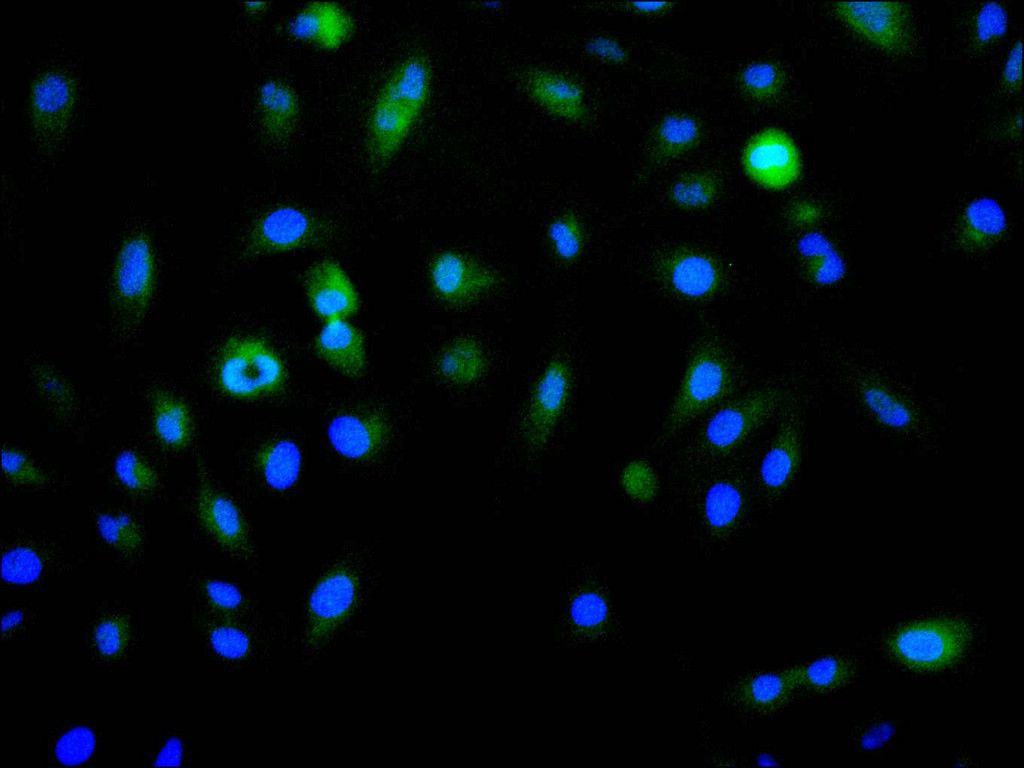
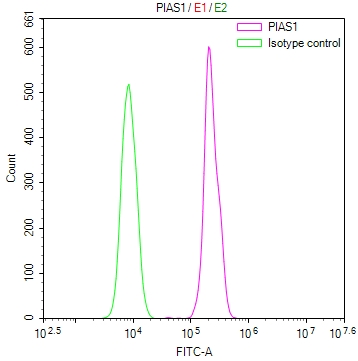
Validation testing demonstrates robust performance across multiple platforms. Western blot analysis detects PIAS1 in HeLa, K562, and Jurkat whole cell lysates, with the observed band at approximately 75 kDa slightly exceeding the predicted 72 kDa molecular weight—a difference likely attributable to post-translational modifications such as SUMOylation or phosphorylation events characteristic of this protein. Immunohistochemistry staining has been validated in human glioma and thyroid tissue sections using citrate buffer antigen retrieval, while immunofluorescence studies in A549 cells reveal the expected nuclear localization pattern. Flow cytometry applications have been confirmed in HeLa cells with clear separation from isotype controls.
This antibody supports researchers exploring STAT signaling regulation, SUMOylation pathways, and transcriptional control mechanisms across oncology and immunology applications.
There are currently no reviews for this product.





