
Call us
301-363-4651 (Available 9 a.m. to 5 p.m. CST from Monday to Friday)

| Code | CSB-RA360437MA1HU |
| Size | US$210 |
| Order now | |
| Image |
|
| Have Questions? | Leave a Message or Start an on-line Chat |
| Application | Recommended Dilution |
|---|---|
| IHC | 1:50-1:200 |
| FC | 1:50-1:200 |
Urokinase-type plasminogen activator (uPA/PLAU) serves as a critical serine protease in the plasminogen activation system, playing essential roles in extracellular matrix remodeling, cell migration, and tissue invasion. Beyond its established function in fibrinolysis, PLAU has emerged as a significant factor in cardiovascular research and cancer biology, where its expression correlates with tumor progression and metastatic potential, making it a valuable biomarker for investigating disease mechanisms.
This recombinant monoclonal antibody, clone 12D11, offers researchers the reproducibility and consistency that sequence-defined production provides. Unlike traditional hybridoma-derived antibodies, recombinant manufacturing ensures lot-to-lot uniformity, allowing you to maintain experimental continuity across long-term studies without the variability that can compromise data interpretation.
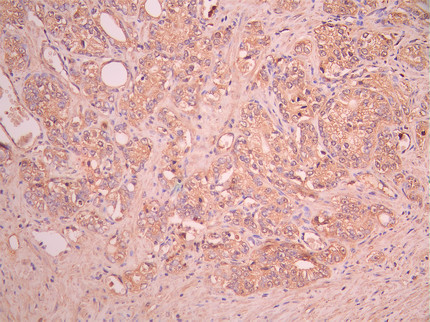
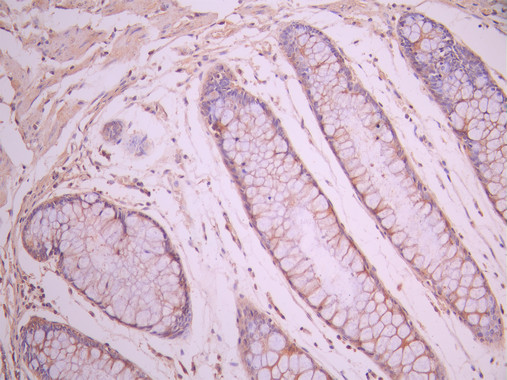
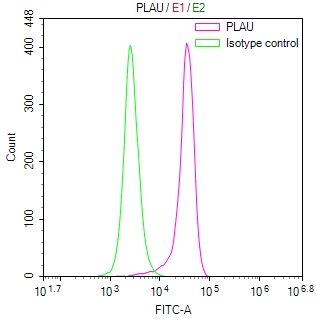
Validated for immunohistochemistry and flow cytometry applications, this antibody demonstrates reliable performance across multiple experimental contexts. IHC validation in paraffin-embedded human prostate cancer and colorectal cancer tissues at 1:50 dilution confirms its utility for studying PLAU expression in clinically relevant tumor samples using standard citrate buffer antigen retrieval protocols. Flow cytometry validation using PC-3 prostate cancer cells shows clear positive signal separation from isotype control, supporting its application in quantitative cell-based analyses of PLAU expression.
The human IgG1 isotype format, combined with affinity chromatography purification, delivers a reagent suitable for detection systems utilizing anti-human Fc-specific secondary antibodies. Supplied in a glycerol-based PBS buffer for optimal stability, this antibody supports researchers investigating PLAU biology in cardiovascular disease, tumor microenvironment dynamics, and metastatic processes where plasminogen activation pathways influence disease outcomes.
There are currently no reviews for this product.





