
Call us
301-363-4651 (Available 9 a.m. to 5 p.m. CST from Monday to Friday)

| Code | CSB-RA947589A0HU |
| Size | US$210 |
| Order now | |
| Image |
|
| Have Questions? | Leave a Message or Start an on-line Chat |
| Application | Recommended Dilution |
|---|---|
| IHC | 1:50-1:200 |
| FC | 1:50-1:200 |
Peroxiredoxin-1 (PRDX1) serves as a critical antioxidant enzyme that protects cells from oxidative stress by reducing hydrogen peroxide and organic hydroperoxides. Beyond its redox function, PRDX1 plays multifaceted roles in cell proliferation, differentiation, and immune regulation—originally identified as a natural killer cell-enhancing factor. Its dysregulation has been implicated in numerous disease states, making it a valuable target for researchers investigating oxidative stress pathways, cancer biology, and cellular defense mechanisms.
This recombinant monoclonal antibody, generated against a synthetic peptide derived from human PRDX1, offers the reproducibility and consistency that demanding experimental workflows require. As a sequence-defined reagent produced through recombinant technology, it eliminates the lot-to-lot variability that can complicate long-term studies or multi-site collaborations. The rabbit IgG format provides excellent signal-to-noise characteristics across multiple detection platforms.
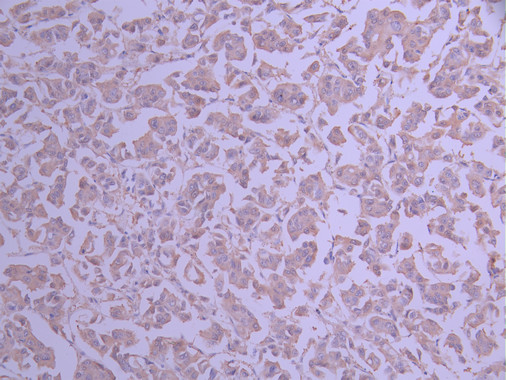
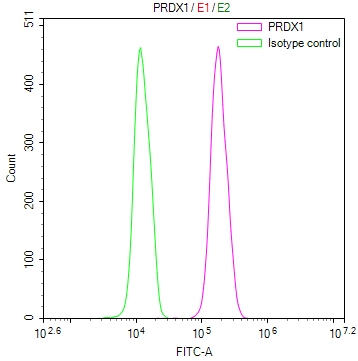
Validation data demonstrates reliable performance in immunohistochemistry, where the antibody successfully detected PRDX1 in paraffin-embedded human breast cancer tissue using standard citrate buffer antigen retrieval at 1:100 dilution. For flow cytometry applications, testing in HeLa cells confirmed specific intracellular staining with clear separation from isotype control, supporting its utility for quantitative analysis of PRDX1 expression at the single-cell level. ELISA compatibility extends its versatility for high-throughput screening applications.
The unconjugated format allows researchers flexibility in selecting detection systems optimized for their specific instrumentation and experimental design. Whether investigating PRDX1's role in tumor progression, characterizing oxidative stress responses, or exploring its immunomodulatory functions, this antibody provides a dependable tool for advancing your research.
There are currently no reviews for this product.





