

Call us
301-363-4651 (Available 9 a.m. to 5 p.m. CST from Monday to Friday)

| Code | CSB-RA920283A0HU |
| Size | US$210 |
| Order now | |
| Image |
|
| Have Questions? | Leave a Message or Start an on-line Chat |
| Application | Recommended Dilution |
|---|---|
| WB | 1:500-1:5000 |
| IF | 1:20-1:200 |
Prostaglandin-endoperoxide synthase 2, commonly known as COX-2, serves as a critical enzyme in the conversion of arachidonic acid to prostaglandins, positioning it at the center of inflammatory responses and pain signaling pathways. Unlike its constitutively expressed counterpart COX-1, COX-2 is typically induced by inflammatory stimuli, growth factors, and oncogenes, making it a focal point for researchers investigating cancer progression, cardiovascular disease, and metabolic disorders.
This recombinant monoclonal antibody, generated from clone 10B2, offers the reproducibility that demanding experimental workflows require. Because the antibody sequence is defined and production occurs in controlled recombinant systems, researchers can expect consistent performance across experiments and between lot numbers, eliminating a common source of variability that can complicate long-term studies or multi-site collaborations.
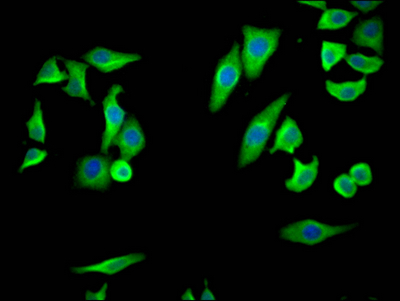
Validation testing demonstrates reliable detection of COX-2 in human samples across multiple applications. Western blot analysis of U-87 glioblastoma whole cell lysate reveals a clean band at the predicted molecular weight of 69 kDa when used at 1:1000 dilution, confirming specificity for the target protein. For immunofluorescence applications, the antibody has been validated in HepG2 hepatocellular carcinoma cells at 1:50 dilution, successfully visualizing COX-2 localization following standard fixation and permeabilization protocols. The antibody is also suitable for ELISA-based detection, with recommended working dilutions ranging from 1:500 to 1:5000 for western blot and 1:20 to 1:200 for immunofluorescence, providing flexibility to optimize signal intensity for your specific experimental conditions.
Whether investigating inflammatory signaling cascades, exploring COX-2's role in tumor microenvironments, or studying prostaglandin-mediated cardiovascular effects, this antibody provides a dependable tool for advancing your research.
There are currently no reviews for this product.





