
Call us
301-363-4651 (Available 9 a.m. to 5 p.m. CST from Monday to Friday)

| Code | CSB-RA990431A0HU |
| Size | US$210 |
| Order now | |
| Image |
|
| Have Questions? | Leave a Message or Start an on-line Chat |
| Application | Recommended Dilution |
|---|---|
| IHC | 1:50-1:200 |
| FC | 1:50-1:200 |
RAB5C belongs to the Ras-related protein family and plays a central role in regulating early endosome trafficking, a process fundamental to receptor-mediated endocytosis, signal transduction, and cellular homeostasis. As a key mediator of vesicular transport, RAB5C has garnered significant attention in research exploring membrane dynamics, autophagy pathways, and the dysregulation of intracellular trafficking observed in various disease states.
This recombinant monoclonal antibody, generated against a synthetic peptide derived from human RAB5C, offers the reproducibility and consistency that demanding experimental workflows require. Because recombinant antibodies are produced from defined genetic sequences, researchers benefit from lot-to-lot uniformity, ensuring that results remain comparable across extended studies and collaborative projects. The rabbit IgG format and affinity-chromatography purification further contribute to reliable performance with minimal background interference.
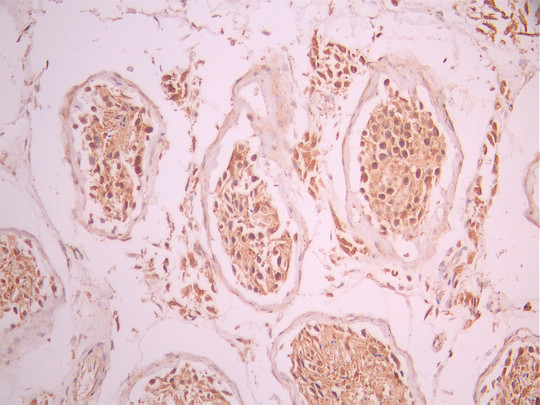
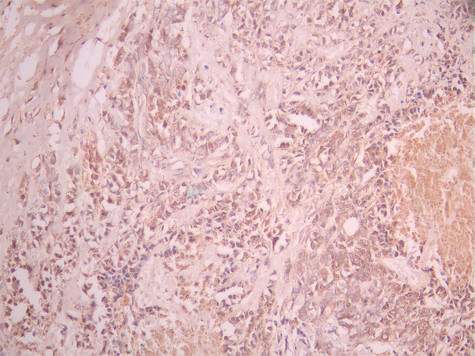
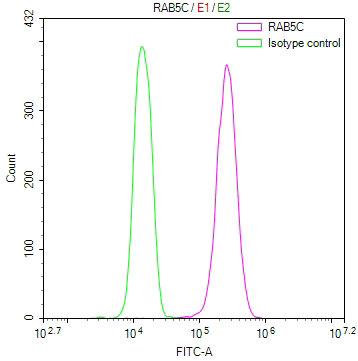
Validation studies demonstrate robust performance across multiple applications. Immunohistochemistry experiments using paraffin-embedded human testis and breast cancer tissues at 1:100 dilution reveal clear target detection following citrate buffer antigen retrieval, providing researchers with a validated approach for examining RAB5C expression patterns in both normal and malignant tissue contexts. Flow cytometry analysis using A431 cells confirms the antibody's utility for intracellular detection, with overlay peak curves showing distinct positive signal separation from isotype control when cells are fixed and permeabilized.
With validated performance in ELISA, immunohistochemistry, and flow cytometry, this antibody supports diverse experimental strategies for investigating RAB5C biology. Researchers studying signal transduction mechanisms, endosomal trafficking, or the broader implications of Ras-family GTPases in cellular regulation will find this reagent a dependable tool for advancing their work.
There are currently no reviews for this product.





