
Call us
301-363-4651 (Available 9 a.m. to 5 p.m. CST from Monday to Friday)

| Code | CSB-RA072639A0HU |
| Size | US$210 |
| Order now | |
| Image |
|
| Have Questions? | Leave a Message or Start an on-line Chat |
| Application | Recommended Dilution |
|---|---|
| WB | 1:500-1:2000 |
| IF | 1:50-1:200 |
| FC | 1:50-1:200 |
Replication Protein A1 (RPA1), also known as the 70 kDa DNA-binding subunit of the RPA complex, serves as an essential component of DNA replication, repair, and recombination machinery. As the largest subunit of the heterotrimeric RPA complex, RPA1 binds single-stranded DNA with high affinity, protecting it from nuclease degradation while coordinating the recruitment of downstream repair and replication factors. This central role in maintaining genomic stability makes RPA1 a critical target for researchers investigating DNA damage responses, cell cycle regulation, and cancer biology.
This recombinant monoclonal antibody, generated in rabbit against a synthetic peptide derived from human RPA1, offers the reproducibility and consistency that demanding experimental workflows require. As a sequence-defined reagent produced through recombinant technology, it eliminates the lot-to-lot variability that can compromise longitudinal studies or multi-site collaborations, ensuring your results remain comparable across experiments.
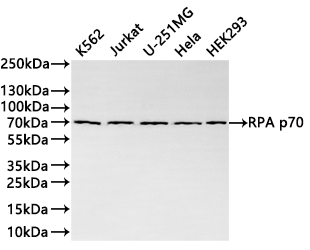
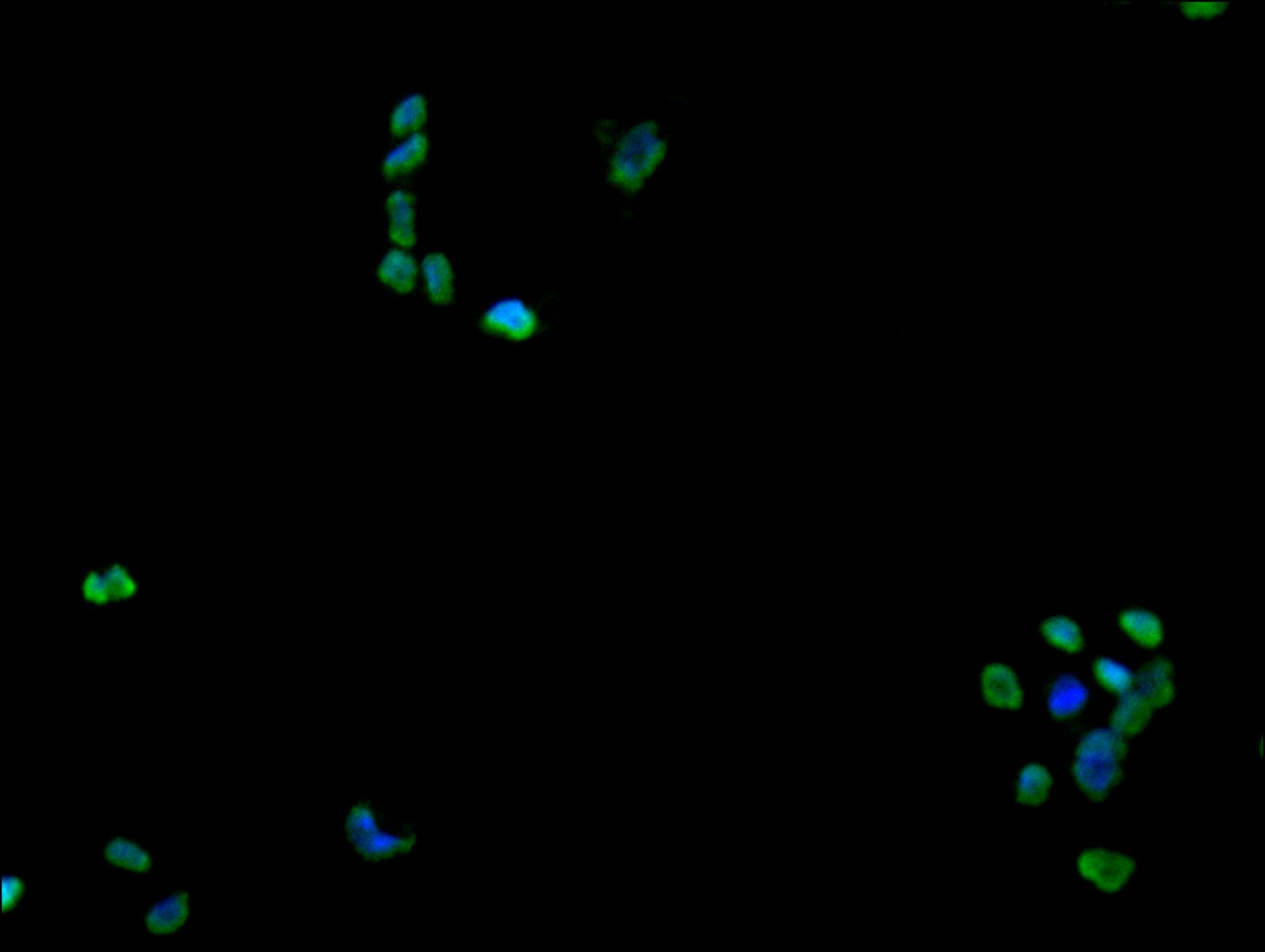
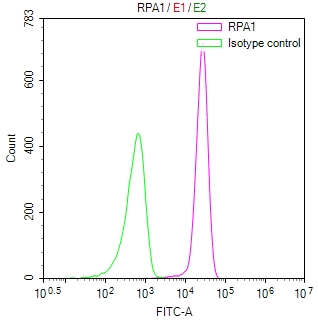
Validation across multiple platforms demonstrates the versatility of this antibody for diverse experimental approaches. Western blot analysis confirms robust detection in human cell lines including K562, Jurkat, U-251MG, HeLa, and HEK293, with an observed band at approximately 70 kDa—slightly above the predicted 68 kDa molecular weight, consistent with post-translational modifications commonly observed for this protein. Immunofluorescence staining in A-431 cells reveals clear nuclear localization patterns, while flow cytometry analysis in Jurkat cells shows distinct positive population shifts compared to isotype controls.
Whether you are exploring replication stress responses, characterizing DNA repair pathway dynamics, or investigating RPA1 dysregulation in disease contexts, this antibody provides a reliable foundation for your research.
There are currently no reviews for this product.





