
Call us
301-363-4651 (Available 9 a.m. to 5 p.m. CST from Monday to Friday)

| Code | CSB-RA278193A0HU |
| Size | US$210 |
| Order now | |
| Image |
|
| Have Questions? | Leave a Message or Start an on-line Chat |
| Application | Recommended Dilution |
|---|---|
| WB | 1:500-1:2000 |
| IF | 1:50-1:200 |
| FC | 1:50-1:200 |
RYK is a receptor tyrosine kinase that plays essential roles in Wnt signaling pathways, influencing cell polarity, migration, and differentiation during development. Unlike conventional receptor tyrosine kinases, RYK functions as a co-receptor for Wnt ligands, making it a compelling target for researchers investigating developmental biology, neural patterning, and cancer progression where Wnt signaling dysregulation is implicated.
This recombinant monoclonal antibody, clone 2H3, offers the reproducibility and consistency that demanding experimental workflows require. Produced using recombinant technology with a defined sequence, it eliminates the lot-to-lot variability inherent in traditional hybridoma-derived antibodies, ensuring your results remain comparable across extended studies and collaborative projects.
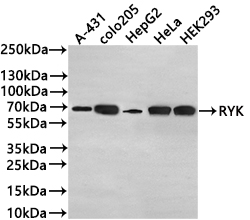
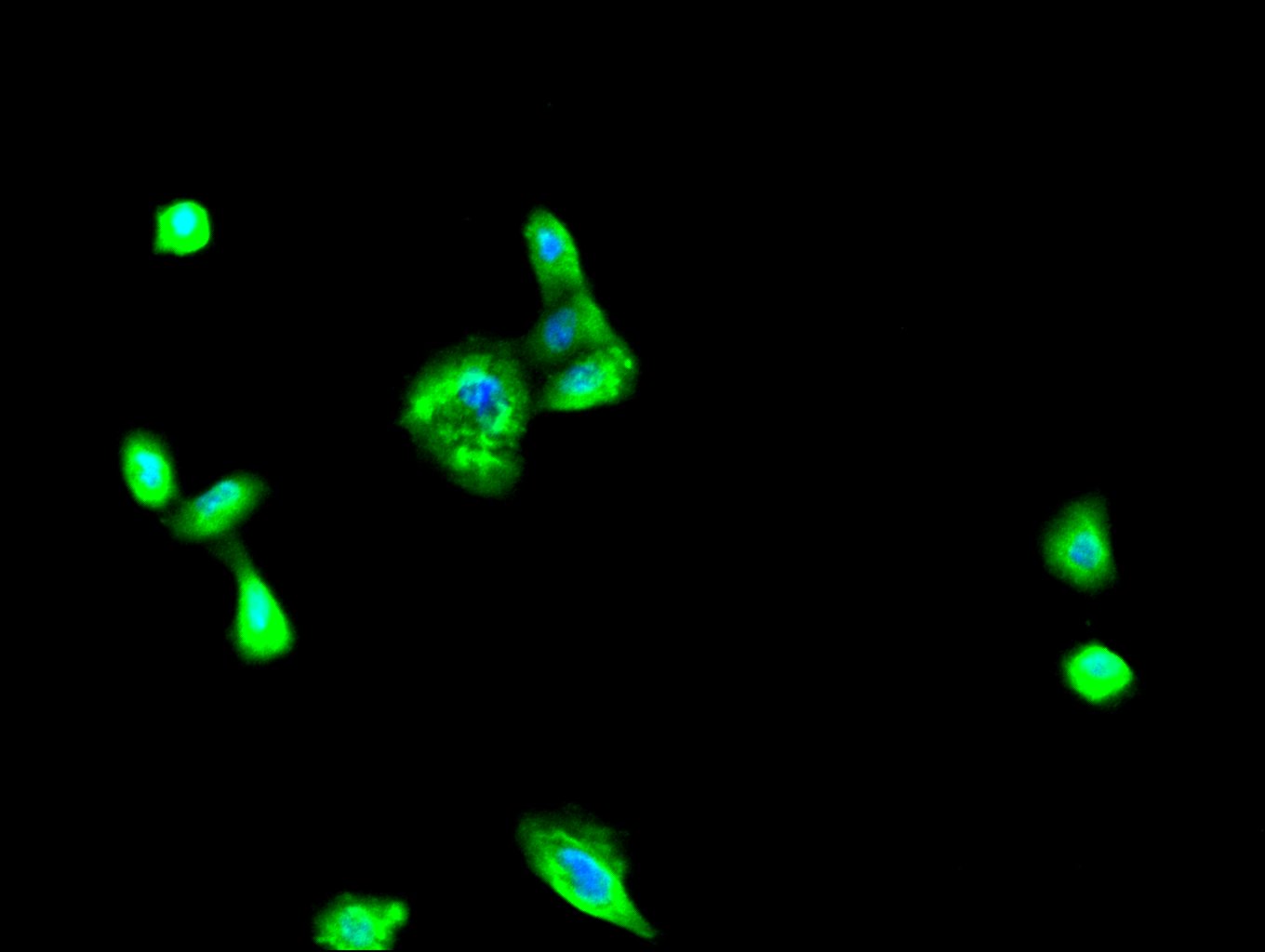
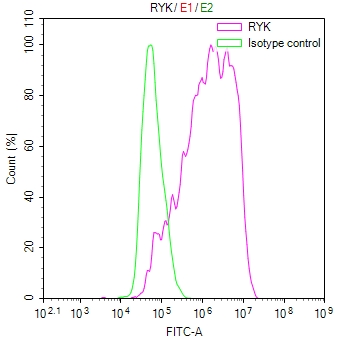
Validated across multiple applications, this antibody provides flexibility for diverse experimental approaches. Western blot analysis demonstrates clean detection of RYK at the expected 68 kDa molecular weight across several human cell lines, including A-431, COLO205, HepG2, HeLa, and HEK293 lysates, confirming reliable performance in routine protein expression studies. For cellular localization experiments, immunofluorescence staining has been validated in A-431 cells, while flow cytometry analysis in BxPC-3 cells enables quantitative assessment of RYK expression at the single-cell level.
The antibody is supplied in a stabilized liquid format with glycerol for convenient long-term storage at -20°C or -80°C. Recommended working dilutions range from 1:500-1:2000 for western blotting and 1:50-1:200 for immunofluorescence and flow cytometry applications.
This antibody serves researchers exploring Wnt signaling mechanisms, developmental processes, and oncology studies where understanding RYK-mediated pathways may reveal new therapeutic insights.
There are currently no reviews for this product.





