
Call us
301-363-4651 (Available 9 a.m. to 5 p.m. CST from Monday to Friday)

| Code | CSB-RA945260A0HU |
| Size | US$210 |
| Order now | |
| Image |
|
| Have Questions? | Leave a Message or Start an on-line Chat |
| Application | Recommended Dilution |
|---|---|
| WB | 1:500-1:5000 |
| IHC | 1:50-1:200 |
The vitamin D receptor serves as a critical nuclear transcription factor that mediates the biological effects of 1,25-dihydroxyvitamin D3, influencing gene expression programs involved in calcium homeostasis, immune modulation, and cellular differentiation. Beyond its classical role in mineral metabolism, VDR has emerged as a significant focus in cancer research, where its expression patterns and signaling activity may influence tumor progression and therapeutic responses.
This recombinant monoclonal antibody, clone 3C7, offers the reproducibility advantages inherent to sequence-defined production. Because the antibody sequence remains fixed across manufacturing lots, researchers can expect consistent performance over time, eliminating the variability concerns that can complicate long-term studies or multi-site collaborations. The rabbit host origin combined with monoclonal specificity provides both high affinity binding and reliable lot-to-lot consistency.
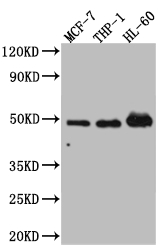
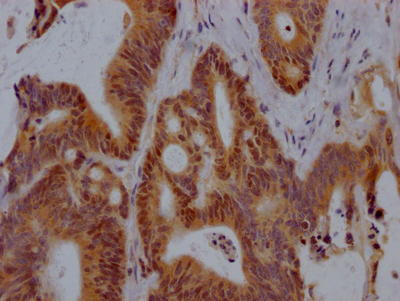
Validation studies demonstrate robust performance across multiple experimental platforms. In western blot applications, the antibody successfully detects VDR in MCF-7 breast cancer cells, THP-1 monocytic cells, and HL-60 promyelocytic leukemia cells, with an observed band at the predicted 49 kDa molecular weight. This detection across diverse human cell lines confirms reliable recognition of endogenous VDR protein. For tissue-based investigations, immunohistochemical staining has been validated in paraffin-embedded human colon cancer sections using standard citrate-based antigen retrieval, enabling researchers to examine VDR expression within the tumor microenvironment context.
Whether investigating VDR's role in nuclear signaling pathways, exploring its involvement in cancer biology, or examining epigenetic regulatory mechanisms, this antibody provides a dependable tool for characterizing vitamin D receptor expression and distribution across cellular and tissue samples.
There are currently no reviews for this product.





