
Call us
301-363-4651 (Available 9 a.m. to 5 p.m. CST from Monday to Friday)

| Code | CSB-RA276627A0HU |
| Size | US$210 |
| Order now | |
| Image |
|
| Have Questions? | Leave a Message or Start an on-line Chat |
| Application | Recommended Dilution |
|---|---|
| WB | 1:500-1:5000 |
| IHC | 1:50-1:200 |
| IF | 1:20-1:200 |
XRCC5, commonly known as Ku80 or Ku86, forms a heterodimer with Ku70 that plays an essential role in the non-homologous end joining pathway of DNA double-strand break repair. This 86 kDa protein serves as the DNA-binding subunit that recognizes and binds to broken DNA ends, recruiting DNA-dependent protein kinase to initiate the repair cascade. Beyond its repair functions, XRCC5 participates in telomere maintenance and V(D)J recombination, making it a critical target for researchers investigating genomic stability, cancer biology, and cellular responses to genotoxic stress.
This recombinant monoclonal antibody, clone 5G3, offers the reproducibility that demanding experimental workflows require. Generated against a synthetic peptide derived from human Ku80 and produced using recombinant technology in rabbit, this antibody delivers sequence-defined consistency across lots, eliminating the variability that can compromise longitudinal studies or multi-site collaborations.
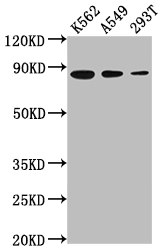
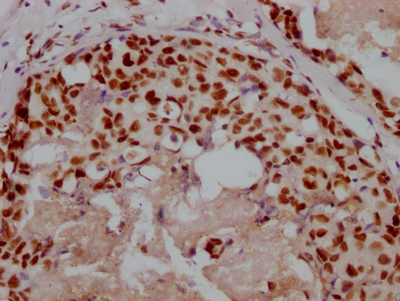
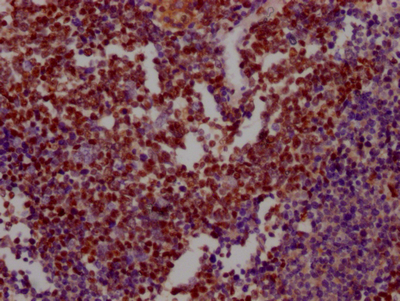
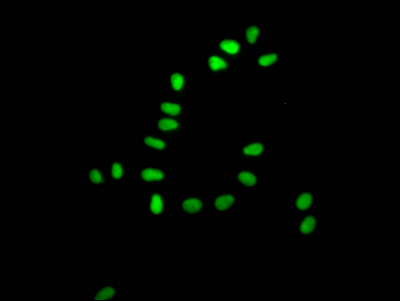
Validation data demonstrates reliable performance across multiple applications. Western blot analysis detects a clean band at the expected 83 kDa molecular weight in K562, A549, and 293T whole cell lysates, confirming specificity in diverse human cell line backgrounds. Immunohistochemistry staining has been validated in paraffin-embedded human breast cancer and lung cancer tissues using citrate buffer antigen retrieval, providing researchers studying tumor biology with a characterized tool for tissue-based investigations. Immunofluorescence analysis in HeLa cells reveals the expected nuclear localization pattern consistent with XRCC5's role in DNA repair processes.
Whether you're examining DNA damage response pathways, characterizing repair-deficient cell models, or investigating nuclear signaling in cancer contexts, this antibody provides the application flexibility and batch-to-batch reliability essential for generating publishable data.
There are currently no reviews for this product.





