
Call us
301-363-4651 (Available 9 a.m. to 5 p.m. CST from Monday to Friday)

In May 2026, the FDA approved Partner Therapeutics’ Bizengri (zenocutuzumab) for an expanded indication for the treatment of advanced cholangiocarcinoma patients with NRG1 gene fusions, making it the world’s first targeted therapy specifically for NRG1-positive cholangiocarcinoma. Previously, Bizengri had been approved for NRG1 fusion-positive pancreatic cancer and non-small cell lung cancer; this expansion further validates the clinical value of this target as a “tumor-agnostic” rare driver gene. NRG1—a neuregulin once widely studied for its roles in nervous system development and cardiac function maintenance—has now entered the spotlight in precision oncology.
NRG1 (neuromodulin 1, also known as ARIA, HRG, GGF and NDF), a member of the epidermal growth factor (EGF) family, has a molecular weight of 44 kD [4, 5]. NRG1 protein structure mainly includes: intracellular region, transmembrane region, proximal membrane sequence, extracellular EGF like domain, immunoglobulin like domain and amino acid sequence (Figure 1).The NRG1 gene contains four isoforms: type I NRG1 to type VI NRG1. All types of NRG1 includes two EGF-like domains, α and β. The EGF-like receptor binding domain is required for the activation of ERBB receptor tyrosine kinase and is located in the proximal region of the extracellular domain [6].
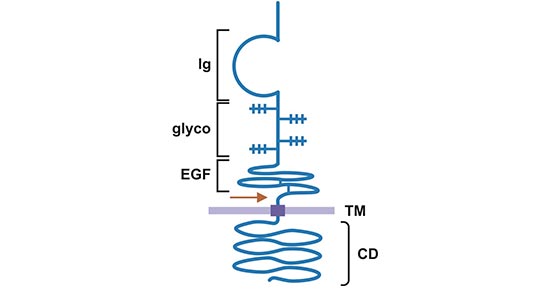
Figure 1. Schematic diagram of NRG1 protein structure
*The figure is derived from a Prolactin publication [6]
NRG1 is mainly expressed in glial cells and neurons as well as in mammary gland, myocardium, lung, kidney, liver and other organs. NRG1 plays an important role in the development of the nervous system, myocardium and mammary gland [4, 5]. It has been found that NRG1β is highly expressed in the nervous system and cardiomyocytes, while NRG1α is often expressed in the mammary gland [7, 8]. In addition, an increasing number of studies have shown that NRG1 fusions are closely associated with the development of a variety of tumors [4, 5].
NRG1 is a member of the EGF ligand family. NRG1 binds to the ERBB family of receptor tyrosine kinases and participates in the biological processes of the cell [9]. There are four ERBB receptors: ERBB1, ERBB2, ERBB3 and ERBB4. NRG1-mediated signaling is mainly associated with ERBB2, ERBB3 and ERBB4 (Figure 2) [6]. In fact, ERBB receptors often form homodimers or heterodimers in every possible combination, which then react with the ligand NRG1. Among them, ERBB2 is unable to form homodimers by itself and requires the participation of ERBB3 or ERBB4 to form heterodimers in order to bind to NRG1. NRG1 acts as an agonist or ligand for ERBB. Upon binding to ERBBs, NRG1 forms the dimeric complex NRG1/ERBBs, which activates the signaling pathway [6, 9, 10].
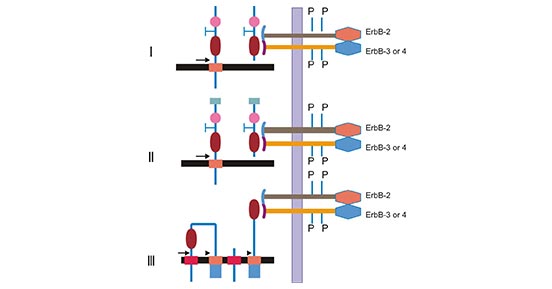
Figure 2. Different subtypes of NRG1 binding to receptors
*The figure is derived from the Prolactin publication [6]
In addition, as shown in Figure 3, fusion partners of NRG1, such as CD74, SLC33A2, and SDC4 have been found at low frequency in a wide range of carcinomas. NRG1 gene fusions activates and retains the EFG-like domain of NRG1 protein, providing continuous activation of signaling pathways, causing uncontrolled cell proliferation and leading to tumorigenesis [11].
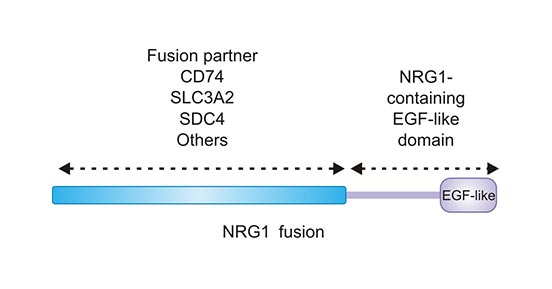
Figure 3. NRG1 fusions retain the EGF-like domain of NRG1
*The figure is derived from the Clinical Cancer Research publication [11]
NRG1 initiates a complex intracellular signaling cascade through the NRG1/ERBBs. NRG1/ERBB activates extracellular signal-regulated kinases (ERK), phosphatidylinositol 3-kinases (PI3Ks), serine/threonine protein kinases (AKT), mitogen-activated protein kinase (MAPK), protein kinase C (PKC), Janus kinase signal and signal transducer and activator of transcription (JAK-STAT). NRG1 is involved in the activation of these signaling pathways, which affects proliferation, differentiation and anti-apoptotic activities in cells [12].
As shown in Figure 4, in Schwann cells, NRG1 binds ERBB3/ERBB2 heterodimers and further mediates intracellular signaling, activating a variety of signaling cascades, including Ras, extracellular signal-regulated kinase 1/2 (Erk1/2), phosphatidylinositol-3-kinase (PI3K)/Akt pathway, Ca2+ mobilization, Ca2+-dependent protein kinase C (PKC) and NFAT activity. Activation of the NRG1 signaling pathway affects the survival, proliferation, migration, and differentiation activities of Schwann cells [13].
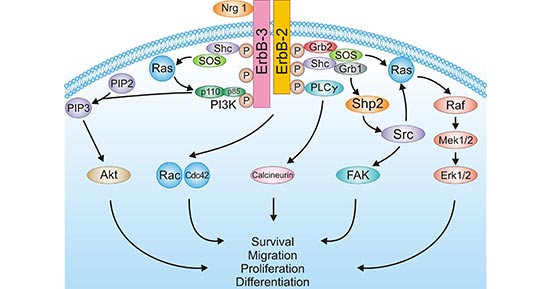
Figure 4. NRG1 binding to ERBB3/ERBB2 activates downstream pathways
*The figure is derived from the Academic Press publication [13]
NRG1, a neuromodulatory protein, promotes neurological development, inhibits neuronal apoptosis, and also induces cytokine expression. NRG1 may cause neurological-related diseases such as Alzheimer's disease (AD) and amyotrophic lateral sclerosis (ALS) as NRG1 or NRG1/ERBB is abnormally expressed [14].
NRG1 plays a key role in synaptic plasticity. NRG1/ERBB4-mediated signaling is associated with neurological disorders [15]. Furthermore, NRG1 is a susceptibility gene for schizophrenia. It was found that those with high NRG1 expression are more likely to develop schizophrenia than those without [16]. In Schwann cells, NRG1 secretes a variety of neurofactors and bioactive substances to provide support for neural axon regeneration and nerve repair [13].
In addition to the nervous system, NRG1 is essential for normal cardiac development. NRG1 plays an important role in the development and functional maintenance of the heart. It has been shown that intermittent exercise can improve cardiac function by activating myocardial NRG1 [17].
There is ample research showing that NRG1 plays a double role in cancer [18, 19]. In breast cancer and non-small cell lung cancer (NSCLC), researchers point that downregulation of NRG1 increases tumor cell proliferation, suggesting that NRG1 may be an oncogene in breast cancer. Inactivation or deletion of NRG1 may induce the development of breast cancer [20] and NSCLC [21].
However, in colorectal cancer, investigators found that isoform NRG1 Ⅲ is upregulated in colorectal cancer expression and may be involved in the progression of colorectal cancer, suggesting that NRG1 could be a new candidate target for early diagnosis and targeted therapy of colorectal cancer [22].
Of note, NRG1 fusions trigger attention among researchers. Data show that the greatest incidence of NRG1 fusions was in non–small cell lung cancer. Moreover, NRG1 fusions are commonly found in other cancers such as kidney cancer, bladder cancer, ovarian cancer, pancreatic cancer, breast cancer, colorectal cancer, sarcoma and neuroendocrine carcinoma [23]. Thus, NRG1 fusions are expected to provide more new strategies to targeted therapies.
Currently, drug development targeting the NRG1 pathway mainly focuses on two directions. First, bispecific antibodies targeting the NRG1/ERBB signaling pathway have achieved clinical breakthroughs. Bizengri, by simultaneously binding HER2 and HER3, blocks the interaction between NRG1 ligand and its receptors. In a Phase II trial, it achieved an objective response rate (ORR) of 36.8% in NRG1 fusion-positive cholangiocarcinoma patients, with responses lasting nearly 13 months. The drug has received Breakthrough Therapy Designation from the FDA for three major indications—pancreatic cancer, NSCLC, and cholangiocarcinoma—marking that precision therapy for NRG1 fusion genes is moving from rare cases to systematic diagnosis and treatment. Second, NRG1 fusion gene screening is becoming a new focus in pan-cancer precision medicine. Data show that NRG1 fusions have the highest incidence in NSCLC and are also found in various solid tumors such as renal cancer, thyroid cancer, ovarian cancer, and colorectal cancer. With the widespread adoption of NGS testing, more potentially benefiting patients are expected to be identified. Looking ahead, NRG1-targeted drugs are likely to expand along two paths: one is to enhance depth of response through combination therapies (e.g., with chemotherapy or immunotherapy); the other is to explore use in earlier treatment settings (such as first-line or adjuvant therapy). In addition, NRG1’s biological functions in non-oncological fields such as chronic heart failure are also under clinical investigation (e.g., JK07), suggesting the target’s potential for cross-indication development. With the successful approval of the first targeted drug, NRG1 is expected to become another star “broad-spectrum anti-cancer” target after NTRK and RET, and R&D surrounding fusion detection, resistance mechanisms, and next-generation drugs (such as PROTACs and ADCs) will also usher in a new wave of activity.
NRG1 Proteins:
Recombinant Human Pro-neuregulin-1, membrane-bound isoform(NRG1),partial (Active)
-SDS.jpg)
(Tris-Glycine gel) Discontinuous SDS-PAGE (reduced) with 5% enrichment gel and 15% separation gel.
-AC1.jpg)
Measured by its binding ability in a functional ELISA. Immobilized NRG1 at 2 μg/ml can bind human ERBB3(CSB-MP007765HU), the EC50 is 18.24-23.66 ng/ml
References
[1] Gay, Nathan D., et al. "Durable response to afatinib in lung adenocarcinoma harboring NRG1 gene fusions." Journal of Thoracic Oncology 12.8 (2017): e107-e110.
[2] Muscarella, Lucia Anna, et al. "ALK and NRG1 fusions coexist in a patient with signet ring cell lung adenocarcinoma." Journal of Thoracic Oncology 12.10 (2017): e161-e163.
[3] Cheema, Parneet K., Mark Doherty, and Ming-Sound Tsao. "A case of invasive mucinous pulmonary adenocarcinoma with a CD74-NRG1 fusion protein targeted with afatinib." Journal of Thoracic Oncology 12.12 (2017): e200-e202.
[4] Rimer, Mendell. "Neuregulins at the neuromuscular synapse: past, present, and future." Journal of neuroscience research 85.9 (2007): 1827-1833.
[5] Dammann, Christiane EL, Heber C. Nielsen, and Kermit L. Carraway III. "Role of neuregulin-1β in the developing lung." American journal of respiratory and critical care medicine 167.12 (2003): 1711-1716.
[6] Zhao, Weijiang. "Neuregulin-1 (Nrg1): An emerging regulator of prolactin (PRL) secretion." Prolactin (2013): 83.
[7] Wansbury, Olivia, et al. "Dynamic expression of Erbb pathway members during early mammary gland morphogenesis." Journal of investigative dermatology 128.4 (2008): 1009-1021.
[8] Sithanandam, G., and L. M. Anderson. "The ERBB3 receptor in cancer and cancer gene therapy." Cancer gene therapy 15.7 (2008): 413-448.
[9] Fock, Valerie, et al. "Neuregulin-1-mediated ErbB2-ErbB3 signalling protects human trophoblasts against apoptosis to preserve differentiation." Journal of cell science 128.23 (2015): 4306-4316.
[10] Wadugu, Brian, and Bernhard Kühn. "The role of neuregulin/ErbB2/ErbB4 signaling in the heart with special focus on effects on cardiomyocyte proliferation." American Journal of Physiology-Heart and Circulatory Physiology 302.11 (2012): H2139-H2147.
[11] Dimou, Anastasios, and D. Ross Camidge. "Detection of NRG1 fusions in solid tumors: Rare gold?" Clinical Cancer Research 25.16 (2019): 4865-4867.
[12] Liu, Dawei, and Xinhong Luan. "The Research Progress of Neuregulin 1 in the Reproductive Development." (2015).
[13] Newbern, Jason, and Carmen Birchmeier. "Nrg1/ErbB signaling networks in Schwann cell development and myelination." Seminars in cell & developmental biology. Vol. 21. No. 9. Academic Press, 2010.
[14] Xu, Junping, et al. "Neuregulin-1 protects mouse cerebellum against oxidative stress and neuroinflammation." Brain Research 1670 (2017): 32-43.
[15] Shamir, Alon, et al. "The importance of the NRG-1/ErbB4 pathway for synaptic plasticity and behaviors associated with psychiatric disorders." Journal of Neuroscience 32.9 (2012): 2988-2997.
[16] Munafo, M. R., et al. "Association of the NRG1 gene and schizophrenia: a meta-analysis." Molecular psychiatry 11.6 (2006): 539-546.
[17] Pascual-Gil, S., et al. "NRG1 PLGA MP locally induce macrophage polarisation toward a regenerative phenotype in the heart after acute myocardial infarction." Journal of drug targeting 27.5-6 (2019): 573-581.
[18] Jones, M. R., et al. "Successful targeting of the NRG1 pathway indicates novel treatment strategy for metastatic cancer." Annals of Oncology 28.12 (2017): 3092-3097.
[19] Weinstein, Edward J., Stefan Grimm, and Philip Leder. "The oncogene heregulin induces apoptosis in breast epithelial cells and tumors." Oncogene 17.16 (1998): 2107-2113.
[20] Chua, Y. L., et al. "The NRG1 gene is frequently silenced by methylation in breast cancers and is a strong candidate for the 8p tumour suppressor gene." Oncogene 28.46 (2009): 4041-4052.
[21] Gladstone, E., et al. "MA21. 01 Generation and Characterization of Novel Preclinical Disease Models of NSCLC with NRG1 Rearrangements to Improve Therapy." Journal of Thoracic Oncology 14.10 (2019): S334.
[22] Stahler, Arndt, et al. "Prevalence and influence on outcome of HER2/neu, HER3 and NRG1 expression in patients with metastatic colorectal cancer." Anti-cancer drugs 28.7 (2017): 717-722.
[23] SJonna, Sushma, et al. "Detection of NRG1 gene fusions in solid tumors." Clinical Cancer Research 25.16 (2019): 4966-4972.




Comments
Leave a Comment