
Call us
301-363-4651 (Available 9 a.m. to 5 p.m. CST from Monday to Friday)

| Code | CSB-RA242578A0HU |
| Size | US$210 |
| Order now | |
| Image |
|
| Have Questions? | Leave a Message or Start an on-line Chat |
| Application | Recommended Dilution |
|---|---|
| WB | 1:500-1:5000 |
| IHC | 1:50-1:200 |
| FC | 1:50-1:200 |
Cystathionine beta-synthase (CBS) is a pivotal enzyme in the transsulfuration pathway, catalyzing the condensation of homocysteine and serine to form cystathionine. This reaction represents a critical junction in cellular metabolism, linking methionine metabolism to cysteine and glutathione biosynthesis. CBS dysfunction has been implicated in homocystinuria and has garnered significant research interest for its role in hydrogen sulfide signaling, making it a compelling target for investigators studying metabolic disorders, redox biology, and cellular stress responses.
This recombinant monoclonal antibody, raised in rabbit against a synthetic peptide derived from human CBS, offers the consistency and reproducibility that demanding experimental workflows require. As a sequence-defined reagent produced through recombinant technology, it eliminates the lot-to-lot variability that can complicate longitudinal studies and multi-site collaborations. The affinity-purified IgG format ensures minimal background while maintaining strong target recognition.
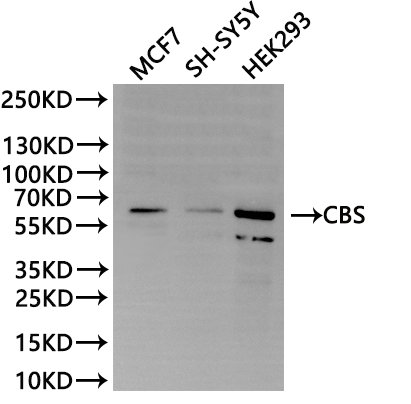
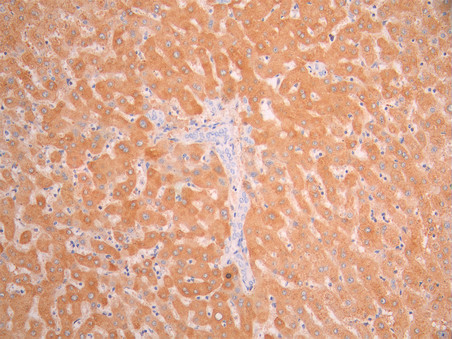
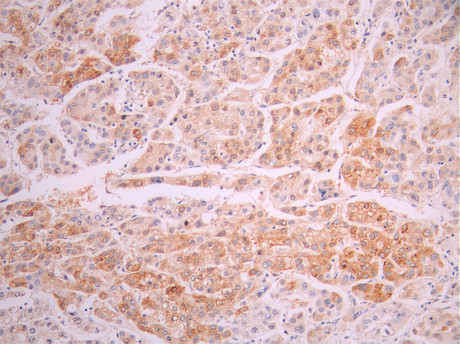
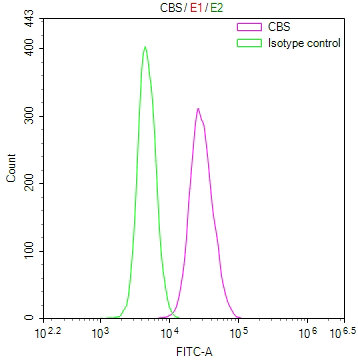
Validation data demonstrate robust performance across multiple platforms. In western blot applications, the antibody detects CBS at the expected 61 kDa molecular weight in MCF7 breast cancer cells, SH-SY5Y neuroblastoma cells, and HEK293 cells, confirming reliable detection across diverse human cell line models. Immunohistochemistry studies reveal clear staining in both normal human liver tissue and liver cancer specimens, reflecting the known hepatic expression of this metabolic enzyme. Flow cytometry validation in SH-SY5Y cells further extends the antibody's utility for quantitative single-cell analyses.
Whether investigating transsulfuration pathway dynamics, exploring CBS as a therapeutic target, or characterizing its expression in disease contexts, this antibody provides the experimental flexibility and technical reliability essential for advancing signal transduction research.
There are currently no reviews for this product.





