
Call us
301-363-4651 (Available 9 a.m. to 5 p.m. CST from Monday to Friday)

| Code | CSB-RA172307A0HU |
| Size | US$210 |
| Order now | |
| Image |
|
| Have Questions? | Leave a Message or Start an on-line Chat |
| Application | Recommended Dilution |
|---|---|
| WB | 1:500-1:2000 |
| IHC | 1:50-1:200 |
| IF | 1:50-1:200 |
| FC | 1:50-1:200 |
CDK1, also known as CDC2 or p34 protein kinase, serves as the master regulator of cell cycle progression, functioning as an essential driver of mitotic entry in all eukaryotic cells. This cyclin-dependent kinase orchestrates the transition from G2 phase into mitosis by phosphorylating numerous substrates that control chromosome condensation, nuclear envelope breakdown, and spindle assembly. Given its central role in cell division, CDK1 has become a critical target in cancer research, where dysregulated cell cycle control contributes to uncontrolled proliferation.
This recombinant monoclonal antibody, generated against a synthetic peptide from human CDK1, offers the reproducibility and consistency that demanding research applications require. As a sequence-defined reagent produced from a stable clone, it eliminates the lot-to-lot variability that can compromise longitudinal studies or multi-site collaborations. The rabbit IgG format provides excellent signal-to-noise characteristics across diverse experimental platforms.
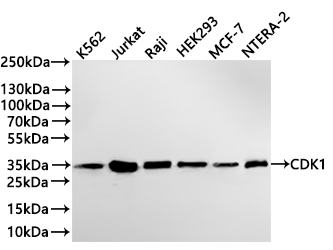
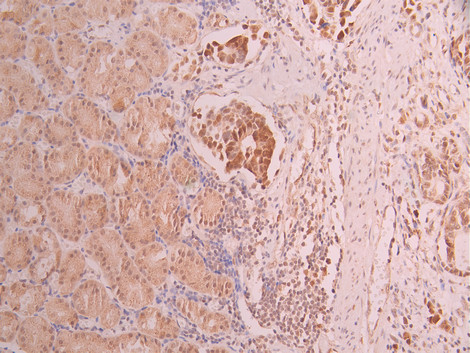
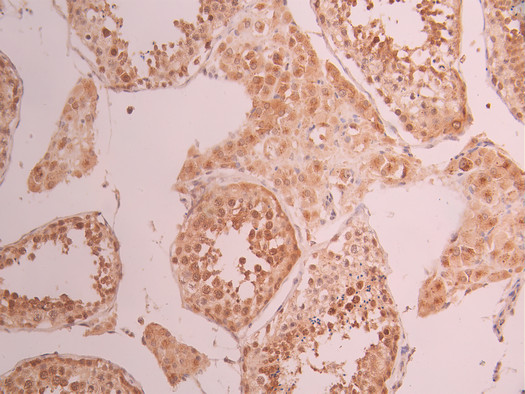
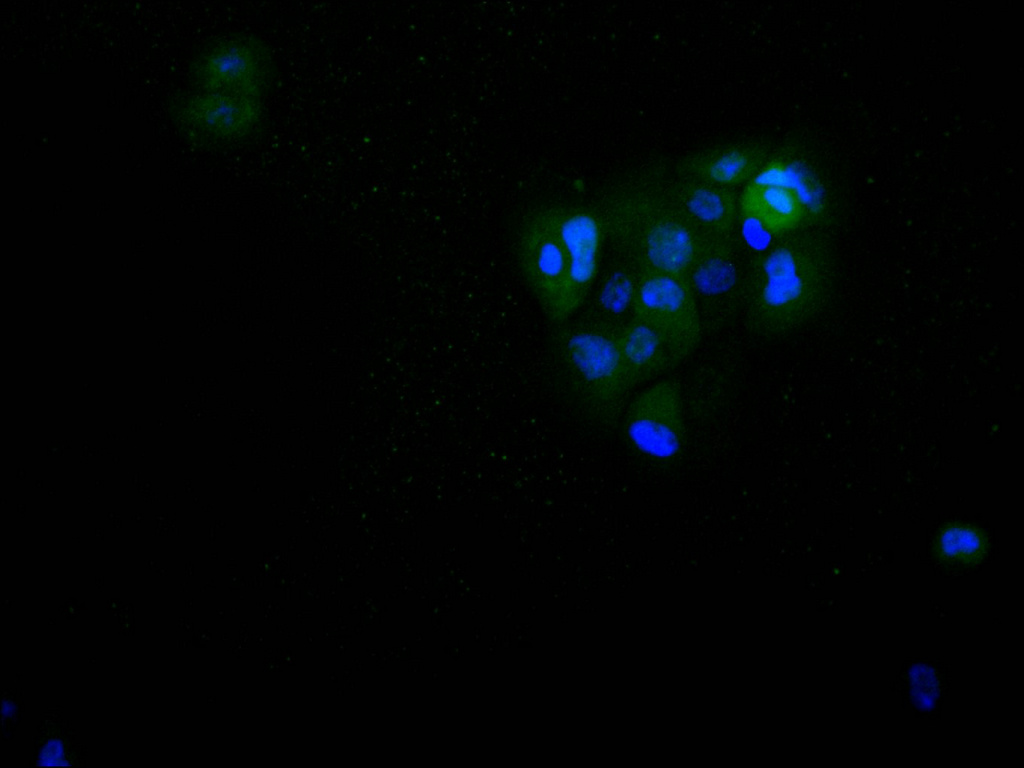
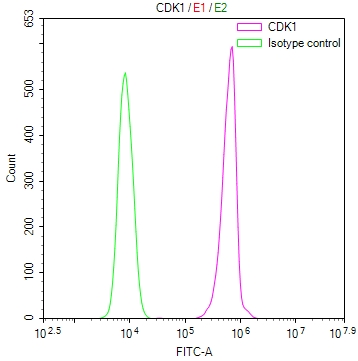
Validation data demonstrates robust performance across multiple applications. Western blot analysis detects a clean 34 kDa band matching the predicted molecular weight across diverse human cell lines including K562, Jurkat, Raji, HEK293, MCF-7, and NTERA-2, confirming reliable detection in both hematopoietic and adherent cell models. Immunohistochemistry staining has been validated in human gastric cancer and testis tissue sections, while immunofluorescence successfully localizes CDK1 in A431 cells. Flow cytometry analysis in HeLa cells shows clear positive population separation from isotype controls.
This antibody supports researchers investigating cell cycle regulation, mitotic checkpoint mechanisms, and cancer biology, providing a versatile tool for studies spanning basic cell division research to translational oncology applications.
There are currently no reviews for this product.





