

Call us
301-363-4651 (Available 9 a.m. to 5 p.m. CST from Monday to Friday)

| Code | CSB-RA940669A0HU |
| Size | US$210 |
| Order now | |
| Image |
|
| Have Questions? | Leave a Message or Start an on-line Chat |
| Application | Recommended Dilution |
|---|---|
| WB | 1:500-1:2000 |
| IHC | 1:50-1:200 |
| FC | 1:50-1:200 |
FLT1, also known as VEGFR-1, serves as a critical receptor tyrosine kinase in the vascular endothelial growth factor signaling pathway. This receptor plays essential roles in angiogenesis, vascular permeability, and endothelial cell function, making it a key target for researchers investigating cancer biology, cardiovascular disease, and metabolic disorders. Understanding FLT1 expression and localization provides valuable insights into tumor vascularization and therapeutic resistance mechanisms.
This recombinant monoclonal antibody, generated against a synthetic peptide derived from human FLT1, offers the consistency and reproducibility that demanding experimental workflows require. As a sequence-defined recombinant clone, it eliminates the lot-to-lot variability inherent in traditional hybridoma-derived antibodies, ensuring your results remain comparable across extended studies and collaborative projects.
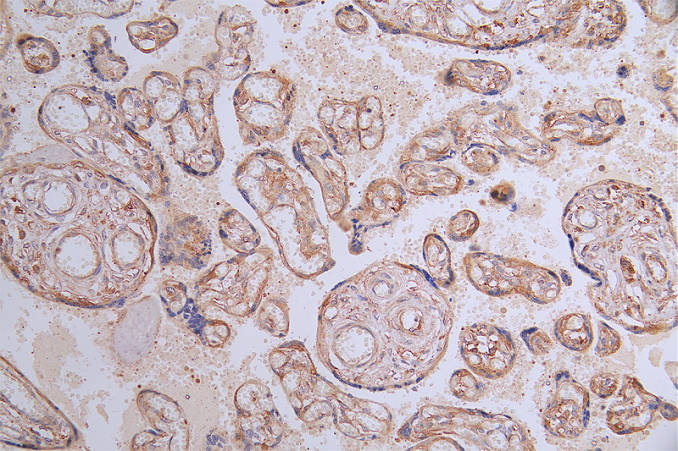
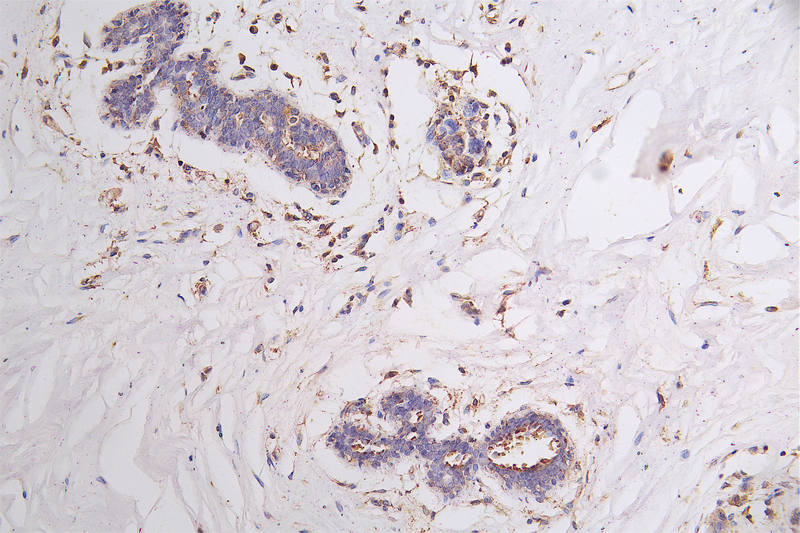
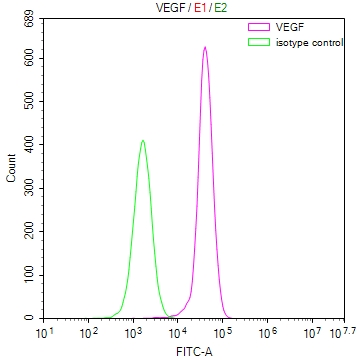
Validation across multiple platforms demonstrates this antibody's versatility in your research toolkit. Western blot analysis confirms specific detection at the expected 150 kDa molecular weight in both JK cell lysates and mouse brain tissue, supporting cross-species reactivity between human and mouse samples. Immunohistochemistry staining has been optimized in human placenta and breast cancer tissue sections, revealing clear target localization using standard citrate buffer antigen retrieval protocols. Flow cytometry validation in MCF-7 breast cancer cells further confirms intracellular detection capability, with distinct signal separation from isotype controls.
The antibody's compatibility with ELISA, western blotting, immunohistochemistry, and flow cytometry provides flexibility to examine FLT1 across different experimental contexts, from quantitative protein analysis to spatial expression studies in tissue architecture. Whether you're characterizing tumor microenvironment angiogenesis or investigating VEGF pathway signaling dynamics, this antibody delivers reliable performance for your vascular biology research.
There are currently no reviews for this product.





