
Call us
301-363-4651 (Available 9 a.m. to 5 p.m. CST from Monday to Friday)

| Code | CSB-RA162789A0HU |
| Size | US$210 |
| Order now | |
| Image |
|
| Have Questions? | Leave a Message or Start an on-line Chat |
| Application | Recommended Dilution |
|---|---|
| IHC | 1:50-1:200 |
| FC | 1:20-1:200 |
ICAM1, also known as CD54, serves as a critical cell surface glycoprotein that mediates leukocyte adhesion and transmigration during inflammatory responses. As a key player in immune cell trafficking and a receptor for major group rhinoviruses, ICAM1 has become an essential target for researchers investigating inflammatory diseases, tumor microenvironment dynamics, and cardiovascular pathology.
This recombinant monoclonal antibody, clone 3E9, offers the reproducibility and consistency that demanding research protocols require. Generated through recombinant technology with a sequence-defined rabbit IgG framework, this antibody eliminates the lot-to-lot variability that can compromise longitudinal studies and multi-site collaborations. The defined molecular identity ensures that your experimental conditions remain constant across projects, supporting reliable data generation.
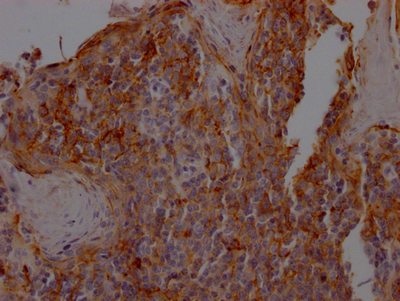
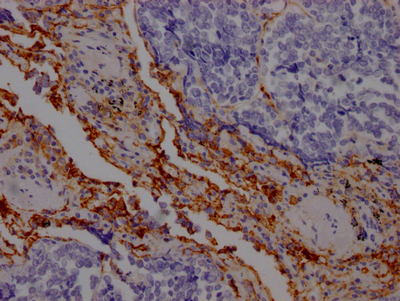
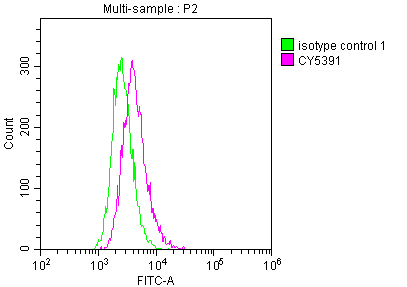
Validation studies demonstrate robust performance across multiple applications. Immunohistochemical analysis of paraffin-embedded human tissues, including tonsil and lung cancer specimens, shows clear target detection at 1:100 dilution using citrate buffer antigen retrieval. The staining pattern in tonsil tissue aligns with expected ICAM1 expression in lymphoid compartments, while lung cancer tissue analysis supports investigations into tumor-associated inflammation. Flow cytometry validation using Raji cells confirms reliable surface detection of ICAM1, with clear separation between specific staining and isotype control, demonstrating the antibody's utility for characterizing ICAM1 expression on B-lymphoblastoid populations.
The unconjugated format provides flexibility for researchers to pair this antibody with their preferred detection systems across ELISA, immunohistochemistry, and flow cytometry workflows. Whether you are exploring endothelial activation in cardiovascular disease models, characterizing immune cell populations, or investigating adhesion molecule dynamics in stem cell research, this antibody delivers the specificity and consistency your work demands.
There are currently no reviews for this product.





