

Call us
301-363-4651 (Available 9 a.m. to 5 p.m. CST from Monday to Friday)

| Code | CSB-RA010949MA1HU |
| Size | US$210 |
| Order now | |
| Image |
|
| Have Questions? | Leave a Message or Start an on-line Chat |
| Application | Recommended Dilution |
|---|---|
| WB | 1:500-1:2000 |
| IHC | 1:50-1:200 |
| FC | 1:50-1:200 |
Intercellular adhesion molecule 1 (ICAM1), also designated CD54, serves as a critical cell surface glycoprotein mediating leukocyte adhesion and transmigration across endothelial barriers. This molecule plays essential roles in immune cell trafficking, inflammatory responses, and vascular biology, while also functioning as the major receptor for human rhinoviruses. Its dynamic expression on activated endothelial cells, lymphocytes, and various other cell types makes ICAM1 a valuable marker for studying immune activation, cardiovascular pathology, and stem cell biology.
This recombinant monoclonal antibody (clone 15A9) offers researchers the reproducibility advantages inherent to sequence-defined antibody production. Generated against recombinant human ICAM1 protein and expressed as a human IgG1 isotype, this antibody delivers consistent performance across experimental replicates, eliminating the lot-to-lot variability that can complicate longitudinal studies.
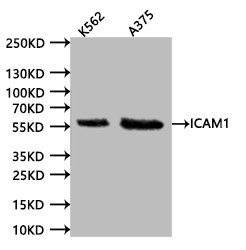
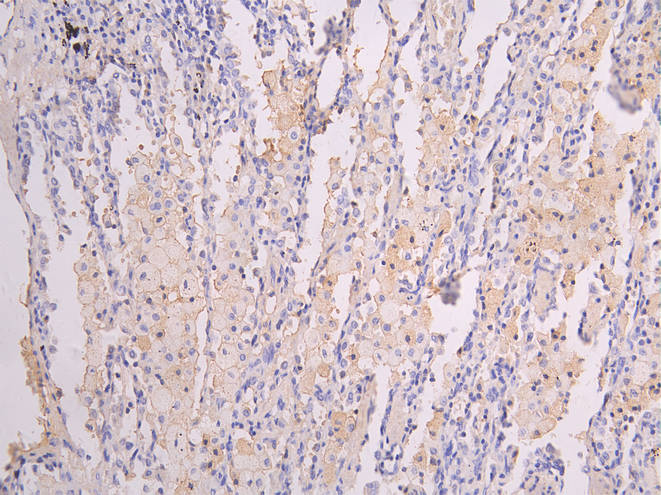
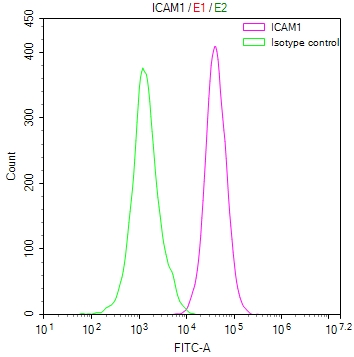
Validation across multiple platforms demonstrates this antibody's experimental versatility. Western blot analysis of K562 and A375 whole cell lysates reveals specific detection of ICAM1 at approximately 58 kDa, closely matching the predicted molecular weight of 57.83 kDa. Immunohistochemical staining of paraffin-embedded human lung tissue confirms utility for tissue-based studies, while flow cytometric analysis of HepG2 cells demonstrates clear positive population separation from isotype controls. Functional ELISA binding assays further confirm high-affinity target recognition with EC50 values in the sub-nanogram range.
Supplied in a glycerol-based PBS buffer with Proclin 300 preservative, this affinity-purified antibody supports investigations spanning cardiovascular disease mechanisms, immunological processes, and stem cell research where ICAM1-mediated adhesion events influence experimental outcomes.
There are currently no reviews for this product.





