
Call us
301-363-4651 (Available 9 a.m. to 5 p.m. CST from Monday to Friday)

| Code | CSB-RA565696A0HU |
| Size | US$210 |
| Order now | |
| Image |
|
| Have Questions? | Leave a Message or Start an on-line Chat |
| Application | Recommended Dilution |
|---|---|
| WB | 1:500-1:2000 |
| IF | 1:50-1:200 |
| FC | 1:50-1:200 |
PARK7, also known as DJ-1, plays a critical role in cellular defense against oxidative stress and has emerged as a key protein in Parkinson's disease research. Mutations in the PARK7 gene are associated with autosomal recessive early-onset Parkinson's disease, making this protein an essential target for investigators studying neurodegeneration, mitochondrial function, and cellular stress responses. Beyond its neurological significance, PARK7 has been implicated in oncogenesis and is expressed across diverse tissue types, broadening its relevance to cancer biology and metabolic research.
This recombinant monoclonal antibody, clone 3C8, offers the consistency and reproducibility that demanding research protocols require. Developed using recombinant technology with a defined sequence, this antibody eliminates the lot-to-lot variability inherent in traditional hybridoma-derived reagents, ensuring your experimental results remain comparable across studies and over time.
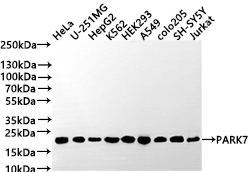
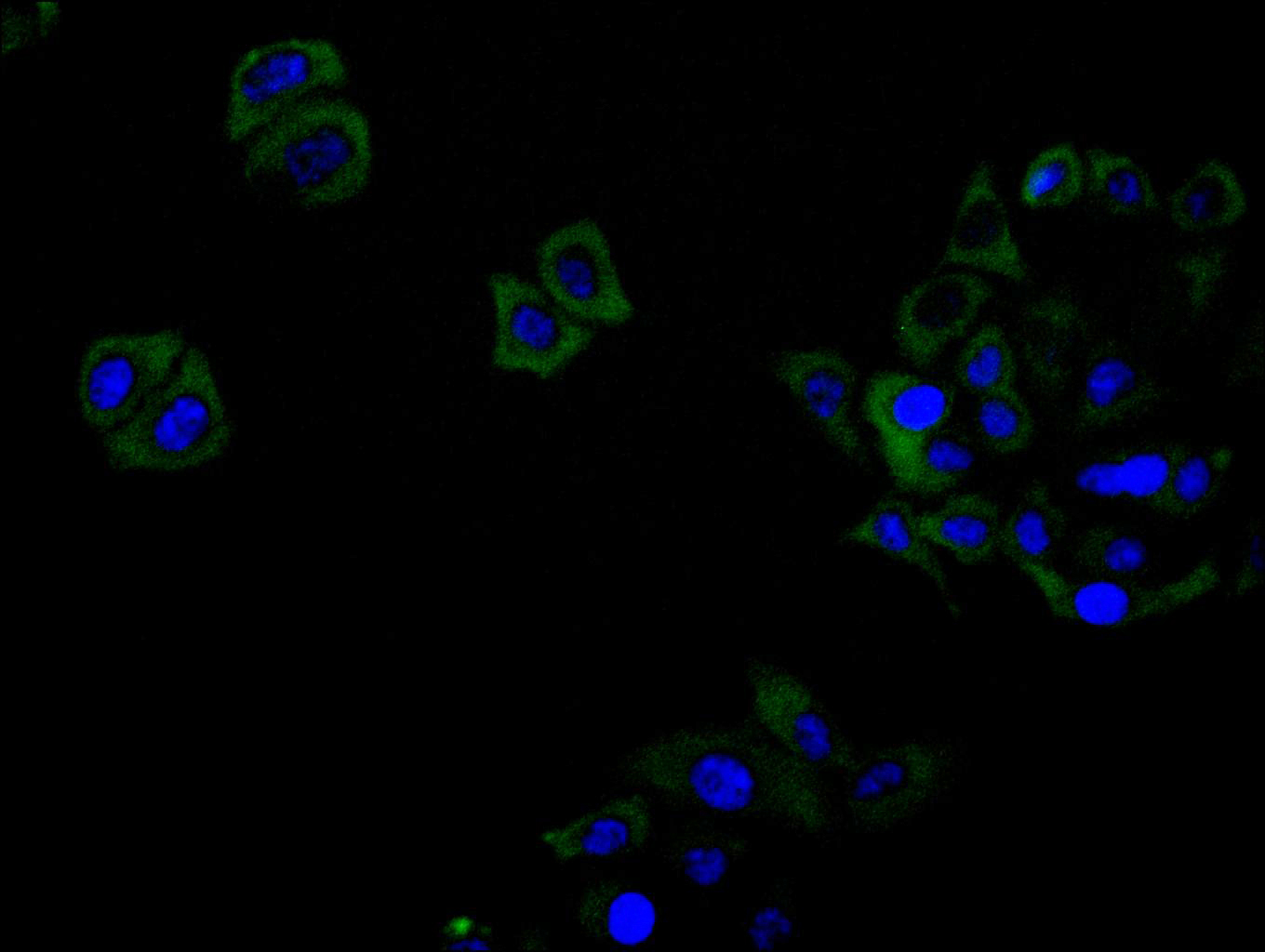
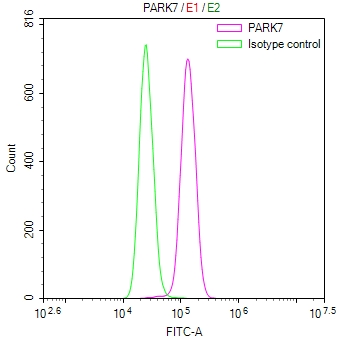
Validation data demonstrates robust performance across multiple applications. In western blot analysis, the antibody detects a clean band at the predicted 20 kDa molecular weight across an extensive panel of human cell lines, including HeLa, U-251MG, HepG2, K562, HEK293, A549, COLO205, SH-SY5Y, and Jurkat cells. This broad detection profile confirms reliable performance across epithelial, neuroblastoma, and hematopoietic cell models. Immunofluorescence staining in HeLa cells reveals clear subcellular localization patterns, while flow cytometry validation demonstrates strong signal separation from isotype controls, supporting quantitative analysis of PARK7 expression at the single-cell level.
Whether investigating Parkinson's disease mechanisms, exploring oxidative stress pathways, or characterizing PARK7 expression in cancer models, this antibody provides the experimental flexibility and technical reliability essential for advancing your research.
There are currently no reviews for this product.





