
Call us
301-363-4651 (Available 9 a.m. to 5 p.m. CST from Monday to Friday)

| Code | CSB-RA156066A0HU |
| Size | US$210 |
| Order now | |
| Image |
|
| Have Questions? | Leave a Message or Start an on-line Chat |
| Application | Recommended Dilution |
|---|---|
| WB | 1:500-1:5000 |
| IHC | 1:50-1:200 |
SERPINE1, commonly known as plasminogen activator inhibitor-1 (PAI-1), serves as a critical regulator of the fibrinolytic system by inhibiting tissue-type and urokinase-type plasminogen activators. Beyond its established role in thrombosis and cardiovascular disease, SERPINE1 has emerged as a significant player in cancer biology, where elevated expression correlates with tumor progression, metastasis, and poor prognosis. Its involvement in extracellular matrix remodeling and cellular senescence pathways makes it a compelling target across metabolic and cell biology research.
This recombinant monoclonal antibody, clone 10C3, offers the reproducibility and consistency that demanding experimental workflows require. Because recombinant antibodies are produced from defined genetic sequences rather than traditional hybridoma methods, you can expect reliable performance across experiments and between lots, eliminating a common source of variability in longitudinal studies.
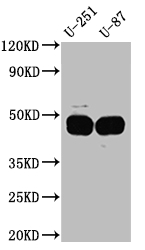
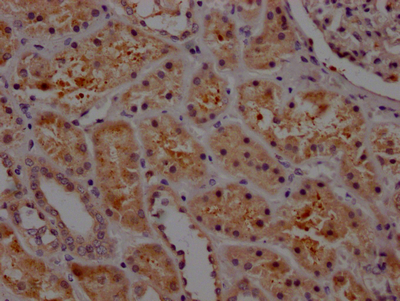
The antibody has been validated for Western blotting, immunohistochemistry, and ELISA applications, providing flexibility across your experimental platforms. Western blot analysis demonstrates specific detection in human glioblastoma cell lines U-251 and U-87, with an observed band at approximately 45 kDa that aligns well with the predicted molecular weights of 44-46 kDa for SERPINE1 isoforms. For immunohistochemistry, validation in paraffin-embedded human kidney tissue confirms utility for examining SERPINE1 expression in fixed tissue sections, with recommended dilutions ranging from 1:50 to 1:200.
Whether you're investigating PAI-1's contribution to cardiovascular pathology, exploring its role in tumor microenvironment dynamics, or studying metabolic regulation, this antibody provides a dependable tool for characterizing SERPINE1 in human samples.
There are currently no reviews for this product.





