
Call us
301-363-4651 (Available 9 a.m. to 5 p.m. CST from Monday to Friday)

| Code | CSB-RA556665A0HU |
| Size | US$210 |
| Order now | |
| Image |
|
| Have Questions? | Leave a Message or Start an on-line Chat |
| Application | Recommended Dilution |
|---|---|
| IHC | 1:50-1:200 |
Toll-like receptor 7 plays a central role in innate immune recognition, serving as a critical sensor for single-stranded RNA from viruses and other pathogens within endosomal compartments. This pattern recognition receptor initiates downstream signaling cascades that drive type I interferon production and inflammatory cytokine responses, making it a key focus for researchers investigating antiviral immunity, autoimmune disorders, and vaccine adjuvant mechanisms.
This recombinant monoclonal antibody, generated against a synthetic peptide derived from human TLR7, offers the consistency and reproducibility that demanding immunological studies require. As a sequence-defined recombinant clone, it eliminates the lot-to-lot variability inherent in traditional hybridoma-derived antibodies, ensuring that your experimental conditions remain stable across extended research programs. The rabbit IgG format provides excellent signal amplification while maintaining specificity for your target.
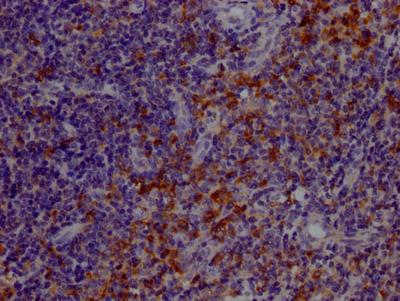
Validation in immunohistochemistry demonstrates reliable performance in paraffin-embedded human tonsil tissue, a lymphoid organ rich in immune cell populations where TLR7 expression is physiologically relevant. Using citrate buffer antigen retrieval and detection via HRP-conjugated secondary antibody with DAB visualization, the antibody performs effectively at dilutions between 1:50 and 1:200, giving you flexibility to optimize signal intensity for your specific tissue preparations. The antibody is also validated for ELISA applications, expanding its utility across different experimental platforms.
Whether you are investigating innate immune signaling pathways, characterizing TLR7 expression patterns in human tissues, or exploring the receptor's role in autoimmune pathology, this affinity-purified antibody provides a dependable tool for advancing your research in immunology, signal transduction, and nuclear signaling studies.
There are currently no reviews for this product.





