
Call us
301-363-4651 (Available 9 a.m. to 5 p.m. CST from Monday to Friday)

| Code | CSB-RA282889A0HU |
| Size | US$210 |
| Order now | |
| Image |
|
| Have Questions? | Leave a Message or Start an on-line Chat |
| Application | Recommended Dilution |
|---|---|
| IF | 1:50-1:200 |
Vascular cell adhesion molecule 1 (VCAM1), also designated CD106, plays a central role in mediating leukocyte adhesion to activated endothelium during inflammatory responses. This transmembrane glycoprotein is upregulated on endothelial cells in response to pro-inflammatory cytokines and serves as a critical mediator of immune cell recruitment across vascular barriers. Understanding VCAM1 expression and localization is essential for researchers investigating atherosclerosis, autoimmune disorders, tumor metastasis, and inflammatory diseases where endothelial activation drives pathological processes.
This recombinant monoclonal antibody, clone 2F4, offers the reproducibility and consistency that demanding research applications require. Generated through recombinant technology with a sequence-defined rabbit IgG framework, this antibody eliminates the lot-to-lot variability that can compromise longitudinal studies or multi-site collaborations. The defined molecular composition ensures that your experimental conditions remain constant across projects, supporting reliable data generation and straightforward troubleshooting.
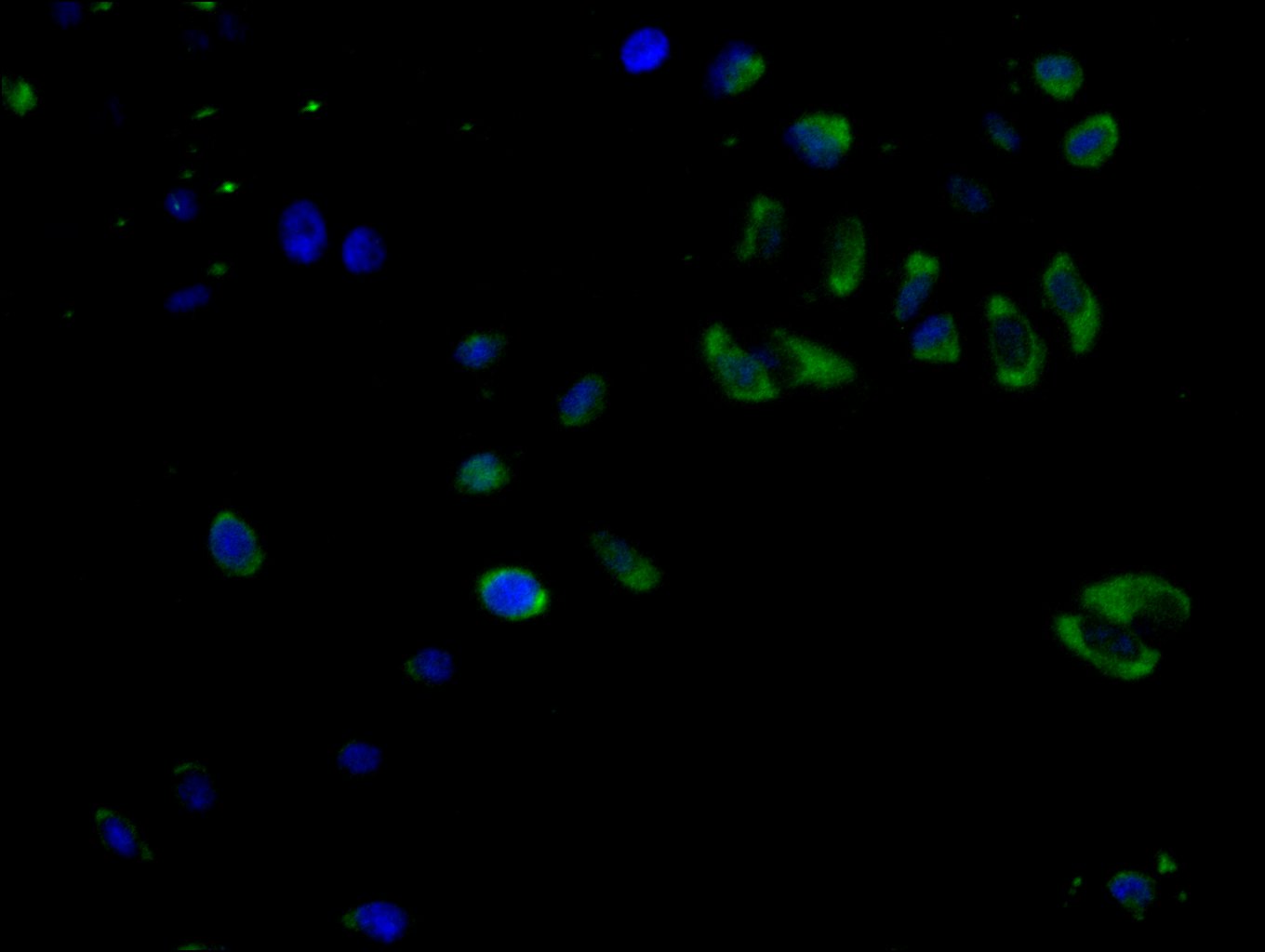
Validation studies confirm reliable performance in immunofluorescence applications, where the antibody successfully detected VCAM1 in HeLa cells at dilutions ranging from 1:50 to 1:200. This working range provides flexibility to optimize signal intensity based on your specific experimental setup and detection system. The antibody is also validated for ELISA, offering researchers versatility across different experimental workflows when studying human samples.
Supplied in a glycerol-containing buffer optimized for long-term stability at -20°C or -80°C, this affinity-purified antibody arrives ready for integration into your immunofluorescence or ELISA protocols. Whether you are characterizing endothelial activation states, investigating inflammatory signaling pathways, or exploring VCAM1 as a therapeutic target, this antibody provides the molecular specificity needed for meaningful experimental outcomes.
There are currently no reviews for this product.





