


Call us
301-363-4651 (Available 9 a.m. to 5 p.m. CST from Monday to Friday)

Thank you for your continued trust and support in CUSABIO. We are excited to kick off 2026 with strong momentum: in January alone, CUSABIO products were cited in 230 publications, bringing our total citation count to over 29,200!
This achievement stands as a testament to our close collaboration and the trust you place in us. As we charge ahead into the new year, we remain committed to delivering reliable, high-performance products—the true workhorses of your research—and to supporting your work with unwavering dedication.
Here's to a year of continued partnership, breakthrough science, and a stampede of progress together.
Now, let's take a look at some of the remarkable research made possible through our collaboration.

Impact Factor: 48.5
Journal Name: Nature
CUSABIO Citation Product:
Mouse brain natriuretic peptide,BNP ELISA Kit; CSB-E07971m
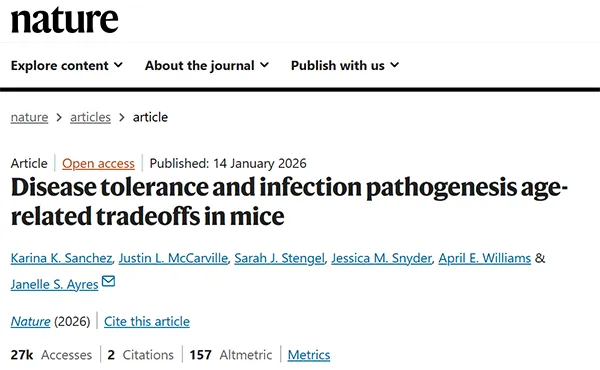
This study reveals age-dependent disease tolerance using a sepsis model. The Foxo1-Trim63 axis protects young hosts by preventing cardiac hypertrophy but drives pathogenic remodeling and mortality in aged mice. Identical pathogens trigger divergent disease trajectories across ages, demonstrating antagonistic pleiotropy—beneficial defense mechanisms in youth become harmful in later life. These findings challenge universal therapeutic approaches, suggesting infection treatments should be tailored to patient age.
Impact Factor: 44.5
Journal Name: Cancer Cell
CUSABIO Citation Product:
Recombinant Human Immunoglobulin lambda-like polypeptide 5 (IGLL5); CSB-YP494948HU
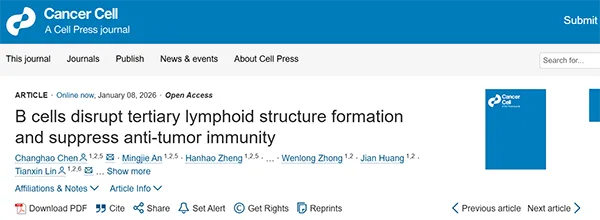
This study identifies an IGLL5-positive B cell subset enriched in immunotherapy-resistant bladder cancer. Mechanistically, IGLL5 binds lymphotoxin beta receptor (LTβR), inducing conformational changes that inhibit non-canonical NF-κB signaling in high endothelial venules (HEVs), leading to tertiary lymphoid structure (TLS) disassembly and suppressed anti-tumor immunity. Targeting IGLL5 restores TLS formation, enhances effector CD8-positive T cell activation, and improves immunotherapy efficacy, offering a promising strategy to overcome resistance to cancer immunotherapy.
Impact Factor: 26.6
Journal Name: Nature Biomedical Engineering
CUSABIO Citation Product:
Human Interleukin 1α,IL-1α ELISA Kit; CSB-E04620h
Human Interleukin 6,IL-6 ELISA KIT; CSB-E04638h
Human Interleukin 8,IL-8 ELISA KIT; CSB-E04641h
Human Tumor necrosis factor α,TNF-α ELISA KIT; CSB-E04740h-IS
Human monocyte chemotactic protein 1/monocyte chemotactic and activating factor,MCP-1/MCAF ELISA kit; CSB-E04655h
Human Matrix metalloproteinase 1,MMP-1 ELISA kit; CSB-E04672h
Human Matrix Metalloproteinase 14,MMP-14 ELISA Kit; CSB-E13157h
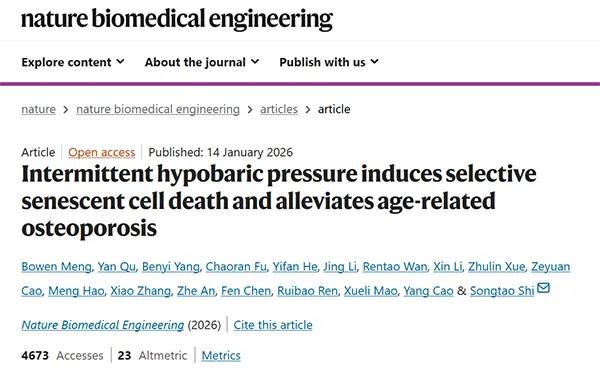
This study reveals that intermittent hypobaric pressure (HP) selectively eliminates senescent cells. Mechanistically, HP activates TMEM59 to induce calcium influx, triggering calpain 2-mediated cleavage of LAMP2 and lysosome-dependent cell death. Senescent cells with abundant lysosomes are particularly vulnerable. In aged mice, intermittent HP treatment extends lifespan, alleviates osteoporosis, and reduces aging phenotypes by clearing senescent cells, offering a novel non-pharmaceutical physical anti-aging strategy.
Impact Factor: 14.1
Journal Name: Advanced Science
CUSABIO Citation Product:
Human lymphotactin,Lptn/LTN ELISA Kit; CSB-E08712h
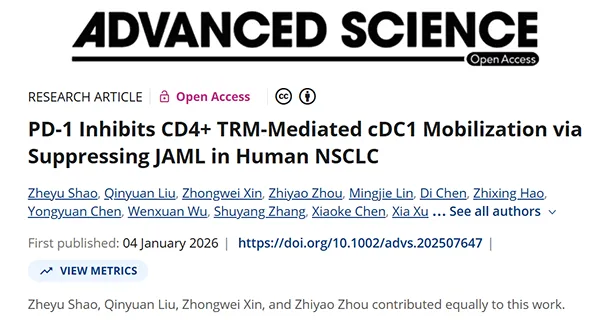
This study identifies CD4+CD69+CD103+ tissue-resident memory T cells (CD4+ TRMs) in human NSCLC that recruit conventional type 1 dendritic cells (cDC1s) via JAML-mediated XCL1 secretion to promote antitumor immunity. PD-1 signaling suppresses JAML through PI3K pathway inhibition, impairing cDC1 mobilization. Combining anti-PD-1 with JAML agonism synergistically enhances antitumor efficacy. The abundance of CD4+ TRMs and XCL1 expression correlate with favorable prognosis and immunotherapy response, offering novel therapeutic strategies for NSCLC.
Impact Factor: 13.6
Journal Name: Interdisciplinary Medicine
CUSABIO Citation Product:
Rat Osteocalcin/Bone gla protein,OT/BGP ELISA kit; CSB-E05129r
This study isolates plant-derived extracellular vesicle-like particles (DREVLPs) from Dipsaci Radix for the first time, demonstrating their bone-targeting capability and osteogenic potential via BMP2/Smads pathway activation. Oral administration of DREVLPs effectively improves bone microstructure and density in ovariectomized mice, showing superior osteoanabolic effects compared to single compounds. These findings establish DREVLPs as a novel class of safe, orally deliverable osteoanabolic agents for postmenopausal osteoporosis treatment.
Impact Factor: 13.1
Journal Name: Nucleic Acids Research
CUSABIO Citation Product:
Human Interferon β,IFN-β/IFNB ELISA Kit; CSB-E09889h
This study introduces the NiLoT strategy to suppress promoter-independent antisense transcription in IVT by introducing site-specific single-strand nicks in the non-template strand, which promotes R-loop formation and strand displacement. This approach significantly reduces immunogenic dsRNA byproducts without compromising RNA yield, enhancing translational efficiency and minimizing innate immune activation in human cells. NiLoT is broadly compatible with diverse template formats, modified nucleotides, and T7 RNAP variants, offering a simple and scalable solution for improving mRNA quality in therapeutic applications.
Impact Factor: 12.5
Journal Name: Science Advances
CUSABIO Citation Product:
Human Interleukin 2,IL-2 ELISA kit; CSB-E04626h
This study integrates epigenomic, functional, and genetic data in CD4+ T cell activation to map stimulation-responsive regulatory elements. Through multidimensional analysis prioritizing essential genes, we identified variant rs5837875 at the CD28 locus that modulates gene expression via ZNF384-mediated chromatin looping in a stimulation-dependent manner. This mechanism drives aberrant T cell hyperactivation and autoimmune disease susceptibility, establishing a comprehensive strategy for deciphering context-specific regulatory mechanisms underlying complex traits.
Impact Factor: 12.5
Journal Name: Science Advances
CUSABIO Citation Product:
Human Lipopolysaccharides,LPS ELISA Kit; CSB-E09945h

This study identifies elevated serum Galectin-3 in type 1 diabetes (T1D) patients and their first-degree relatives, primarily secreted by monocytes/macrophages due to increased intestinal permeability and endotoxemia. Mechanistically, Galectin-3 binds to LAG3 receptor to suppress MEK/ERK signaling, thereby limiting regulatory T cell differentiation and function. Both pharmacological inhibition (TD139) and genetic knockout of Galectin-3 significantly attenuated insulitis and diabetes onset in NOD mice. These findings suggest Galectin-3 as a potential biomarker for T1D and its inhibitor TD139 as a promising therapeutic candidate.
Impact Factor: 10.7
Journal Name: MedComm
CUSABIO Citation Product:
Recombinant Human Caspase-3 (CASP3), partial; CSB-EP004548HU
This study identified emestrin-type epidithiodiketopiperazines (ETPs) from fungi as potent inhibitors of Gasdermin D (GSDMD)-mediated pyroptosis through high-throughput screening. Mechanistically, ETPs directly activate caspase-3/7 to cleave GSDMD at D87, generating non-pathogenic p10 fragments instead of pore-forming p30, thereby blocking inflammatory cell death. In vivo, low-dose compound 2 (emestrin, 2 mg/kg) significantly improved survival in LPS-induced septic shock and acute lung injury models by suppressing monocyte-to-dendritic cell differentiation. This research provides novel natural product candidates for sepsis treatment with a unique mechanism distinct from direct GSDMD targeting.
Impact Factor: 10.6
Journal Name: Cell Reports Medicine
CUSABIO Citation Product:

This study reveals that 36% of pediatric acute myeloid leukemia (AML) patients harbor sequence-dependent splicing dysregulation associated with poor prognosis and chemoresistance, resembling splicing patterns seen in adult AML with spliceosomal mutations but through distinct mechanisms. The research identifies U2AF2 downregulation as the key driver of aberrant splicing, with weak polypyrimidine tracts increasing sensitivity to U2AF2 loss. Importantly, combined inhibition of PRMT5 and type I PRMTs partially restores splicing and improves treatment response, offering a novel strategy to overcome therapy resistance in pediatric AML.


