
Call us
301-363-4651 (Available 9 a.m. to 5 p.m. CST from Monday to Friday)

| Code | CSB-EP026244HUd7 |
| Abbreviation | Recombinant Human YAP1 protein |
| MSDS | |
| Size | $224 |
| Order now | |
| Image |
|
| Have Questions? | Leave a Message or Start an on-line Chat |
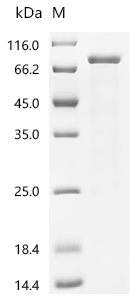
Recombinant Human Transcriptional coactivator YAP1 is produced using an E.coli expression system. The protein includes the complete sequence from amino acids 1 to 504. A 10xHis tag has been added to the C-terminus, which makes purification and detection more straightforward. SDS-PAGE analysis indicates a purity level exceeding 95%, suggesting this preparation should work well for research applications that demand high-quality protein.
YAP1 functions as a transcriptional coactivator and appears to be central in regulating gene expression tied to cell growth and proliferation. The protein represents a key piece of the Hippo signaling pathway, which likely controls organ size and maintains tissue balance. Given its apparent importance in these biological processes, YAP1 has become a major research target in cancer studies and regenerative medicine.
Potential Applications
Note: The applications listed below are based on what we know about this protein's biological functions, published research, and experience from experts in the field. However, we haven't fully tested all of these applications ourselves yet. We'd recommend running some preliminary tests first to make sure they work for your specific research goals.
Based on the provided information, the recombinant human YAP1 protein is expressed in E. coli, a prokaryotic system that may not support proper folding or post-translational modifications required for eukaryotic proteins like YAP1, which is involved in complex transcriptional regulation and likely requires specific conformations for activity. The purity >95% by SDS-PAGE indicates low contamination but does not confirm correct folding or bioactivity. Since the protein's activity is unknown, and E. coli often fails to produce functional eukaryotic proteins due to a lack of chaperones or modification machinery, the folding and bioactivity cannot be assumed. Thus, the protein may be misfolded or inactive without experimental validation.
1. Protein-Protein Interaction Studies Using His-Tag Pull-Down Assays
The C-terminal 10xHis tag facilitates purification and immobilization for pull-down assays. However, if the protein is misfolded, it may not interact with native binding partners (e.g., TEAD or 14-3-3 proteins) correctly, leading to unreliable results. The high purity minimizes background, but researchers should first validate folding (e.g., via circular dichroism or activity tests) before use. If folded correctly, this application is feasible; otherwise, results may be artifactual.
2. Antibody Development and Validation
The full-length YAP1 can serve as an immunogen for antibody production, but if misfolded, generated antibodies might not recognize the native protein in physiological contexts. The His-tag simplifies purification, but antibodies should be validated against correctly folded YAP1 (e.g., using cell-derived protein) to ensure specificity. If used for immunoassays like Western blotting under denaturing conditions, it may work, but conformational epitopes could be missed.
3. Biochemical Characterization and Stability Studies
This application is suitable for assessing folding and stability, as studies like thermal stability assays or chemical denaturation can directly evaluate protein conformation. The high purity allows reliable biophysical analysis. However, if the protein is misfolded, these studies would characterize an inactive form, so results should be interpreted as descriptive of the recombinant product rather than native YAP1. This can still provide insights into recombinant protein behavior.
4. In Vitro Transcriptional Complex Assembly Studies
This application critically depends on bioactivity. If YAP1 is misfolded or inactive, it cannot assemble functional transcriptional complexes with TEAD or DNA, leading to invalid mechanistic insights. The His-tag aids purification, but without activity confirmation, such studies are high-risk. Researchers should first test transcriptional activity in vitro (e.g., using reporter assays) before proceeding.
Final Recommendation & Action Plan
Given the uncertainty in folding and bioactivity, it is essential to prioritize validation before any application. Recommend performing functional assays (e.g., testing YAP1-TEAD interaction or transcriptional activation in vitro) and structural checks (e.g., circular dichroism or size-exclusion chromatography) to confirm native conformation. If validated, the protein can be used as described; otherwise, applications like transcriptional studies should be avoided, and alternative uses (e.g., as a denatured antigen for linear epitope antibody production) considered. Always include controls and consider mammalian expression systems for activity-dependent studies.
There are currently no reviews for this product.





