
Call us
301-363-4651 (Available 9 a.m. to 5 p.m. CST from Monday to Friday)

| Code | CSB-RA005983MA1HU |
| Size | US$210 |
| Order now | |
| Image |
|
| Have Questions? | Leave a Message or Start an on-line Chat |
| Application | Recommended Dilution |
|---|---|
| ELISA | 1:5000-1:50000 |
| WB | 1:1000-1:5000 |
CRLF2, also known as thymic stromal lymphopoietin receptor (TSLPR), plays a central role in immune regulation by partnering with IL-7 receptor alpha to form the functional TSLP receptor complex. This signaling pathway influences dendritic cell activation, T helper cell differentiation, and inflammatory responses, making CRLF2 a significant target in immunology research. Aberrant CRLF2 expression has also drawn attention in hematological malignancy studies, where its overexpression is associated with certain B-cell acute lymphoblastic leukemia subtypes.
This recombinant monoclonal antibody (clone 10A4) offers the consistency and reliability that demanding experimental workflows require. Because recombinant antibodies are produced from defined sequences rather than hybridoma-derived sources, researchers benefit from lot-to-lot reproducibility that supports longitudinal studies and ensures comparable results across experiments.
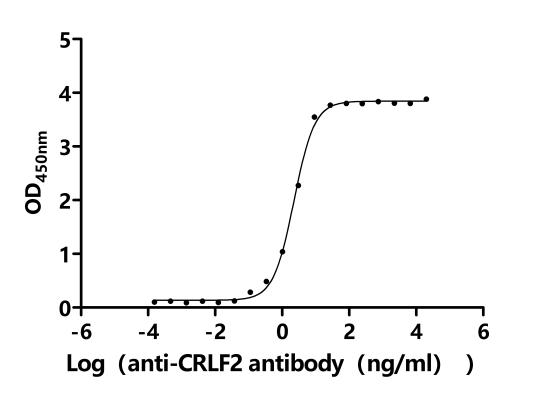
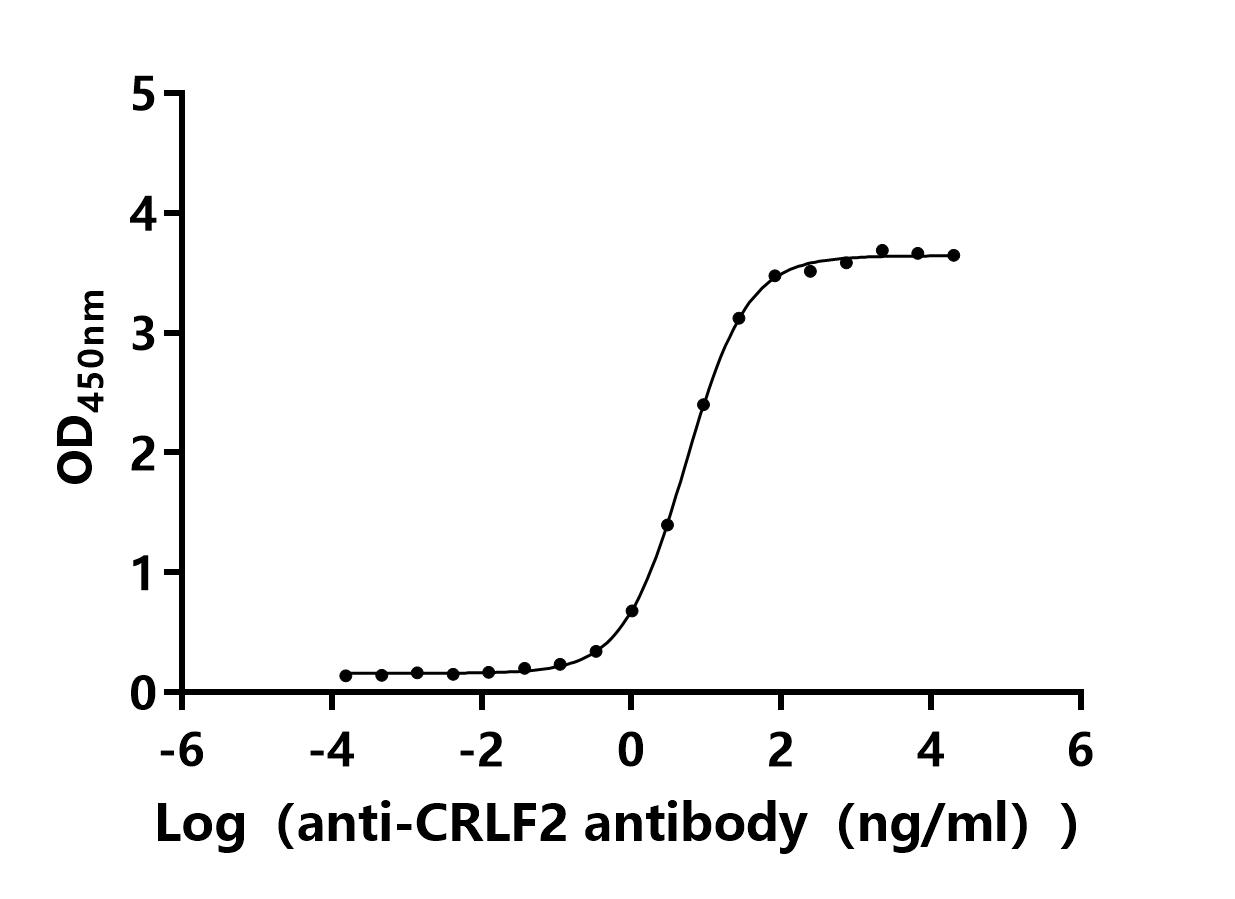
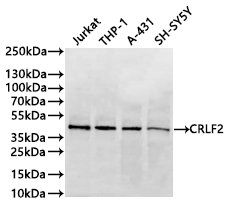
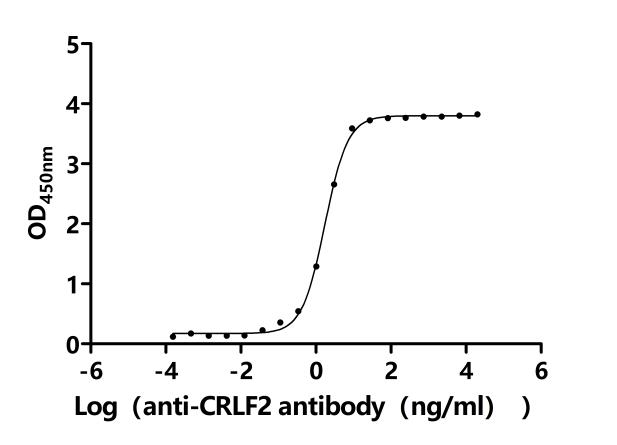
Validated for both ELISA and Western blot applications, this antibody demonstrates robust performance across multiple experimental contexts. Western blot analysis confirms detection of CRLF2 at the predicted 42 kDa molecular weight in diverse human cell lines, including Jurkat, THP-1, A-431, and SH-SY5Y lysates, providing flexibility for researchers working with lymphoid, monocytic, epithelial, or neuroblastoma models. Functional ELISA data further demonstrates strong binding activity with EC50 values in the low nanogram per milliliter range for both human and cynomolgus macaque CRLF2, supporting cross-species reactivity that proves valuable for translational research involving primate models.
The human IgG1 isotype format and affinity-purified preparation ensure minimal background interference, while the unconjugated format allows researchers to select detection systems suited to their specific protocols. This antibody serves as a reliable tool for investigating TSLP signaling, immune cell biology, and related disease mechanisms.
There are currently no reviews for this product.





