
Call us
301-363-4651 (Available 9 a.m. to 5 p.m. CST from Monday to Friday)

| Code | CSB-RA022814A694phHU |
| Size | US$210 |
| Order now | |
| Image |
|
| Have Questions? | Leave a Message or Start an on-line Chat |
| Application | Recommended Dilution |
|---|---|
| WB | 1:500-1:5000 |
| IHC | 1:50-1:200 |
STAT5A plays a central role in cytokine and growth factor signaling pathways, serving as a critical transcription factor that mediates cellular responses to hormones, interleukins, and other extracellular signals. Phosphorylation at tyrosine 694 represents the key activation event that enables STAT5A dimerization, nuclear translocation, and subsequent gene regulation. Detecting this specific phosphorylation state allows researchers to assess pathway activation status in contexts ranging from immune cell development to oncogenic signaling.
This recombinant monoclonal antibody, generated against a synthetic phosphopeptide corresponding to the human STAT5A Y694 region, offers the reproducibility advantages inherent to sequence-defined antibody production. Because the antibody sequence remains constant across production lots, researchers can expect consistent performance over time, eliminating the variability concerns that can complicate long-term studies or multi-site collaborations.
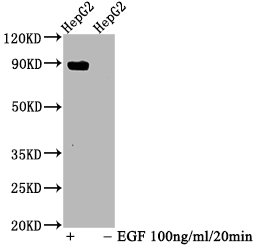
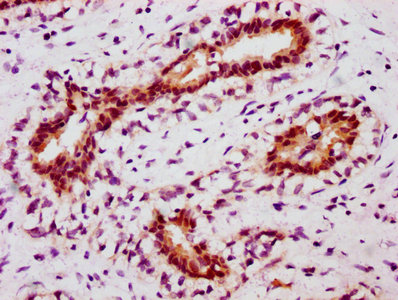
Validation studies demonstrate reliable performance across multiple experimental platforms. Western blot analysis of HepG2 whole cell lysates, comparing EGF-treated and untreated conditions, reveals specific detection at the expected 90 kDa molecular weight, confirming the antibody's utility for monitoring stimulus-dependent STAT5A activation. For tissue-based studies, immunohistochemistry validation in paraffin-embedded human breast cancer sections shows clear staining patterns, supporting applications in clinical specimen analysis where STAT5A signaling status may inform disease characterization.
The antibody's compatibility with both biochemical and morphological detection methods provides workflow flexibility for researchers investigating signal transduction mechanisms. Whether examining acute signaling responses in cell culture models or characterizing pathway activation patterns in archival tissue specimens, this phospho-specific antibody supports investigations into STAT5A-dependent processes across diverse experimental contexts.
There are currently no reviews for this product.





