
Call us
301-363-4651 (Available 9 a.m. to 5 p.m. CST from Monday to Friday)

In July 2026, RNAi pioneer Alnylam delivered a historic quarterly report: AMVUTTRA broke the $1 billion mark in single-quarter sales for the first time, driving an 89% year-on-year revenue surge across its TTR franchise. On the same day, BeiGene secured exclusive commercialization rights for the drug in Mainland China and Macau, formally entering the siRNA space. This series of events has once again thrust the transthyretin (TTR) target into the spotlight—from breakthrough therapies for rare cardiomyopathies (ATTR-CM) and polyneuropathy (ATTR-PN) to potential applications in metabolic diseases and oncology, TTR is emerging as a hot bridge connecting basic research with clinical translation. As diverse technological platforms—including RNAi, antisense oligonucleotides, and gene editing—compete on the same stage, drug development targeting TTR has entered a phase of explosive growth, driving surging demand for precise and efficient research tools.
Transthyretin (TTR) is also called vitamin A binding protein, which is widely distributed in a variety of cells, plasma, and tissue fluids [1]. TTR is synthesized as a carrier protein, mainly expressed in the liver and the choroid plexus of the brain, which secreted into the blood and cerebrospinal fluid, where TTR plays a role in transporting thyroxine (mainly T4) and retinol (i.e., Vitamin A) to cells and tissues throughout the body [2]. Thyroxine is pivotal to the maintenance of human growth and development [3]. Besides, Vitamin A deficiency is a major cause of night blindness [4]. Apparently, TTR performs many functions in biological systems (See our previous article "Knowledge about Transthyretin"). Normally, TTR is a stable plasma protein. However, under conditions of TTR abnormal accumulation, the cases are often involved in the infection, inflammation, malnutrition, amyloidosis, and tumors [5, 6]. At present, several TTR drugs have been approved for the treatment of TTR related amyloidosis [7, 8]. Surprisingly, multiple TTR-targeted drugs are being investigated in clinical trials for neurological, endocrine, and metabolic diseases, etc.
First, what is amyloidosis? Amyloidosis is a rare disease that occurs when an abnormal protein, called amyloid, builds up in organs and interferes with their normal function. The manifestations of the disease depend on the site of amyloid accumulation. Generally, the lesions occur mainly in the kidneys, heart, and nervous system. Then, what is TTR amyloidosis? Briefly, TTR amyloidosis is triggered by deposition of TTR amyloid fibrils in various tissues ,[9].
To further elaborate on that, TTR is a highly stable tetrameric structural protein, but TTR tetramers can be degraded into monomers under pathological or abnormal physiological conditions (e.g., stress, inflammatory response). The monomers of TTR can generate a variety of complex amyloid fibrils, leading to abnormal intracellular amyloid fibril accumulation (Figure 1). The abnormal intracellular amyloid deposition contributes to the disorder metabolism, which can lead to related diseases, such as the well-reported hereditary transthyretin amyloidosis ,[10].
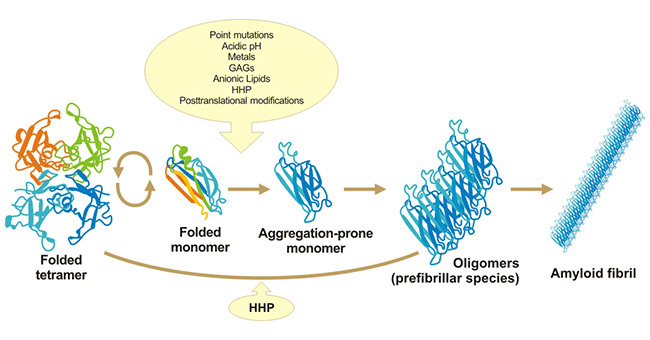
Figure 1. TTR amyloidosis cascade process
In humans, 90% of the plasma TTR is synthesized and secreted by the liver and choroid plexus. Fetal TTR may have a dual source, with a portion inherited from the mother and others synthesized by the fetus' own liver. In addition to the liver and choroid plexus, TTR is also produced in cells of the retinal pigment epithelium, pancreatic islet cells, visceral yolk membrane endoderm, pineal gland, and human embryonic trophectoderm [11, 12].
Albeit it is well-documented in terms of the synthesis of TTR, its catabolism has not been fully investigated. One study found that the metabolism of TTR is concentrated in the liver (36-38%), muscle (12-15%), and skin (8-10%) [13]. Further data suggest that the internalization of TTR in the liver and kidney is mediated via TTR’s receptor. Among them, renal uptake of TTR is mediated by Megalin (alias: LDL-related protein 2), a member of the low-density lipoprotein (LDL) receptor family, mainly expressed in the proximal epithelium of the renal tubules. In contrast, liver uptake of TTR is mediated by LDL family receptor members that are sensitive to receptor-associated proteins. Namely, the metabolism of TTR is likely achieved via affecting receptor-associated proteins or inhibiting hepatic uptake of TTR, which implied a similar pathway between TTR and protein metabolic processes. Given that Megalin is not expressed in the liver, further studies are needed to elucidate how TTR is metabolized in the liver [14] (Figure 2).
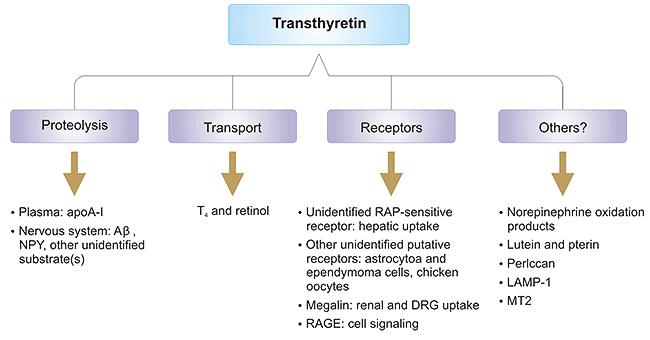
Figure 2. TTR metabolic pathway
Apparently, TTR as a basic substance for human life activities, TTR physiological functions are much more than transporting thyroxine and retinol. Site-specific TTRs have specific physiological effects, respectively. Among TTR-related diseases, the most studied are TTR-related amyloidosis, such as Transthyretin Cardiac Amyloidosis Myocardiopathy (ATTR-CM) [15], Transthyretin Amyloid Polyneuropathy (Transthyretin Amyloid Polyneuropathy (ATTR-PN) [16], and Alzheimer's Disease (AD) [17]. TTR has also been associated with various metabolic diseases such as type II diabetes and impaired glucose regulation [18]. TTR is also involved in promoting or suppressing malignant tumor processes, with significantly different expression levels in various tumors [19, 20]
As previously described, mutations in the TTR gene can cause heritable familial amyloidosis (e.g., ATTR-CM and ATTR-PN). ATTR-CM is a rare cardiomyopathy that is primarily due to TTR mutations. TTR mutations cause abnormal depolymerization of the TTR protein to form abnormal material (amyloid) deposited in the heart. ATTR-CM is closely related to restrictive cardiomyopathy and progressive heart failure [21]. ATTR-PN is an inherited, rare, and fatal neurodegenerative disease, which is also induced by TTR mutations. Its main clinical manifestations include burning pain, numbness, muscle weakness, and myasthenia [22]. Currently, the treatment of ATTR-CM and ATTR-PN is mainly to inhibit the mutant TTR or to stabilize the structure of TTR protein tetramers.
Another disease often studied is Alzheimer's disease (AD). AD is a degenerative disease of the central nervous system, which is characterized by the development of amyloid plaques. Some studies have found that AD symptoms were inhibited when TTR expression is elevated [17]. But other reports suggest that genetic mutations in TTR may act as a risk gene for Alzheimer's disease [23]. Therefore, TTR may exert positive or negative impacts on AD.
In general, TTR is regarded as a sensitive clinical indicator to evaluate the nutritional status of the body. Several studies have shown that TTR levels in diabetic patients are closely related to their complications and prognosis. Specifically, TTR binds to retinol transporter proteins to form macromolecular compounds, which could reduce the renal filtration rate of retinol-binding protein and maintain plasma retinol-binding protein concentration. But retinol-binding protein is a well-defined adipokine that is inextricably linked to the development of diabetes [18, 24, 25]. These findings implied that TTR may function as a potential biomarker for metabolic diseases.
Intriguingly, many studies indicated the abnormal expression of TTR in tumors, including pancreatic cancer [26], lung cancer [27], liver cancer [28], ovarian cancer [29], and colorectal cancer [30]. For example, in hepatocellular carcinoma cells, a deletion of TTR gene was observed, but inhibition in cell growth was identified after TTR transfection in vitro. Conversely, some experiments found that TTR expression levels were upregulated in pancreatic ductal carcinoma. Beyond this, TTR was also differentially expressed in other tumors such as lung cancer, ovarian cancer, and colorectal cancer, suggesting that TTR may play a dual role in tumors [28-30]. Collectively, TTR might serve as a potent tumor marker with good sensitivity and specificity in different tumors.
Currently, marketed and investigational drugs targeting TTR are mainly divided into two categories: TTR stabilizers (stabilizing the tetramer structure to reduce dissociation) and TTR inhibitors (inhibiting TTR protein synthesis via RNA interference or antisense oligonucleotides). Indications are primarily focused on transthyretin amyloid cardiomyopathy (ATTR-CM) and polyneuropathy (ATTR-PN). The clinical landscape has undergone significant changes in recent years. Key drug updates are as follows:
| Drug | Target/Mechanism | Drug Type | Indication | Developer | Highest Development Status (as of August 2026) |
|---|---|---|---|---|---|
| AMVUTTRA (vutrisiran) | TTR mRNA, RNAi | siRNA | ATTR-PN, ATTR-CM | Alnylam | Marketed (US 2022, Japan, EU, etc.); Q2 2026 single-quarter sales exceeded $1 billion |
| ONPATTRO (patisiran) | TTR mRNA, RNAi | siRNA | ATTR-PN | Alnylam | Marketed, but being rapidly replaced by AMVUTTRA; Q2 revenue fell to $18 million |
| Tafamidis (tafamidis meglumine) | TTR stabilizer | Small molecule | ATTR-CM, ATTR-PN | Pfizer | Marketed (US 2019); generic entry delayed to mid-2031, maintaining exclusivity |
| Inotersen Sodium | TTR mRNA, ASO | Antisense oligonucleotide | ATTR-PN | Ionis / Akcea | Marketed (EU, US), but small market share |
| Eplontersen (Wainua) | TTR mRNA, ASO | Antisense oligonucleotide | ATTR-PN, ATTR-CM | Ionis / AstraZeneca | Phase III did not meet primary endpoint (ATTR-CM), development setback |
| Acoramidis (AG-10) | TTR stabilizer | Small molecule | ATTR-CM | BridgeBio / Alexion | Phase III positive results in ATTR-CM; NDA submitted to FDA |
| NI-006 | Protein folding modulator (antibody) | Monoclonal antibody | ATTR-CM | Neurimmune / Alexion | Phase II ongoing (Phase I completed) |
| PRX-004 | TTR modulator | Biologic | ATTR-CM | Prothena / Novo Nordisk | Early Phase II |
| Nucresiran | TTR mRNA, next-generation siRNA | siRNA | ATTR-CM, ATTR-PN | Alnylam (Ikaria platform) | Phase I/II; supports once-every-six-month dosing; considered next-generation blockbuster |
TTR-targeted therapy has grown from a small rare-disease market to a large arena with annual sales potential exceeding $4 billion, with RNAi technology (especially siRNA) leading due to dosing convenience and efficacy advantages. Future competition will focus on ultra-long-acting dosing (once every six months), combination therapy strategies, and market access and penetration in emerging markets (e.g., China). For researchers and drug developers, TTR remains a highly translatable target, and its derivative applications in metabolism, oncology, and other fields deserve continued attention.
To fully serve pharmaceutical companies in TTR based drug research for amyloidosis, metabolism diseases, and tumors, CUSABIO offers TTR active protein products (Code: CSB-MP025270HUh6; Code: CSB-MP025270MO) to help you explore the mechanism of TTR or its potential clinical value.
● Recombinant Human Transthyretin (TTR) (Active)
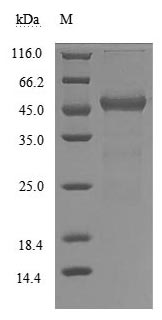
Purity was greater than 90% as determined by SDS-PAGE. (Tris-Glycine gel) Discontinuous SDS-PAGE (reduced) with 5% enrichment gel and 15% separation gel.
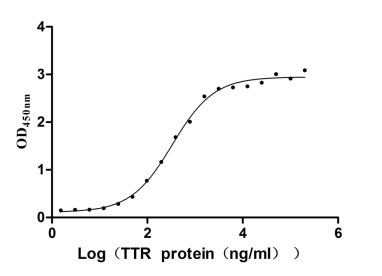
Immobilized RBP4 (CSB-MP019483HU) at 5 μg/ml can bind human TTR, the EC50 of human TTR protein is 284.7-391.7 ng/ml.
● Recombinant Mouse Transthyretin (TTR) (Active)
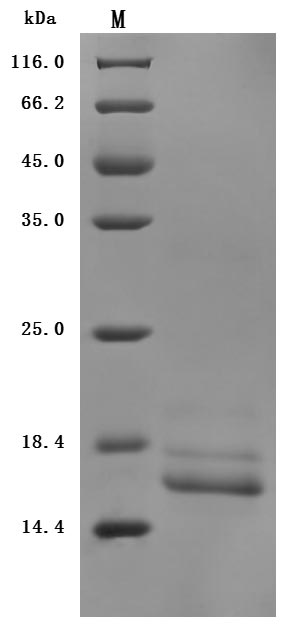
Purity was greater than 95% as determined by SDS-PAGE. (Tris-Glycine gel) Discontinuous SDS-PAGE (reduced) with 5% enrichment gel and 15% separation gel.
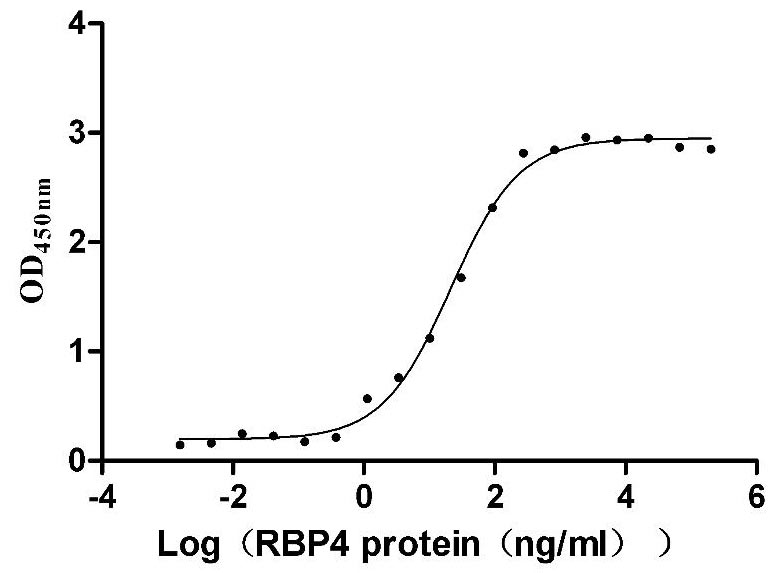
Immobilized Mouse Ttr at 5 μg/ml can bind Mouse Rbp4 (CSB-MP4018MO), the EC50 is 17.06-26.23 ng/mL.
References
[1] Rosales, Francisco J., et al. "Determination of a cut-off value for the molar ratio of retinol-binding protein to transthyretin (RBP: TTR) in Bangladeshi patients with low hepatic vitamin A stores." The Journal of nutrition 132.12 (2002): 3687-3692.
[2] Wojtczak, Andrzej, Piotr Neumann, and Vivian Cody. "Structure of a new polymorphic monoclinic form of human transthyretin at 3 Å resolution reveals a mixed complex between unliganded and T4-bound tetramers of TTR." Acta Crystallographica Section D: Biological Crystallography 57.7 (2001): 957-967.
[3] Zhao, Xiaoya, et al. "Screening and Analysis of Thyroid-Disrupting Chemicals Based on Selective Recognition for a Thyroxine-Binding Peptide." Int. J. Electrochem. Sci 16.211012 (2021): 2.
[4] Norsa, Lorenzo, et al. "Night blindness in cystic fibrosis: the key role of vitamin A in the digestive system." Nutrients 11.8 (2019): 1876.
[5] Bemporad, Francesco, et al. "The Transthyretin/Oleuropein Aglycone Complex: A New Tool against TTR Amyloidosis." Pharmaceuticals 15.3 (2022): 277.
[6] Driggin, Elissa, et al. "Markers of nutritional status and inflammation in transthyretin cardiac amyloidosis: association with outcomes and the clinical phenotype." Amyloid 27.2 (2020): 73-80.
[7] Cotrina, Ellen Y., et al. "Targeting transthyretin in Alzheimer's disease: drug discovery of small-molecule chaperones as disease-modifying drug candidates for Alzheimer's disease." European Journal of Medicinal Chemistry 226 (2021): 113847.
[8] Hayashi, Yuya, and Hirofumi Jono. "Recent advances in oligonucleotide-based therapy for transthyretin amyloidosis: clinical impact and future prospects." Biological and Pharmaceutical Bulletin 41.12 (2018): 1737-1744.
[9] Kapoor, Mahima, et al. "Clinical presentation, diagnosis and treatment of TTR amyloidosis." journal of neuromuscular diseases 6.2 (2019): 189-199.
[10] Azevedo, Estefania, et al. "Transthyretin-related amyloidoses: a structural and thermodynamic approach." Amyloidosis 1 (2013).
[11] Buxbaum, Joel N., and Natàlia Reixach. "Transthyretin: the servant of many masters." Cellular and molecular life sciences 66.19 (2009): 3095-3101.
[12] Monteiro, E., R. Perdigoto, and A. L. Furtado. "Liver transplantation for familial amyloid polyneuropathy. "Hepato-gastroenterology 45.23 (1998): 1375-1380.
[13] Sekijima, Yoshiki, Jeffery W. Kelly, and Shu-ichi Ikeda. "Pathogenesis of and therapeutic strategies to ameliorate the transthyretin amyloidoses." Current pharmaceutical design 14.30 (2008): 3219-3230.
[14] Liz, Márcia A., et al. "Aboard transthyretin: from transport to cleavage." IUBMB life 62.6 (2010): 429-435.
[15] Rozenbaum, Mark H., et al. "Impact of delayed diagnosis and misdiagnosis for patients with transthyretin amyloid cardiomyopathy (ATTR-CM): a targeted literature review." Cardiology and therapy 10.1 (2021): 141-159.
[16] Adams, David, et al. "Expert consensus recommendations to improve diagnosis of ATTR amyloidosis with polyneuropathy." journal of neurology 268.6 (2021): 2109-2122.
[17] Gião, Tiago, et al. "Undiscovered roles for transthyretin: from a transporter protein to a new therapeutic target for Alzheimer's disease." International journal of molecular sciences 21.6 (2020): 2075.
[18] Ko, Emily M., et al. "The complex triad of obesity, diabetes and race in Type I and II endometrial cancers: prevalence and prognostic significance." Gynecologic oncology 133.1 (2014): 28-32.
[19] Lee, Chih-Chun, et al. "Transthyretin stimulates tumor growth through regulation of tumor, immune, and endothelial cells." The Journal of Immunology 202.3 (2019): 991-1002.
[20] Megerian, Cliff A., et al. "Differential expression of transthyretin in papillary tumors of the endolymphatic sac and choroid plexus." the Laryngoscope 107.2 (1997): 216-221.
[21] Rozenbaum, Mark H., et al. "Impact of delayed diagnosis and misdiagnosis for patients with transthyretin amyloid cardiomyopathy (ATTR-CM): a targeted literature review." Cardiology and therapy 10.1 (2021): 141-159.
[22] Lamb, Yvette N., and Emma D. Deeks. "Tafamidis: a review in transthyretin amyloidosis with polyneuropathy. "Drugs 79.8 (2019): 863-874.
[23] Teerlink, Craig C., et al. "Analysis of high-risk pedigrees identifies 11 candidate variants for Alzheimer's disease." Alzheimer's & Dementia (2021).
[24] Westermark, Gunilla T., and Per Westermark. "Transthyretin and amyloid in the islets of Langerhans in type-2 diabetes." Experimental diabetes research 2008 (2008).
[25] Henze, Andrea, et al. "Transthyretin predicts cardiovascular outcome in hemodialysis patients with type 2 diabetes." Diabetes Care 35.11 (2012): 2365 -2372.
[26] Chen, Jiong, et al. "Identification and verification of transthyretin as a potential biomarker for pancreatic ductal adenocarcinoma." journal of cancer research and clinical oncology 139.7 (2013): 1117-1127.
[27] Ding, Hongmei, et al. "Transthyretin as a potential biomarker for the differential diagnosis between lung cancer and lung infection." biomedical reports 2.5 (2014): 765-769.
[28] Shimura, Tatsuo, et al. "Clinical significance of serum transthyretin level in patients with hepatocellular carcinoma. "ANZ Journal of Surgery 88.12 (2018): 1328-1332.
[29] Schweigert, Florian J., and Jalid Sehouli. "Transthyretin, a biomarker for nutritional status and ovarian cancer." Cancer research 65.3 (2005): 1114- 1114.
[30] Nicklasson, J. "Transthyretin as a biomarker for nutritional status during investigation for colorectal cancer." Clinical Nutrition 37 (2018): S191- S192.




Comments
Leave a Comment