


Call us
301-363-4651 (Available 9 a.m. to 5 p.m. CST from Monday to Friday)

Thank you for your continued support of CUSABIO! In February 2026, articles related to CUSABIO products were published in excess of 200. The total number of articles has now reached 29,800.
Thank you for choosing CUSABIO research products on your scientific research journey. Your trust and support are deeply appreciated. We will continue to work hard to provide you with even better products and services.
Now, let's take a moment to share these wonderful research results.
Impact Factor: 52.7
Journal Name: Signal Transduction and Targeted Therapy
CUSABIO Citation Product:
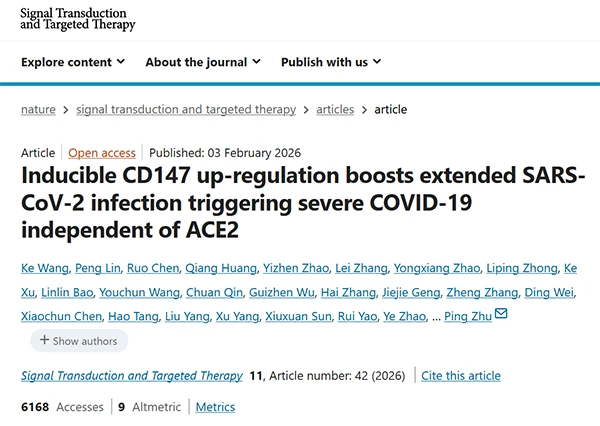
This study reveals that SARS-CoV-2 infection induces CD147 up-regulation via AHR activation, promoting extended viral infection and immune imbalance in severe COVID-19. CD147 mediates ACE2-independent viral entry, with its expression increasing while membrane-bound ACE2 decreases post-infection. The anti-CD147 antibody Meplazumab effectively blocks viral entry, reduces inflammation, and restores immune homeostasis. Cryo-EM structure of the CD147-spike complex identified five key residue pairs at the binding interface, providing structural basis and therapeutic insights for severe COVID-19 treatment.
Impact Factor: 15.7
Journal Name: Nature Communications
CUSABIO Citation Product:
dnaK Antibody; CSB-PA633459HA01EGW
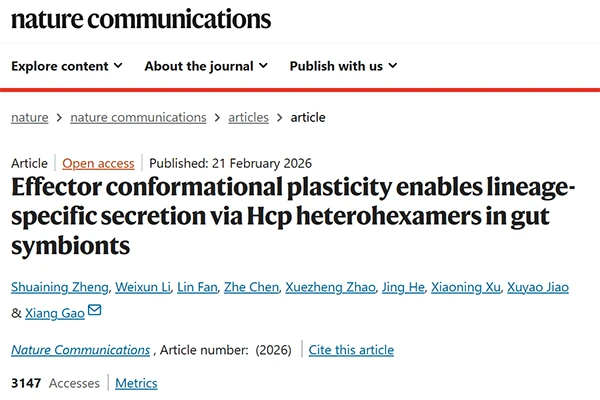
This study uncovers a novel effector delivery mechanism in the gut symbiont Bacteroides fragilis. Hcp2 and Hcp3 form an obligate heterohexamer essential for V1 effector Bte1 translocation. Cryo-EM structures reveal that Bte1 undergoes substantial conformational rearrangements to fit into the rigid Hcp pore. Phylogenetic analysis demonstrates lineage-specific co-evolution between Hcp2-Hcp3 complexes and distinct effectors, with hypervariable interfaces on Hcp3 recognizing conserved N-terminal modules via a "lock-and-key" mechanism. These findings redefine T6SS cargo selection rules by highlighting conformational adaptability and provide mechanistic insights for engineering programmable delivery systems.
Impact Factor: 15.7
Journal Name: Nature Communications
CUSABIO Citation Product:
Mouse Tumor necrosis factor α,TNF-α ELISA KIT; CSB-E04741m
Mouse Interleukin 6,IL-6 ELISA KIT; CSB-E04639m
Mouse interleukin 10,IL-10 ELISA KIT; CSB-E04594m
Mouse Interleukin 4,IL-4 ELISA KIT; CSB-E04634m
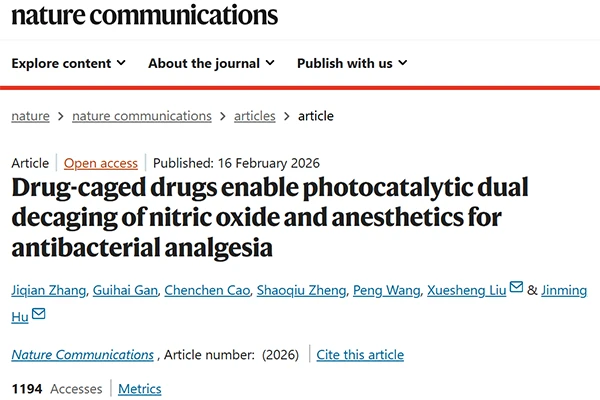
This study proposes a "drug-caged drug" strategy where the secondary amine of local anesthetic tetracaine (TTC) is selectively caged by nitric oxide (NO) to form TTC-NO prodrug, co-loaded with photocatalyst fac-Ir(ppy)3 into PEG-b-PCL micellar nanoparticles (TTC-NO@M). Under mild visible light (500 nm), the system enables photocatalytic dual uncaging of NO and TTC, achieving combined antibacterial, anti-inflammatory, and analgesic effects. In MRSA-infected cutaneous wound and septic arthritis mouse models, TTC-NO@M significantly promoted wound healing, alleviated joint damage, and provided prolonged analgesia for 12 hours—markedly superior to TTC alone (3 hours). The analgesic mechanism was validated through suppressed neuronal activity in dorsal root ganglion and primary somatosensory cortex, offering a promising approach to simultaneously address bacterial infections and associated pain.
Impact Factor: 15.7
Journal Name: Nature Communications
CUSABIO Citation Product:
Recombinant Human Protein Wnt-7b (WNT7B); CSB-EP026142HU
Recombinant Human Protein Wnt-10b (WNT10B); CSB-EP026130HU
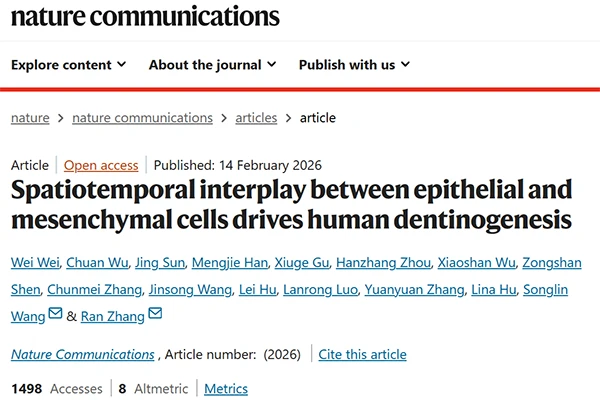
This study establishes a spatiotemporal atlas of human tooth development, revealing epithelial-mesenchymal interactions driving dentinogenesis. Researchers identified that dental epithelium orchestrates dental papilla differentiation through a WNT-NOTCH sequential activation model. DLX6-AS1+ cells were characterized as odontoblast progenitors and isolated from adult dental pulp stem cells. Under WNT-NOTCH sequential stimulation, these cells successfully regenerated tubular dentin in vivo, providing a promising therapeutic strategy for dentin defect repair.
Impact Factor: 14.6
Journal Name: Acta Pharmaceutica Sinica B
CUSABIO Citation Product:
Mouse Cytochrome P450 2E1(CYP2E1) ELISA kit; CSB-EL006425MO
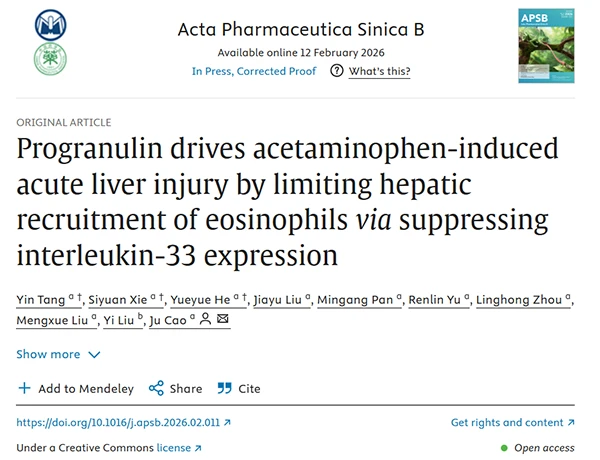
This study reveals that progranulin (PGRN) plays a pathogenic role in drug-induced liver injury (DILI). Serum PGRN levels were significantly elevated in acetaminophen (APAP) overdose patients and model mice, positively correlating with disease severity. PGRN knockout mice were protected against APAP-induced acute liver injury (ALI), with this protective effect dependent on increased hepatic recruitment of eosinophils mediated by interleukin-33 (IL-33) from liver sinusoidal endothelial cells (LSECs). Mechanistically, PGRN suppressed IL-33 expression in LSECs by inhibiting the AMPK-FOXO3 signaling pathway, thereby reducing eosinophil infiltration and exacerbating liver damage. Anti-PGRN antibody treatment effectively prevented and treated APAP or concanavalin A-induced ALI, whereas recombinant PGRN protein aggravated liver injury. This study identifies PGRN as a novel biomarker and therapeutic target for DILI.
Impact Factor: 14.1
Journal Name: Advanced Science
CUSABIO Citation Product:
Mouse anti-double stranded DNA antibody (IgG) ELISA Kit; CSB-E11194m
Mouse anti-nuclear Antibody (IgG) ELISA Kit; CSB-E12912m
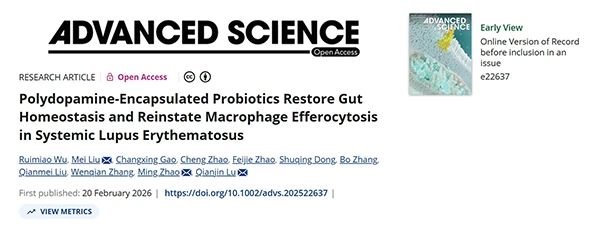
This study developed polydopamine-encapsulated Lactobacillus rhamnosus GG (LGG@PDA) with enhanced viability, intestinal colonization, and antioxidant capacity. In lupus mouse models, LGG@PDA restored gut and immune homeostasis by enriching L-methionine, which enhanced macrophage efferocytosis in a CX3CR1-dependent manner. This promoted apoptotic cell clearance, reduced autoantibody levels, and ameliorated renal pathology. The findings establish a bioengineered probiotic platform integrating microbiota modulation with immune regulation, offering a promising microbiota-based therapeutic strategy for systemic lupus erythematosus.
Impact Factor: 14.1
Journal Name: Advanced Science
CUSABIO Citation Product:
Human 5-hydroxyeicosatetraenoic acid(5-HETE)ELISA Kit; CSB-E17006h
Human 4-Hydroxynonenal (HNE)ELISA Kit; CSB-E16214h
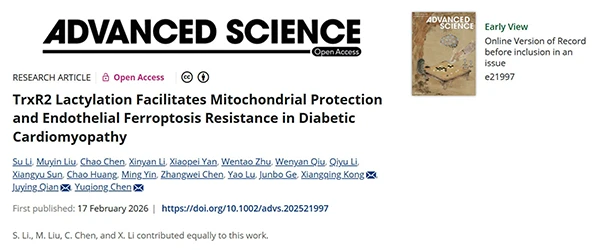
This study demonstrates that TrxR2 lactylation at K340 enhances mitochondrial thioredoxin reductase activity, activating FUNDC1-dependent mitophagy to degrade SCP2 (the ACSL4 receptor), thereby suppressing mitochondrial ferroptosis and improving cardiac microvascular function in diabetic cardiomyopathy. The TrxR2 agonist Kukoamine B was identified, offering a novel therapeutic strategy for diabetic cardiovascular complications.
Impact Factor: 14.1
Journal Name: Advanced Science
CUSABIO Citation Product:
HMGCR Antibody; CSB-PA010565LA01HU
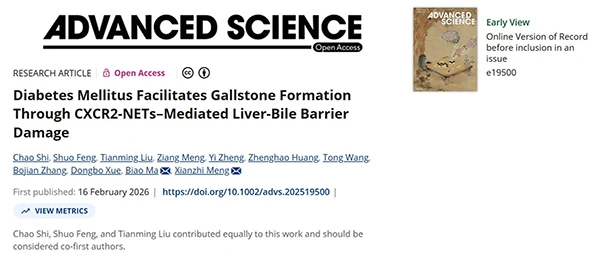
This study reveals a novel mechanism where diabetes promotes gallstone formation via CXCR2-NETs pathway. Hyperglycemia binds and upregulates CXCR2, activating neutrophils to form extracellular traps (NETs) that disrupt hepatic tight junctions, allowing NETs entry into bile to accelerate lithogenesis. Sarcosine was identified as a potential therapeutic agent that inhibits CXCR2 expression and NETs production, offering a new target for preventing diabetes-associated gallstone disease.
Impact Factor: 14.1
Journal Name: Advanced Science
CUSABIO Citation Product:
CBLIF Antibody; CSB-PA009417YA01HU
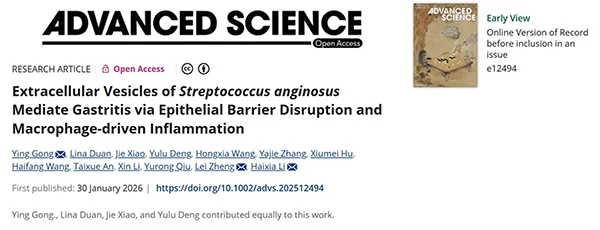
This study demonstrates that Streptococcus anginosus-derived extracellular vesicles (SA-EVs) target gastric tissue and enter epithelial cells, delivering virulence factors TMPC and FBP62 to activate MAPK signaling, disrupt tight junction proteins (Claudin-18, Occludin, ZO-1), and induce neutrophil infiltration with elevated pro-inflammatory cytokines (TNFα, IL-6, IL-17A), causing acute and chronic gastritis. Genetic deletion of Tmpc or Fbp62 significantly attenuates SA-EVs pathogenicity. These findings reveal novel mechanisms of non-H. pylori gastritis and provide new therapeutic targets.
Impact Factor: 14.1
Journal Name: Advanced Science
CUSABIO Citation Product:
Human irisin ELISA kit; CSB-EQ027943HU
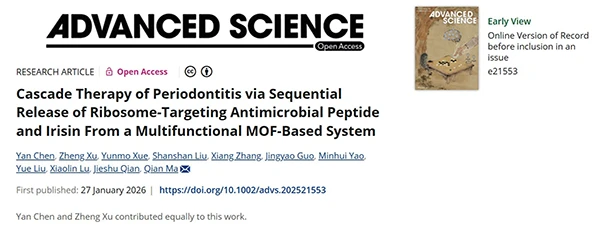
This study developed a MOF-based system co-delivering antimicrobial peptide GF and irisin for pH-responsive sequential release, achieving antibacterial, anti-inflammatory, antioxidant, and osteogenic effects. GF was first found to target the ribosomal A-site via a mechanism distinct from tetracycline, reducing resistance risk. It offers a novel cascade therapy for periodontitis.


