
Call us
301-363-4651 (Available 9 a.m. to 5 p.m. CST from Monday to Friday)

| Code | CSB-RA584416A0HU |
| Size | US$210 |
| Order now | |
| Image |
|
| Have Questions? | Leave a Message or Start an on-line Chat |
| Application | Recommended Dilution |
|---|---|
| WB | 1:500-1:2000 |
| IHC | 1:50-1:200 |
| IF | 1:50-1:200 |
| FC | 1:50-1:200 |
EIF2AK4, also known as GCN2, is a serine/threonine kinase that plays a central role in the integrated stress response by phosphorylating eukaryotic translation initiation factor 2 alpha. This kinase serves as a critical sensor of amino acid deprivation and other cellular stresses, making it an essential target for researchers investigating metabolic adaptation, autophagy regulation, and stress-induced translational control. Its involvement in tumor cell survival under nutrient-limiting conditions has also positioned GCN2 as a subject of growing interest in cancer biology.
This recombinant monoclonal antibody, generated in rabbit and derived from clone 7G4, offers the reproducibility and sequence-defined consistency that demanding experimental workflows require. Unlike traditional hybridoma-derived antibodies, recombinant production ensures lot-to-lot uniformity, allowing researchers to confidently compare results across extended studies without concerns about antibody variability.
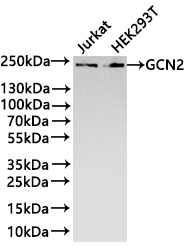
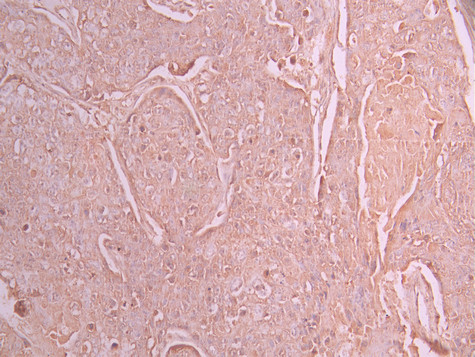
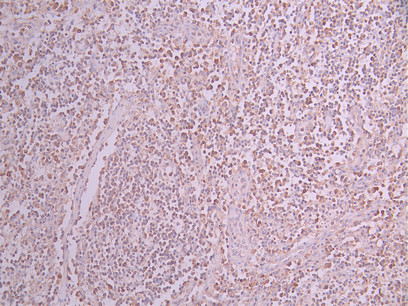
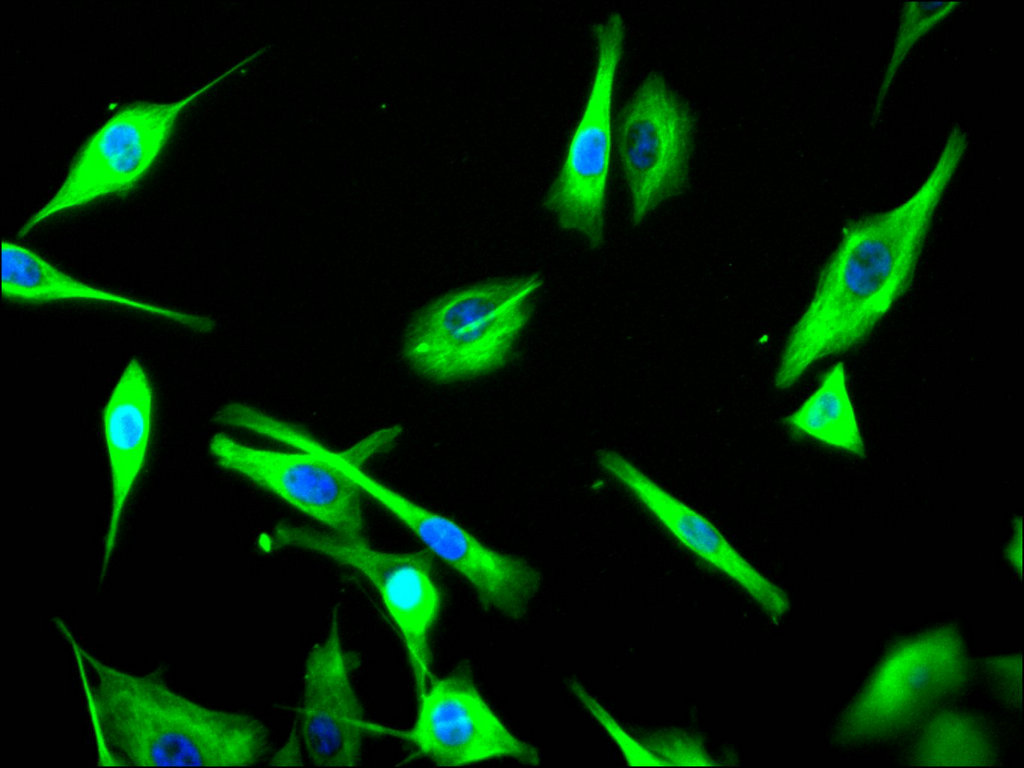
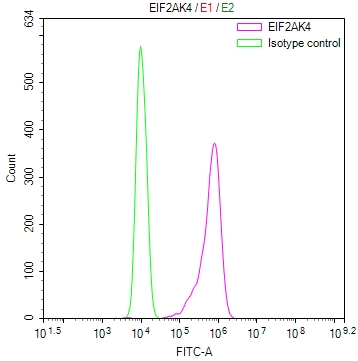
Validation data demonstrates robust performance across multiple applications. Western blot analysis detects GCN2 in Jurkat and HEK293T whole cell lysates, with an observed band at approximately 200 kDa—slightly higher than the predicted 187 kDa molecular weight, likely reflecting post-translational modifications such as glycosylation or phosphorylation common to this kinase. Immunohistochemistry has been validated in human melanoma cancer and lymph node tissue sections using citrate buffer antigen retrieval, while immunofluorescence staining successfully localizes the protein in PC-3 cells. Flow cytometry analysis confirms detection in A431 cells with clear separation from isotype controls.
This antibody supports researchers exploring stress response pathways, translational regulation, and cancer metabolism, providing a reliable tool for characterizing GCN2 expression and localization across diverse experimental systems.
There are currently no reviews for this product.





