
Call us
301-363-4651 (Available 9 a.m. to 5 p.m. CST from Monday to Friday)

| Code | CSB-RA013227MA1HU |
| Size | US$210 |
| Order now | |
| Image |
|
| Have Questions? | Leave a Message or Start an on-line Chat |
| Application | Recommended Dilution |
|---|---|
| ELISA | 1:5000-1:50000 |
Lymphotoxin-beta receptor (LTBR), also designated as TNFRSF3 or TNF receptor type III, serves as a critical signaling hub within the tumor necrosis factor receptor superfamily. This membrane receptor orchestrates essential cellular processes including lymphoid organ development, inflammatory responses, and cell survival pathways through its interactions with lymphotoxin-alpha/beta heterotrimers and LIGHT. Researchers investigating immune regulation, lymphoid tissue architecture, and TNF superfamily signaling rely on precise detection tools to characterize LTBR expression and function in their experimental systems.
This recombinant monoclonal antibody, clone 7G6, offers the reproducibility advantages inherent to recombinant technology. Because the antibody sequence is defined and produced through controlled expression systems, you can expect consistent performance across different lots, eliminating the variability concerns that can complicate long-term studies or multi-site collaborations. The human IgG1 isotype format and affinity chromatography purification ensure high purity suitable for sensitive detection applications.
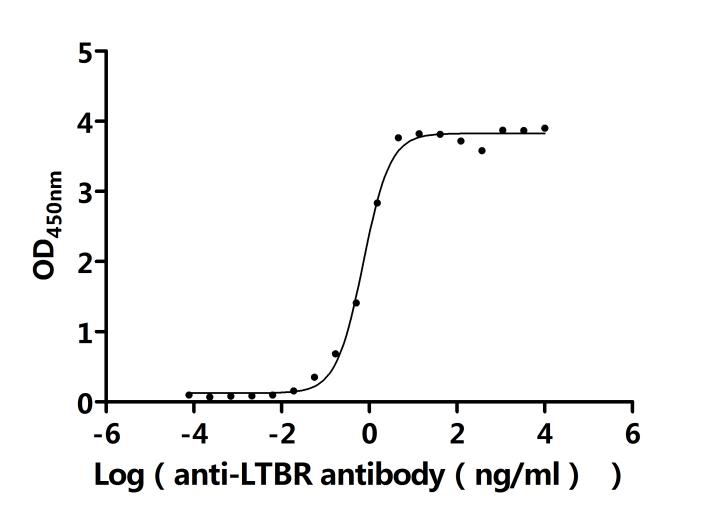
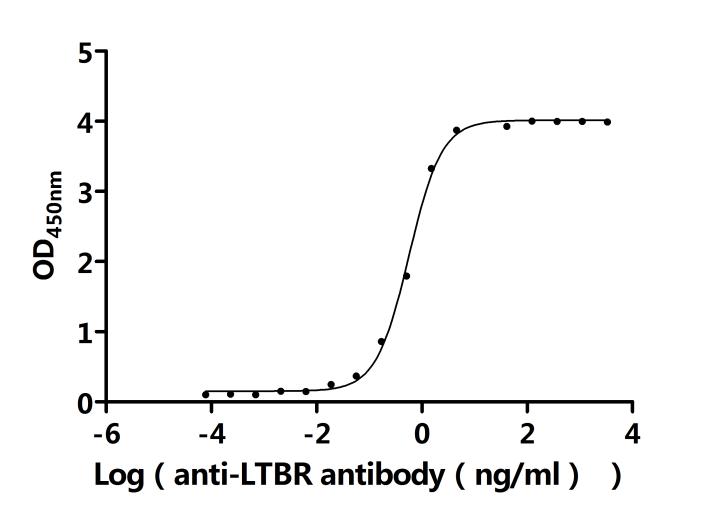
Validation studies demonstrate robust binding activity against human LTBR in functional ELISA formats. When tested against immobilized recombinant human LTBR protein, this antibody achieves EC50 values in the sub-nanogram range, with measurements between 0.53 and 0.82 ng/mL across independent protein preparations. This exceptional sensitivity supports detection at the recommended dilution range of 1:5000 to 1:50000, providing flexibility to optimize signal-to-background ratios for your specific experimental conditions.
The unconjugated format allows integration into diverse detection workflows using your preferred secondary antibody systems. This antibody supports investigations spanning epigenetics, nuclear signaling, cell biology, and signal transduction research, making it a valuable tool for laboratories studying TNF receptor family biology and downstream pathway activation in human samples.
There are currently no reviews for this product.





