
Call us
301-363-4651 (Available 9 a.m. to 5 p.m. CST from Monday to Friday)

| Code | CSB-RA157424A0HU |
| Size | US$210 |
| Order now | |
| Image |
|
| Have Questions? | Leave a Message or Start an on-line Chat |
| Application | Recommended Dilution |
|---|---|
| WB | 1:500-1:2000 |
| IHC | 1:50-1:200 |
| IF | 1:50-1:200 |
| FC | 1:50-1:200 |
RBX1, also known as RING-box protein 1 or ROC1, serves as an essential component of the Cullin-RING E3 ubiquitin ligase complexes that regulate protein degradation through the ubiquitin-proteasome pathway. This small but critical protein functions as the catalytic subunit that recruits E2 ubiquitin-conjugating enzymes, making it indispensable for cellular processes including cell cycle progression, DNA damage response, and signal transduction. Given its involvement in regulating the stability of numerous substrates, RBX1 has emerged as a significant focus in cancer biology and therapeutic development research.
This recombinant monoclonal antibody, clone 7D3, offers researchers the reproducibility advantages inherent to recombinant technology. Generated against a synthetic peptide derived from human RBX1 and produced in rabbit host, the sequence-defined nature of this antibody ensures consistent performance across experiments and eliminates the lot-to-lot variability that can complicate long-term studies.
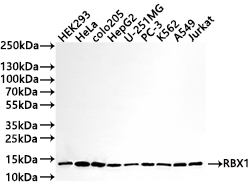
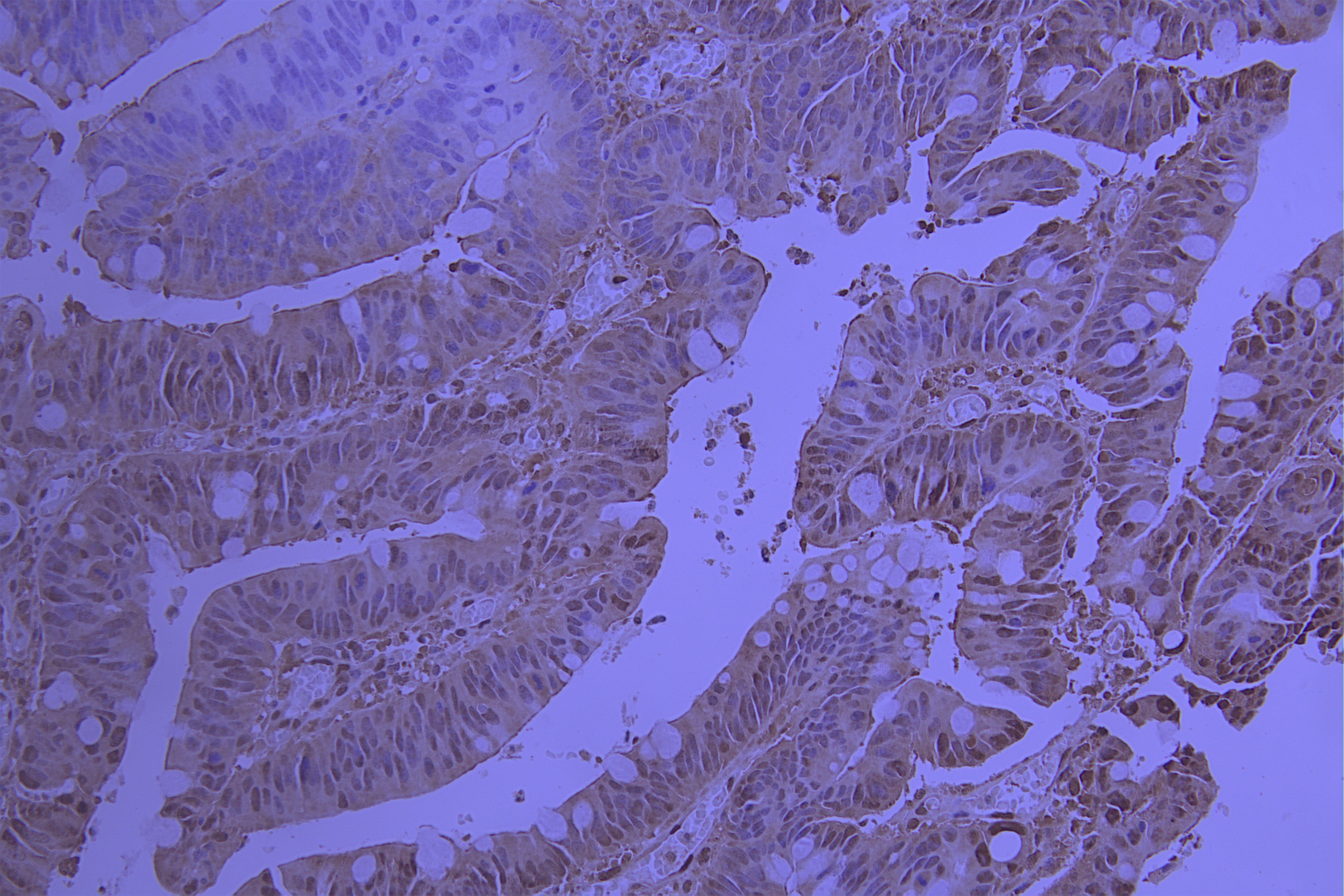
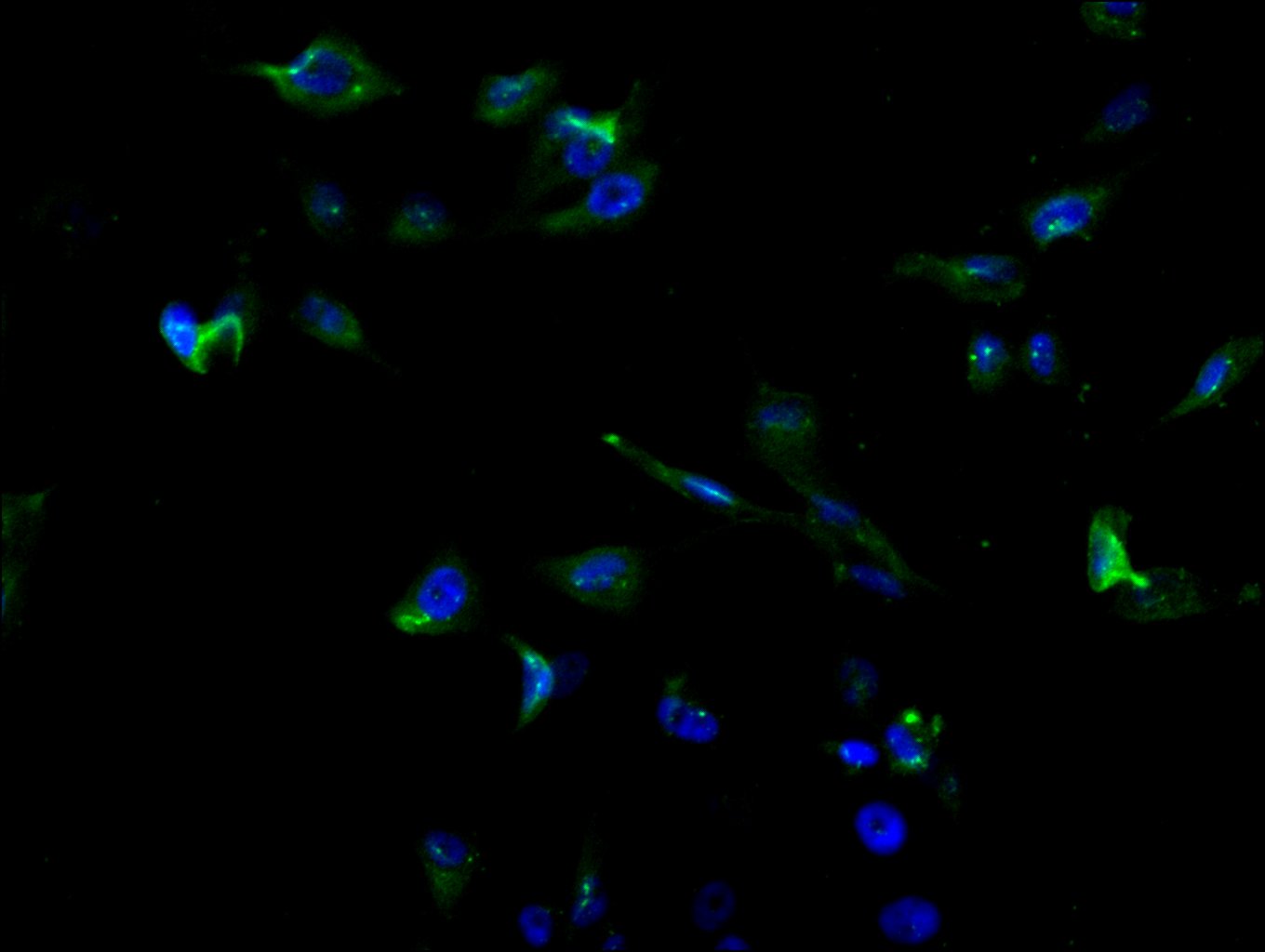
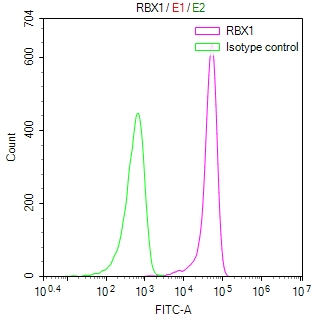
Validation across multiple experimental platforms demonstrates genuine workflow flexibility. Western blot analysis confirms specific detection of RBX1 at the expected 12 kDa molecular weight across a diverse panel of human cell lines including HEK293, HeLa, COLO205, HepG2, U-251MG, PC-3, K562, A549, and Jurkat cells, indicating robust performance across different cellular contexts. Immunohistochemistry validation in paraffin-embedded human colorectal cancer tissue demonstrates suitability for archival sample analysis. Immunofluorescence staining in PC-3 cells and flow cytometry analysis of Jurkat cells further extend the antibody's utility for subcellular localization studies and quantitative single-cell analysis.
This antibody supports investigations into ubiquitin-mediated proteolysis, Cullin-RING ligase biology, and the mechanistic underpinnings of diseases where protein homeostasis is disrupted.
There are currently no reviews for this product.





