
Call us
301-363-4651 (Available 9 a.m. to 5 p.m. CST from Monday to Friday)

| Code | CSB-RA247982A0HU |
| Size | US$210 |
| Order now | |
| Image |
|
| Have Questions? | Leave a Message or Start an on-line Chat |
| Application | Recommended Dilution |
|---|---|
| WB | 1:500-1:5000 |
| IHC | 1:50-1:200 |
BCL2L1, commonly known as Bcl-XL, serves as a critical regulator of the intrinsic apoptotic pathway, where it functions to inhibit programmed cell death by preventing mitochondrial outer membrane permeabilization. This anti-apoptotic protein has become a focal point in cancer research, as its overexpression contributes to tumor cell survival and resistance to chemotherapy, making it an essential target for investigators studying cell fate decisions and therapeutic vulnerabilities.
This recombinant monoclonal antibody, generated against a synthetic peptide derived from human Bcl-XL, offers the reproducibility and consistency that demanding experimental workflows require. Because the antibody sequence is defined and produced recombinantly in rabbit, you can expect uniform performance across lots, eliminating the variability that can complicate long-term studies or multi-site collaborations.
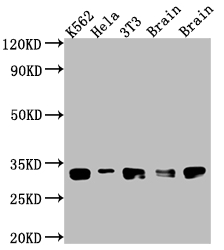
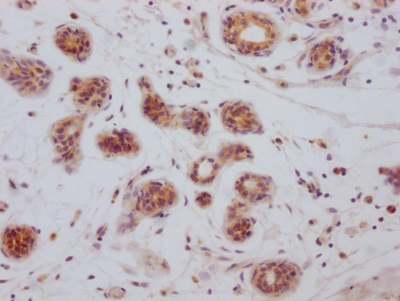
Validation testing demonstrates robust performance across multiple applications and species. In western blot analysis at 1:1000 dilution, this antibody detects Bcl-XL in human cell lines including K562 and HeLa, as well as in NIH/3T3 mouse fibroblasts and both rat and mouse brain tissue lysates. The observed band at approximately 30 kDa runs slightly higher than the predicted molecular weights of 19-27 kDa, which likely reflects post-translational modifications such as phosphorylation that are known to regulate Bcl-XL activity and stability. This cross-species reactivity with human, mouse, and rat samples provides flexibility for researchers working across different model systems. Immunohistochemistry validation in paraffin-embedded human breast cancer tissue at 1:100 dilution confirms suitability for examining Bcl-XL expression patterns in clinical specimens.
Whether you are investigating apoptotic signaling mechanisms, screening for therapeutic targets in oncology, or characterizing metabolic stress responses, this antibody provides a reliable tool for your research.
There are currently no reviews for this product.





