
Call us
301-363-4651 (Available 9 a.m. to 5 p.m. CST from Monday to Friday)

| Code | CSB-RA287160A0HU |
| Size | US$210 |
| Order now | |
| Image |
|
| Have Questions? | Leave a Message or Start an on-line Chat |
| Application | Recommended Dilution |
|---|---|
| WB | 1:500-1:5000 |
| IF | 1:20-1:200 |
PAK1 (p21-activated kinase 1) serves as a critical effector kinase downstream of Rho family GTPases, particularly Rac1 and Cdc42, positioning it at the intersection of cytoskeletal dynamics, cell motility, and survival signaling. Its dysregulation has been implicated in tumor progression and metastasis across multiple cancer types, making it a compelling target for researchers investigating oncogenic signaling networks and potential therapeutic vulnerabilities.
This recombinant monoclonal antibody, clone 4F10, offers the reproducibility and consistency that demanding experimental workflows require. Because the antibody sequence is defined and produced recombinantly in rabbit host cells, researchers can expect uniform performance across lots, eliminating the variability that can complicate long-term studies or multi-site collaborations. The affinity-purified IgG format ensures minimal background while maintaining strong target recognition.
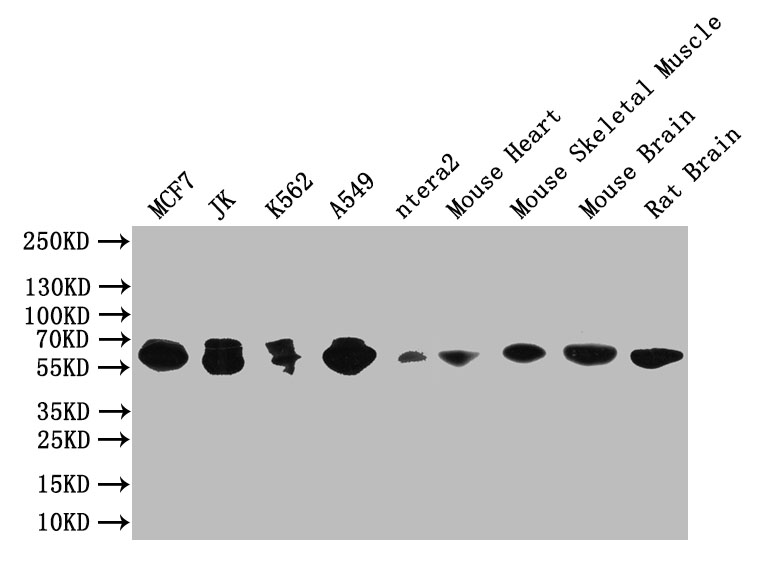
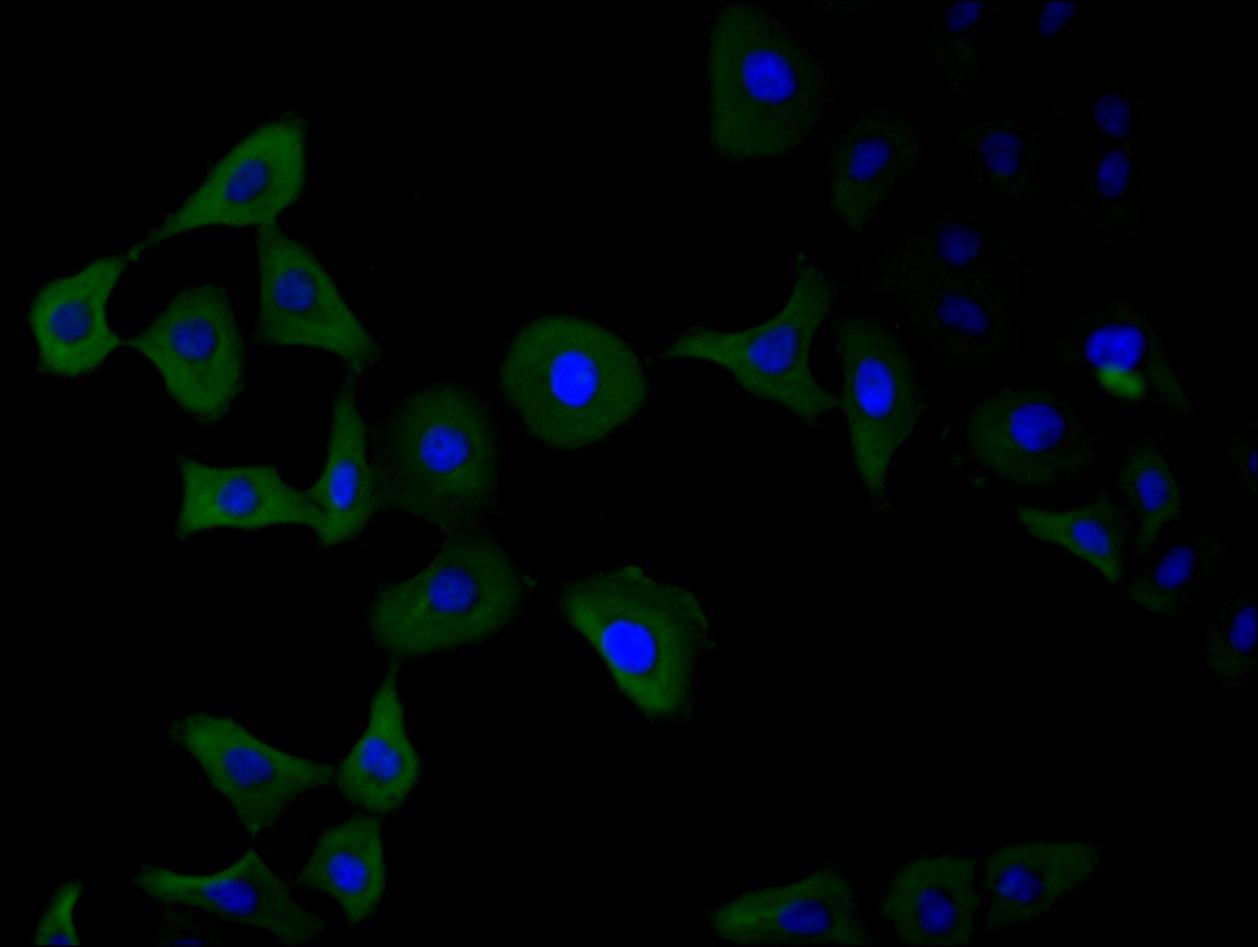
Validation studies demonstrate robust performance across multiple applications. In western blot experiments, the antibody detects PAK1 at the expected 61 kDa molecular weight across a diverse panel of human cell lines including MCF7, Jurkat (JK), K562, A549, and NTERA2, as well as mouse heart, skeletal muscle, and brain tissues. This cross-species reactivity between human and mouse samples provides flexibility for researchers working with both clinical specimens and animal models. Immunofluorescence studies in HeLa cells reveal clear cytoplasmic localization patterns consistent with PAK1's known subcellular distribution, enabling visualization of endogenous protein in fixed cell preparations.
Whether investigating PAK1's role in cancer cell migration, cytoskeletal remodeling, or upstream pathway activation, this antibody provides a reliable tool for signal transduction research and cell biology applications where consistent, sequence-defined reagents are essential.
There are currently no reviews for this product.





