
Call us
301-363-4651 (Available 9 a.m. to 5 p.m. CST from Monday to Friday)

| Code | CSB-RA006169A33phHU |
| Size | US$210 |
| Order now | |
| Image |
|
| Have Questions? | Leave a Message or Start an on-line Chat |
| Application | Recommended Dilution |
|---|---|
| IF | 1:20-1:200 |
Beta-catenin phosphorylation at serine 33 and serine 37 represents a critical regulatory checkpoint in the Wnt signaling pathway, marking the protein for ubiquitination and subsequent proteasomal degradation. Detecting this specific phosphorylation state allows researchers to monitor the dynamic balance between canonical Wnt pathway activation and beta-catenin turnover, providing essential insights into processes ranging from embryonic development to oncogenic transformation where this pathway is frequently dysregulated.
This recombinant monoclonal antibody, developed from clone 4C11, offers the reproducibility and consistency that phospho-specific detection demands. Because recombinant production ensures a sequence-defined antibody with minimal lot-to-lot variation, researchers can confidently compare phosphorylation dynamics across extended experimental timelines without concerns about reagent drift affecting their quantitative assessments.
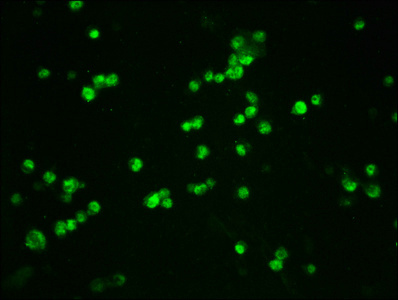
Validation through immunofluorescence microscopy demonstrates clear detection of phospho-beta-catenin in 293T cells following Calyculin A treatment, a phosphatase inhibitor that enriches phosphorylated protein pools. The staining protocol, performed at 1:100 dilution with standard fixation and permeabilization conditions, reveals the expected subcellular localization pattern when counterstained with DAPI. This validation confirms the antibody's utility for examining phospho-beta-catenin distribution in human cell culture models under conditions that modulate phosphorylation status.
The antibody arrives purified by affinity chromatography in a glycerol-containing buffer optimized for long-term storage stability. For researchers investigating Wnt pathway regulation, GSK-3beta activity, or the molecular mechanisms underlying beta-catenin-dependent transcription in development and disease contexts, this phospho-specific antibody provides a reliable tool for dissecting the post-translational modifications that govern beta-catenin fate.
There are currently no reviews for this product.





