
Call us
301-363-4651 (Available 9 a.m. to 5 p.m. CST from Monday to Friday)

| Code | CSB-RA177985A0HU |
| Size | US$210 |
| Order now | |
| Image |
|
| Have Questions? | Leave a Message or Start an on-line Chat |
| Application | Recommended Dilution |
|---|---|
| WB | 1:500-1:5000 |
| IHC | 1:50-1:200 |
CDC42 is a small GTPase belonging to the Rho family that serves as a master regulator of cell polarity, cytoskeletal dynamics, and cell cycle progression. This signaling hub orchestrates diverse cellular processes including filopodia formation, directed cell migration, and vesicular trafficking, making it a critical target for researchers investigating cancer biology, signal transduction pathways, and fundamental cell biology mechanisms.
This recombinant monoclonal antibody, clone 3C3, offers the reproducibility and consistency that demanding experimental workflows require. Because it is produced from a defined genetic sequence rather than traditional hybridoma methods, researchers can expect uniform performance across lots, eliminating the variability that can complicate longitudinal studies or multi-site collaborations. The rabbit IgG format provides excellent signal-to-noise characteristics across immunoassay platforms.
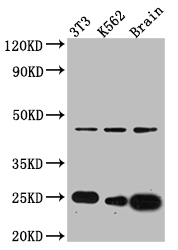
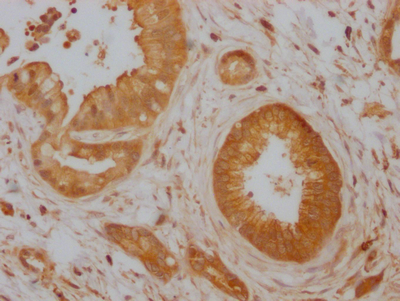
Validation studies demonstrate reliable performance in Western blot applications across both human and mouse samples, with successful detection confirmed in K562 and NIH/3T3 whole cell lysates as well as mouse brain tissue. The observed band at approximately 24 kDa runs slightly higher than the predicted 22 kDa molecular weight, a shift commonly attributed to post-translational modifications such as prenylation, which is essential for CDC42 membrane localization and function. For immunohistochemistry applications, this antibody has been validated in paraffin-embedded human pancreatic cancer tissue using standard citrate-based antigen retrieval, producing clear specific staining at dilutions between 1:50 and 1:200.
Whether you are mapping CDC42-dependent signaling networks in cancer models, investigating cytoskeletal reorganization during cell migration, or exploring its emerging roles in epigenetic regulation, this antibody provides a dependable tool with cross-species reactivity and validated flexibility across ELISA, Western blot, and immunohistochemistry platforms.
There are currently no reviews for this product.





