
Call us
301-363-4651 (Available 9 a.m. to 5 p.m. CST from Monday to Friday)

| Code | CSB-RA825742A0HU |
| Size | US$210 |
| Order now | |
| Image |
|
| Have Questions? | Leave a Message or Start an on-line Chat |
| Application | Recommended Dilution |
|---|---|
| WB | 1:500-1:5000 |
| IHC | 1:50-1:200 |
| IF | 1:20-1:200 |
TP53, commonly known as p53, stands as one of the most extensively studied proteins in cancer biology, functioning as a critical tumor suppressor that orchestrates cellular responses to DNA damage, oncogenic stress, and other threats to genomic integrity. Mutations in TP53 occur in approximately half of all human cancers, making antibodies that can detect mutant forms of this protein invaluable tools for understanding tumor biology and progression.
This recombinant monoclonal antibody, generated against a synthetic peptide derived from human mutant p53, offers the consistency and reproducibility that demanding research applications require. Because recombinant antibodies are produced from defined sequences rather than hybridoma-based methods, researchers benefit from lot-to-lot uniformity that supports longitudinal studies and ensures experimental reproducibility across collaborative projects.
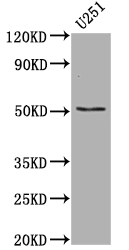
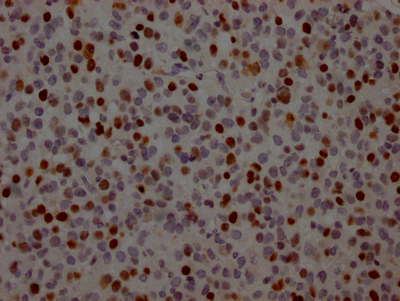
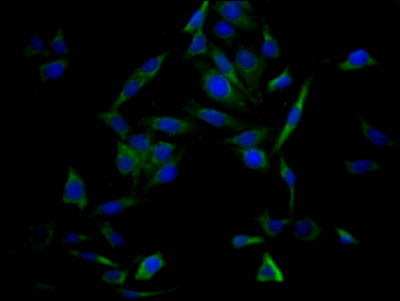
Validation testing demonstrates robust performance across multiple platforms. In western blot analysis of U-251 glioblastoma cell lysates, the antibody detects a band at 53 kDa—the observed size difference from predicted molecular weights reflects the well-documented post-translational modifications, including phosphorylation and acetylation, that regulate p53 stability and activity. Immunohistochemistry staining has been validated in paraffin-embedded human glioma tissue using citrate buffer antigen retrieval, while immunofluorescence studies in HepG2 hepatocellular carcinoma cells confirm nuclear localization patterns consistent with p53 biology.
This versatility across western blot, immunohistochemistry, and immunofluorescence applications provides researchers with workflow flexibility when investigating p53 status in human samples. Whether exploring epigenetic regulation, nuclear signaling pathways, or cancer cell biology, this antibody delivers the reliable detection needed to advance understanding of this essential tumor suppressor.
There are currently no reviews for this product.





