
Call us
301-363-4651 (Available 9 a.m. to 5 p.m. CST from Monday to Friday)

| Code | CSB-RA024077MA1HU |
| Size | US$210 |
| Order now | |
| Image |
|
| Have Questions? | Leave a Message or Start an on-line Chat |
| Application | Recommended Dilution |
|---|---|
| WB | 1:1000-1:5000 |
| IF | 1:20-1:200 |
| FC | 1:20-1:200 |
TP53, commonly known as p53, stands as one of the most extensively studied proteins in cancer biology, functioning as a critical tumor suppressor that orchestrates cellular responses to DNA damage, oncogenic stress, and metabolic dysfunction. Often called the "guardian of the genome," p53 regulates cell cycle arrest, apoptosis, and senescence pathways, with mutations in this gene occurring in approximately half of all human cancers. Understanding p53 expression, localization, and function remains central to cancer research, cell biology, and therapeutic development.
This recombinant monoclonal antibody, clone 16D9, offers researchers the reproducibility advantages inherent to recombinant technology. Because the antibody sequence is defined and production occurs in controlled expression systems, you can expect consistent performance across experiments and over time, eliminating the lot-to-lot variability that can complicate long-term studies or multi-site collaborations.
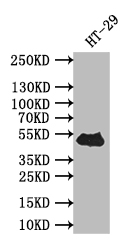
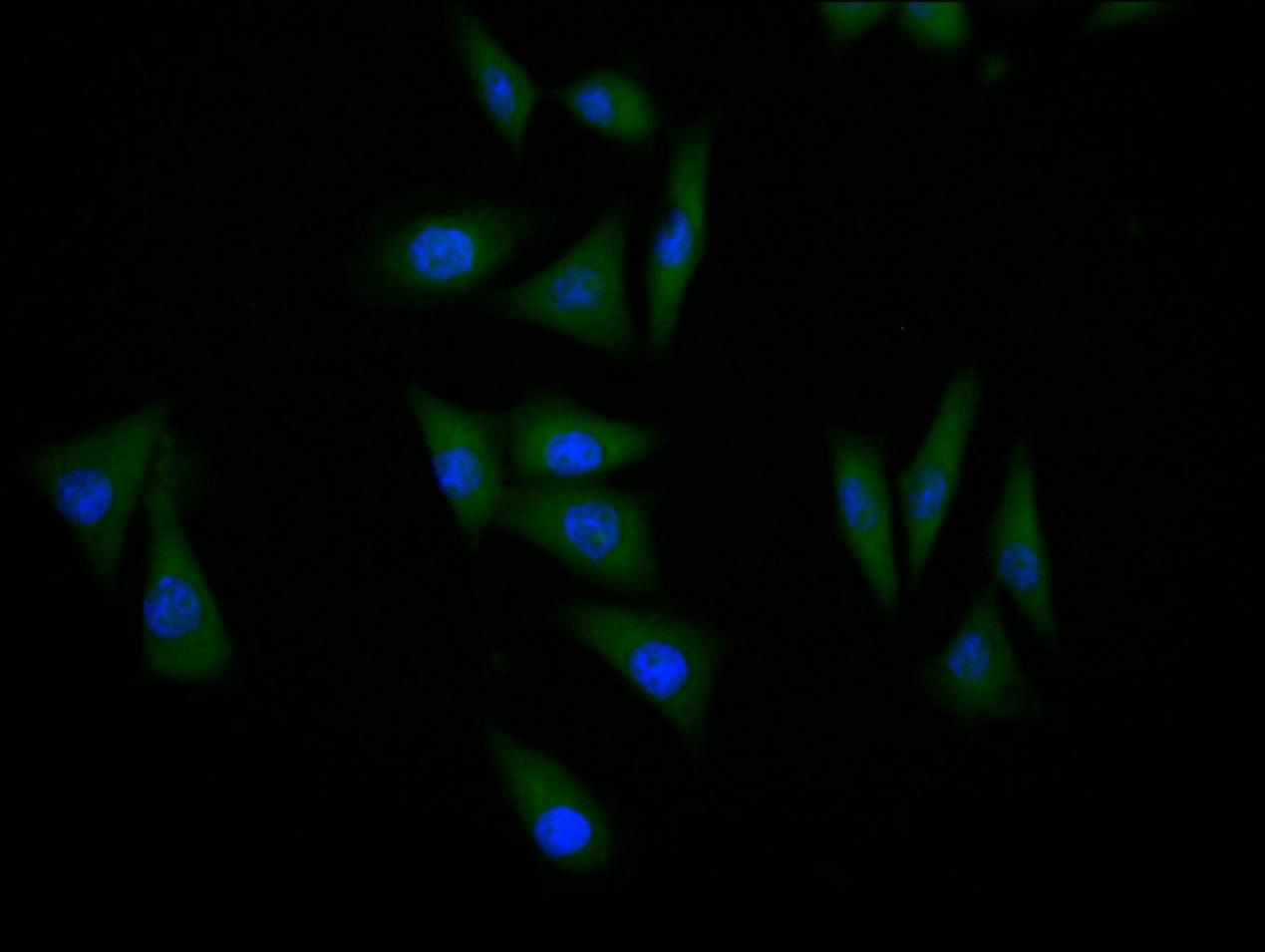
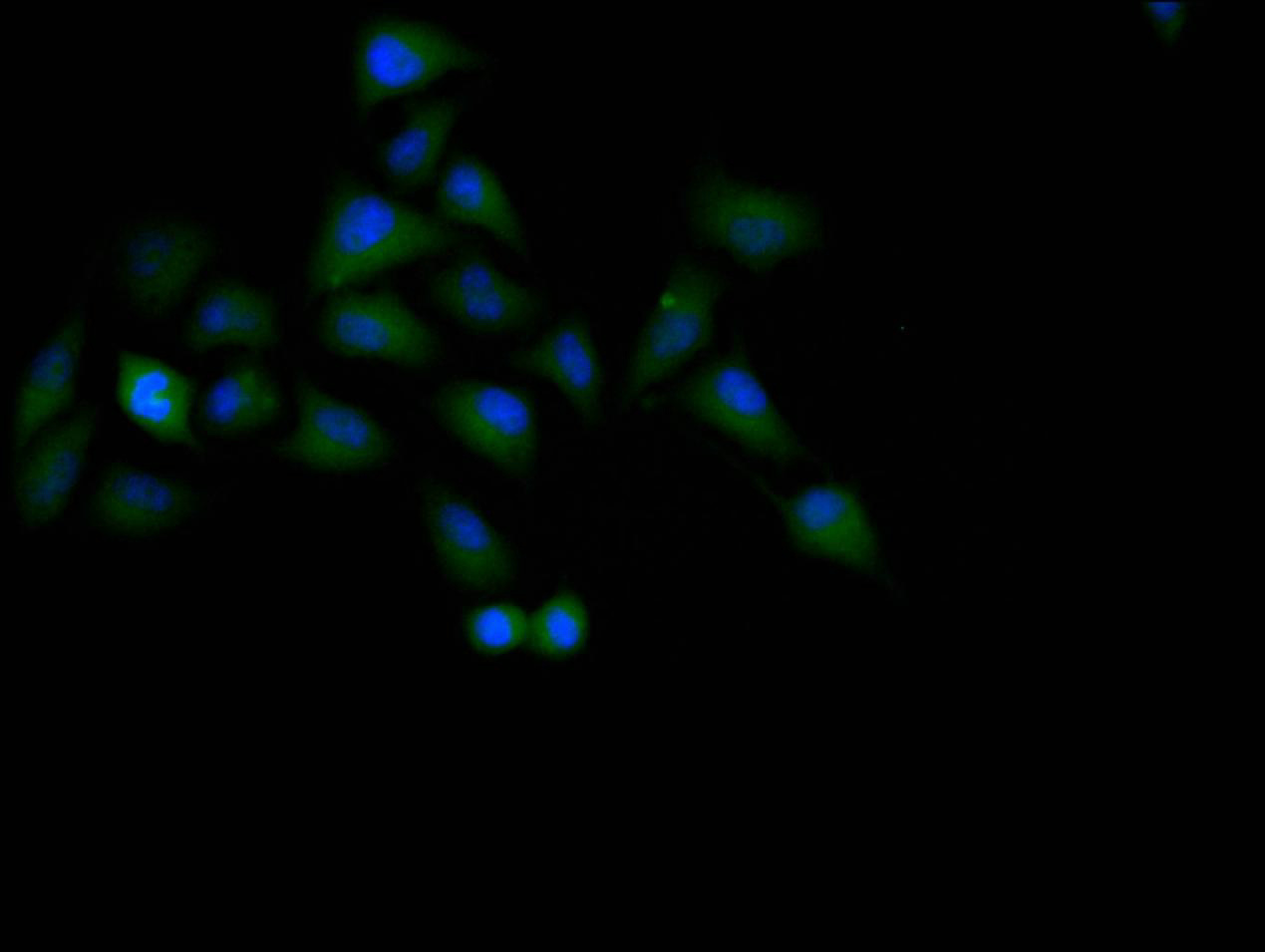
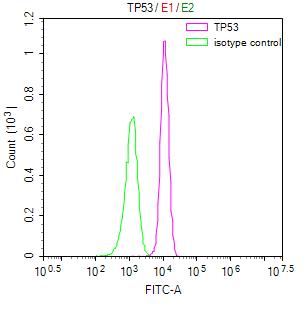
Validation data demonstrates reliable detection of TP53 in human samples across multiple experimental platforms. Western blot analysis of HT-29 colorectal adenocarcinoma cell lysate reveals a clean band at the predicted 43 kDa molecular weight, confirming accurate target recognition. Immunofluorescence studies in MCF-7 breast cancer and HeLa cervical cancer cells show clear nuclear localization patterns consistent with p53's role as a transcription factor, while flow cytometry analysis in permeabilized HeLa cells demonstrates robust signal separation from isotype controls.
This versatility across Western blot, immunofluorescence, and flow cytometry applications provides flexibility for researchers investigating p53 biology from multiple experimental angles. Whether examining p53 protein levels, subcellular distribution, or population-level expression patterns, this antibody supports investigations spanning epigenetics, nuclear signaling, cancer biology, and fundamental cell biology research.
There are currently no reviews for this product.





