
Call us
301-363-4651 (Available 9 a.m. to 5 p.m. CST from Monday to Friday)

| Code | CSB-RA024077A55phHU |
| Size | US$210 |
| Order now | |
| Image |
|
| Have Questions? | Leave a Message or Start an on-line Chat |
| Application | Recommended Dilution |
|---|---|
| WB | 1:500-1:5000 |
| IF | 1:20-1:200 |
Phosphorylation of tumor suppressor p53 at threonine 55 represents a critical regulatory modification that influences p53 stability and transcriptional activity. This site-specific phosphorylation event has been implicated in modulating p53's ability to induce cell cycle arrest and apoptosis, making it a valuable target for researchers investigating DNA damage responses, cell cycle checkpoints, and cancer biology.
This recombinant monoclonal antibody, developed using rabbit host immunization against a synthetic phosphopeptide corresponding to human Phospho-TP53 at T55, offers the reproducibility and consistency that demanding research applications require. As a sequence-defined recombinant clone, it eliminates the lot-to-lot variability inherent in traditional hybridoma-derived antibodies, ensuring that your experimental conditions remain stable across extended studies and collaborative projects.
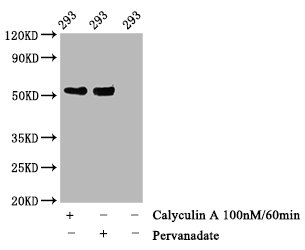
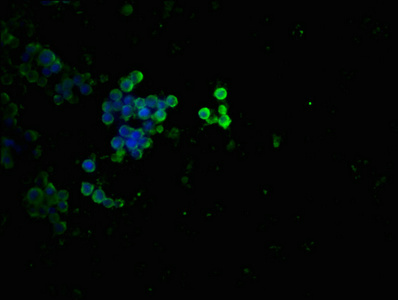
Validation studies demonstrate reliable performance across multiple platforms. In western blot applications, the antibody detects a band at the expected 53 kDa molecular weight in 293 cell lysates treated with phosphatase inhibitors such as Calyculin A or Pervanadate, confirming specificity for the phosphorylated form of p53. The recommended working dilution range of 1:500 to 1:5000 provides flexibility for optimization in your specific experimental system. Immunofluorescence studies using Calyculin A-treated 293 cells reveal clear nuclear localization patterns consistent with p53's role as a transcription factor, with effective staining achieved at 1:20 to 1:200 dilutions.
Whether you are examining stress-induced p53 activation, characterizing post-translational modification dynamics, or investigating upstream kinase pathways, this phospho-specific antibody provides a dependable tool for cell biology research focused on this essential tumor suppressor.
There are currently no reviews for this product.





