
Call us
301-363-4651 (Available 9 a.m. to 5 p.m. CST from Monday to Friday)

| Code | CSB-RA054513A0HU |
| Size | US$210 |
| Order now | |
| Image |
|
| Have Questions? | Leave a Message or Start an on-line Chat |
| Application | Recommended Dilution |
|---|---|
| IHC | 1:50-1:200 |
| IF | 1:50-1:200 |
| FC | 1:50-1:200 |
HRAS belongs to the RAS family of small GTPases that function as molecular switches in signal transduction pathways controlling cell proliferation, differentiation, and survival. As one of the most frequently mutated oncogenes in human cancers, HRAS plays a central role in driving malignant transformation, making it an essential target for cancer biology research and therapeutic development studies.
This recombinant monoclonal antibody, clone 13E11, offers researchers the reproducibility and consistency that comes with sequence-defined production. Unlike traditional hybridoma-derived antibodies, recombinant technology ensures that every lot performs identically, eliminating the variability that can compromise longitudinal studies or multi-site collaborations. The antibody was raised in rabbit against a synthesized peptide from human HRAS protein and has been affinity-purified for optimal specificity.
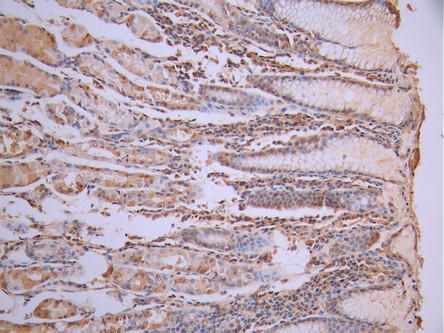
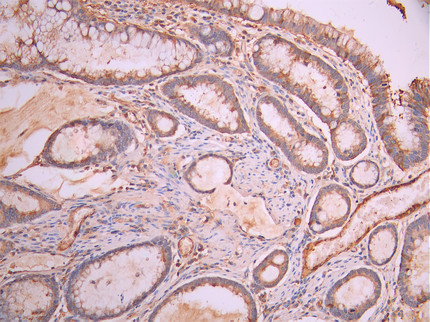
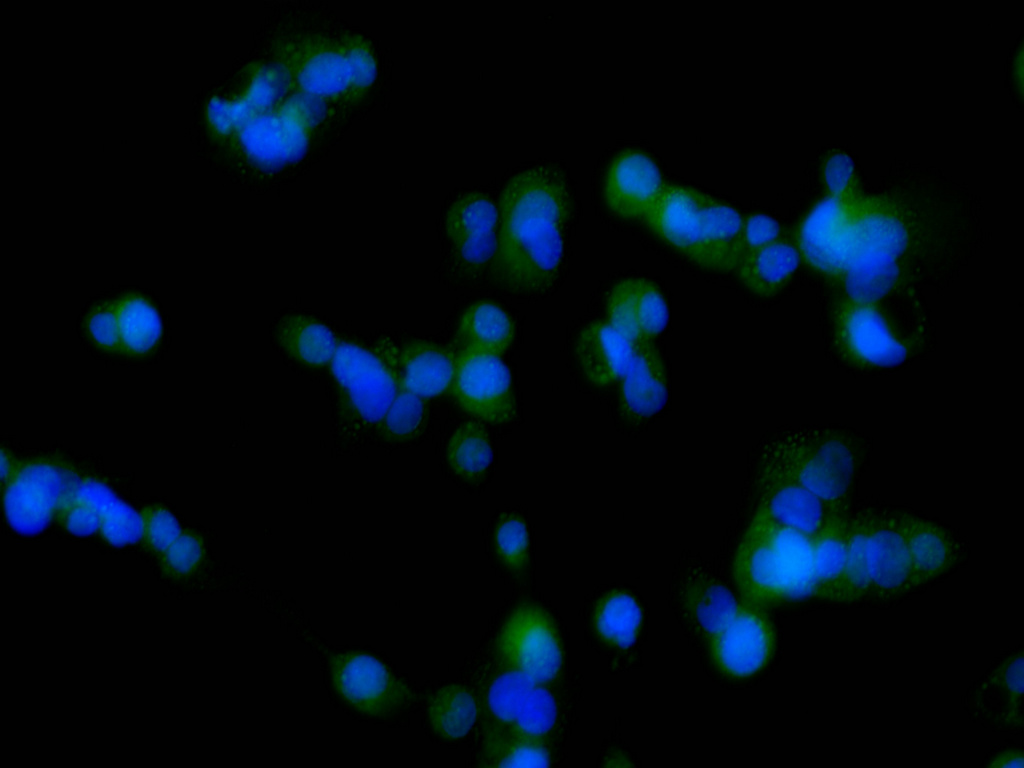
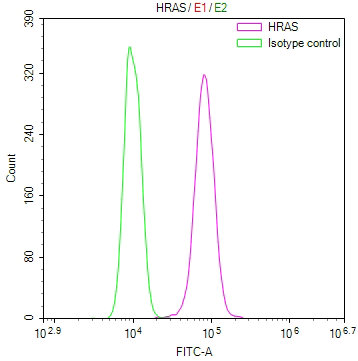
Validation studies demonstrate robust performance across multiple experimental platforms. Immunohistochemistry testing in paraffin-embedded human tissues reveals clear staining in both normal stomach tissue and gastric cancer samples at 1:100 dilution using citrate buffer antigen retrieval, providing researchers with a validated tool for examining HRAS expression in clinical specimens. Immunofluorescence analysis in HepG2 hepatocellular carcinoma cells shows distinct cellular localization patterns, while flow cytometry experiments using HeLa cells confirm the antibody's utility for quantitative single-cell analysis with clear separation from isotype control.
This versatility across IHC, immunofluorescence, and flow cytometry applications gives researchers flexibility to investigate HRAS biology using complementary approaches within the same study. For investigators exploring RAS-mediated signal transduction, oncogenic transformation, or tumor biology, this antibody provides a reliable reagent for characterizing HRAS expression and localization in human samples and cell line models.
There are currently no reviews for this product.





