Call us
301-363-4651 (Available 9 a.m. to 5 p.m. CST from Monday to Friday)

Transmembrane Protein 158 (TMEM158), also known as C11orf15, is a membrane-localized tumor suppressor. It regulates cell proliferation and survival by inhibiting Akt phosphorylation, a key step in the PI3K/Akt signaling pathway—this action curtails uncontrolled cell growth and metastasis. Downregulation of TMEM158 is linked to breast, lung, and colorectal cancers, often associating with poor patient outcomes.
Preclinical research explores TMEM158 as a therapeutic target. Strategies like gene delivery to restore its expression in tumor cells aim to reactivate its suppressive functions. While no TMEM158-targeted drugs are in clinical trials, its role in modulating oncogenic pathways makes it a promising candidate for future anti-cancer therapies.
Recombinant Human Transmembrane protein 158 (TMEM158), partial (CSB-MP023732HU1)
Validated Data
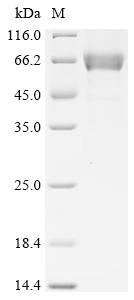
(Tris-Glycine gel) Discontinuous SDS-PAGE (reduced) with 5% enrichment gel and 15% separation gel.
The following TMEM158 reagents supplied by CUSABIO are manufactured under a strict quality control system. Multiple applications have been validated and solid technical support is offered.
TMEM158 Proteins for Homo sapiens (Human)
| Code | Product Name | Source |
|---|---|---|
| CSB-CF023732HU | Recombinant Human Transmembrane protein 158 (TMEM158) | in vitro E.coli expression system |
| CSB-YP023732HU1 CSB-EP023732HU1 CSB-BP023732HU1 CSB-EP023732HU1-B |
Recombinant Human Transmembrane protein 158 (TMEM158), partial | Yeast E.coli Baculovirus In Vivo Biotinylation in E.coli |
| CSB-MP023732HU1 | Recombinant Human Transmembrane protein 158 (TMEM158), partial | Mammalian cell |
| CSB-MP023732HU1d7 | Recombinant Human Transmembrane protein 158 (TMEM158), partial | Mammalian cell |
| CSB-MP023732HU | Recombinant Human Transmembrane protein 158 (TMEM158)-VLPs | Mammalian cell |