
Call us
301-363-4651 (Available 9 a.m. to 5 p.m. CST from Monday to Friday)

| Code | CSB-RA597007A0HU |
| Size | US$210 |
| Order now | |
| Image |
|
| Have Questions? | Leave a Message or Start an on-line Chat |
| Application | Recommended Dilution |
|---|---|
| WB | 1:500-1:2000 |
| IHC | 1:50-1:200 |
| FC | 1:50-1:200 |
MAP2K2, commonly known as MEK2, serves as a critical dual-specificity kinase within the RAS-RAF-MEK-ERK signaling cascade, where it functions as the direct upstream activator of ERK1/2. This pathway governs fundamental cellular processes including proliferation, differentiation, and survival, making MEK2 a focal point in cancer biology, developmental disorders such as cardiofaciocutaneous syndrome, and therapeutic resistance studies.
This recombinant monoclonal antibody, clone 8H12, offers researchers the reproducibility essential for longitudinal studies and multi-site collaborations. Produced using recombinant technology with a sequence-defined rabbit IgG framework, it eliminates the lot-to-lot variability that can compromise experimental consistency, ensuring your results remain comparable across extended research programs.
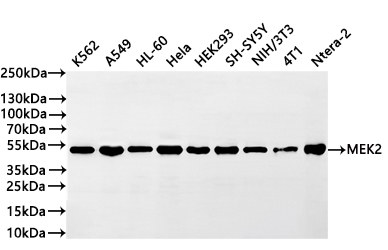
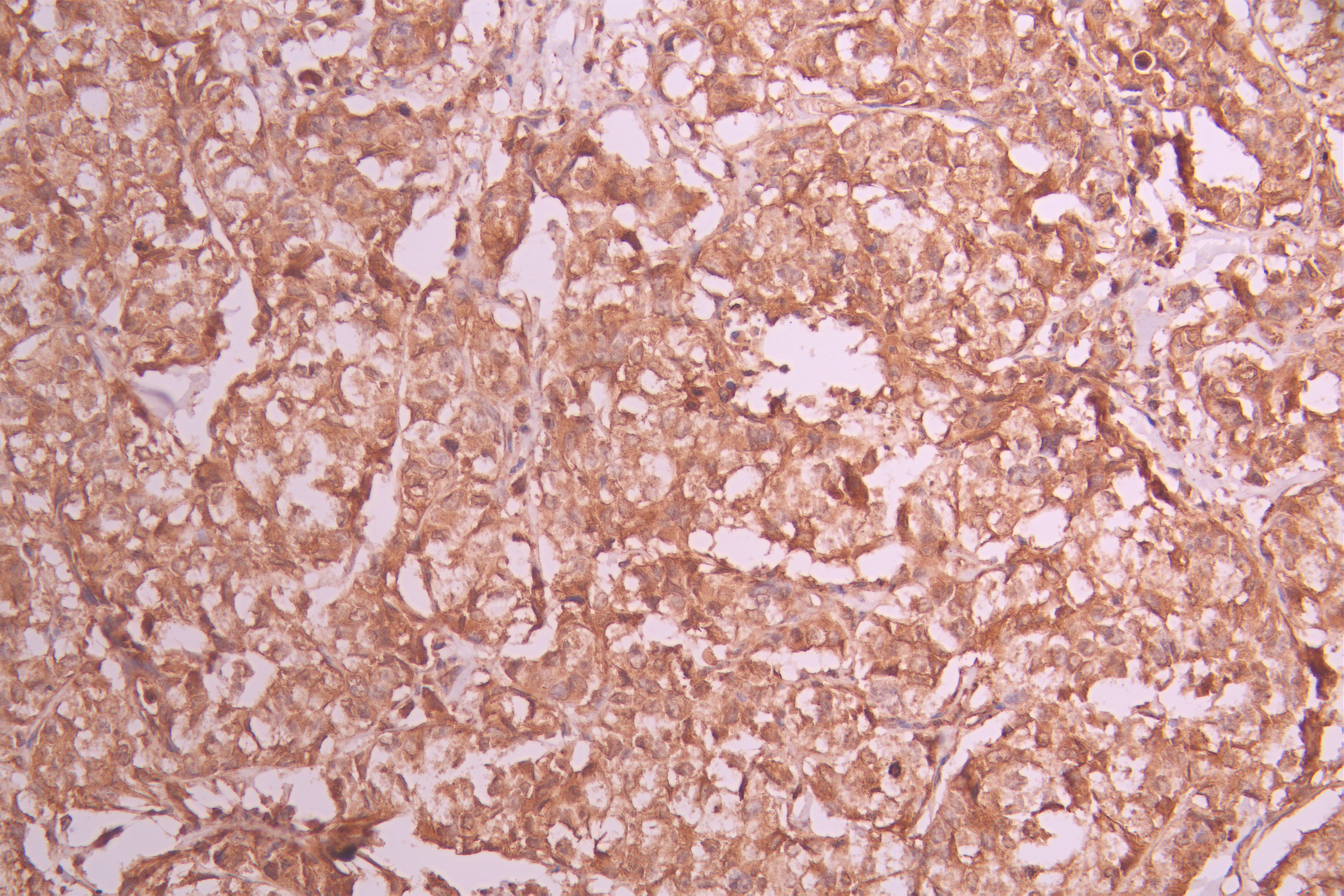
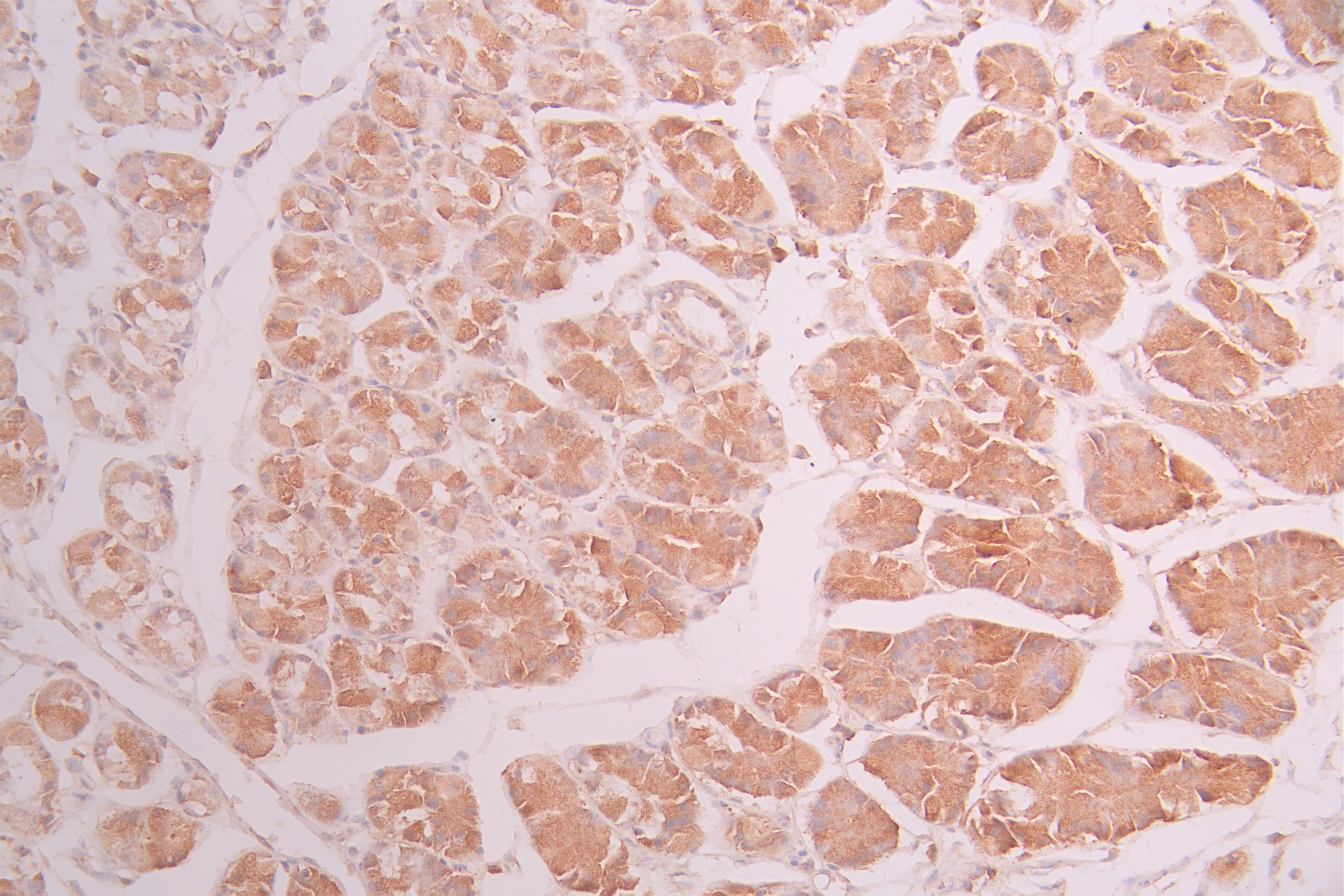
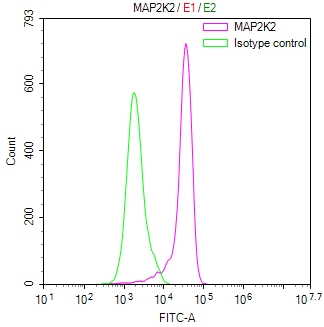
Validation data demonstrates robust performance across multiple experimental platforms. Western blot analysis confirms specific detection at the expected 44 kDa molecular weight across an extensive panel of human cell lines including K562, A549, HL-60, HEK293, SH-SY5Y, and Ntera-2, with cross-species reactivity confirmed in mouse samples including NIH/3T3 and 4T1 cell lysates as well as mouse brain tissue. Immunohistochemistry validation in paraffin-embedded human breast cancer and stomach tissue sections shows reliable staining with citrate buffer antigen retrieval, while flow cytometry analysis in A431 cells demonstrates clear positive signal separation from isotype controls.
The antibody's versatility across Western blot, immunohistochemistry, and flow cytometry applications provides flexibility for researchers investigating MAPK pathway dynamics in contexts ranging from oncogenic signaling and drug resistance mechanisms to neurodevelopmental studies. Its confirmed performance in both human and mouse samples supports translational research workflows bridging cell-based assays and animal model investigations.
There are currently no reviews for this product.





