Call us
301-363-4651 (Available 9 a.m. to 5 p.m. CST from Monday to Friday)

The MYCL gene encodes the MYCL proto-oncogene, a basic helix-loop-helix (bHLH) transcription factor, also known as L-Myc. It forms heterodimers with MAX to bind E-box sequences (CACGTG), regulating target genes involved in cell proliferation, differentiation, and apoptosis. MYCL crosstalks with PI3K/Akt and MAPK pathways, amplifying their pro-growth signals.
Amplification of MYCL is prevalent in small cell lung cancer (SCLC) and neuroblastoma, driving tumorigenesis. Direct targeting is challenging due to its non-enzymatic nature, but preclinical peptide inhibitors like OMomyc (disrupting MYCL-MAX interaction) show potential. Combination therapies with PI3K/MAPK inhibitors are also being explored to counter MYCL-mediated tumor progression.
Recombinant Human Protein L-Myc (MYCL), partial (CSB-EP015274HU1)
Validated Data
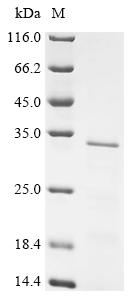
(Tris-Glycine gel) Discontinuous SDS-PAGE (reduced) with 5% enrichment gel and 15% separation gel.
The following MYCL reagents supplied by CUSABIO are manufactured under a strict quality control system. Multiple applications have been validated and solid technical support is offered.
MYCL Proteins for Homo sapiens (Human)
| Code | Product Name | Source |
|---|---|---|
| CSB-YP015274HU CSB-EP015274HU CSB-BP015274HU CSB-MP015274HU CSB-EP015274HU-B |
Recombinant Human Protein L-Myc (MYCL) | Yeast E.coli Baculovirus Mammalian cell In Vivo Biotinylation in E.coli |
| CSB-EP015274HU1 | Recombinant Human Protein L-Myc (MYCL), partial | E.coli |