
Call us
301-363-4651 (Available 9 a.m. to 5 p.m. CST from Monday to Friday)

| Code | CSB-RA101461A0HU |
| Size | US$210 |
| Order now | |
| Image |
|
| Have Questions? | Leave a Message or Start an on-line Chat |
| Application | Recommended Dilution |
|---|---|
| IHC | 1:50-1:200 |
PIK3R1, also known as the p85-alpha regulatory subunit of phosphatidylinositol 3-kinase, plays a central role in the PI3K/AKT signaling pathway that governs cell growth, proliferation, and survival. As a critical regulator of class IA PI3K activity, PIK3R1 modulates downstream signaling events that are frequently dysregulated in cancer and immune disorders, making it an essential target for researchers investigating oncogenic mechanisms and therapeutic vulnerabilities.
This recombinant monoclonal antibody, clone 13E7, offers the reproducibility and consistency that demanding experimental workflows require. Produced using recombinant technology with a sequence-defined rabbit IgG framework, this antibody eliminates the lot-to-lot variability that can compromise longitudinal studies and multi-site collaborations. The defined molecular composition ensures that your results remain comparable across experiments, whether you're establishing baseline expression patterns or tracking changes across treatment conditions.
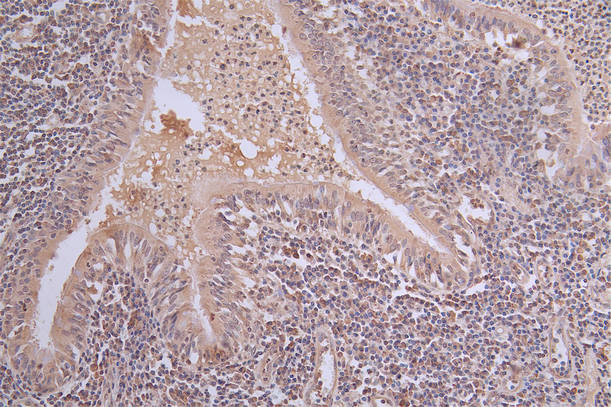
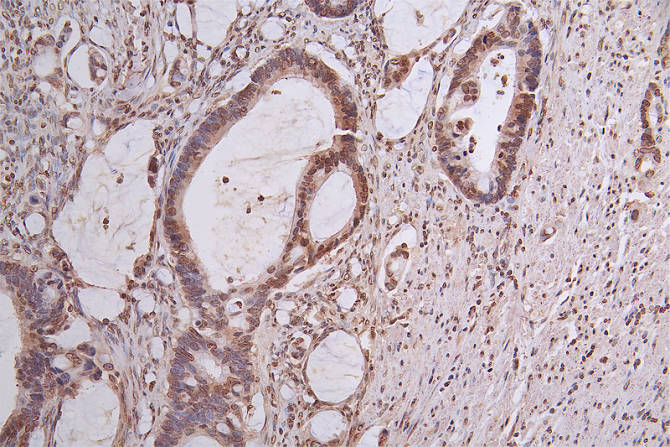
Validated for immunohistochemistry applications, this antibody has been tested in paraffin-embedded human tissues including lung and rectal cancer specimens at dilutions of 1:50 to 1:200. The validation studies employed citrate buffer antigen retrieval and demonstrated clear specific staining using standard polymer-based HRP detection systems, providing you with established protocols to streamline your experimental setup.
Whether you're investigating PI3K pathway activation in tumor microenvironments, exploring regulatory mechanisms in immune cell signaling, or characterizing expression patterns across tissue types, this antibody provides a reliable tool for your research. Its validation in both normal and malignant human tissues makes it particularly well-suited for studies examining PIK3R1's role in cancer biology, immunology, and signal transduction research.
There are currently no reviews for this product.





