
Call us
301-363-4651 (Available 9 a.m. to 5 p.m. CST from Monday to Friday)

| Code | CSB-RA019386A780phHU |
| Size | US$210 |
| Order now | |
| Image |
|
| Have Questions? | Leave a Message or Start an on-line Chat |
| Application | Recommended Dilution |
|---|---|
| IHC | 1:50-1:200 |
| IF | 1:20-1:200 |
| IP | 1:200-1:1000 |
Retinoblastoma protein (RB1) serves as a master regulator of cell cycle progression, functioning as a critical tumor suppressor that controls the G1/S transition. Phosphorylation at serine 780 represents a key regulatory event, as cyclin D-CDK4/6 complexes phosphorylate this residue to inactivate RB1's growth-suppressive function, releasing E2F transcription factors and permitting cell cycle advancement. Monitoring this specific phosphorylation event provides researchers with direct insight into CDK4/6 activity and cell cycle status, making it particularly valuable for studying cancer biology and evaluating CDK4/6 inhibitor responses.
This recombinant monoclonal antibody, generated against a synthetic phosphopeptide corresponding to human Phospho-RB1 (S780), offers the consistency and reproducibility that phospho-specific detection demands. The recombinant format ensures sequence-defined specificity and eliminates the lot-to-lot variability that can compromise longitudinal studies of signaling dynamics. Affinity purification further enhances signal clarity by removing non-specific immunoglobulins.
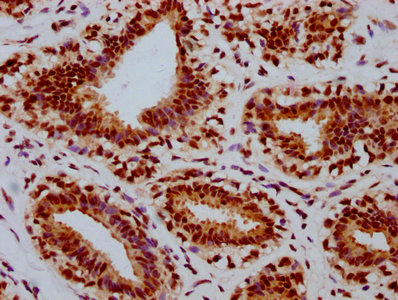
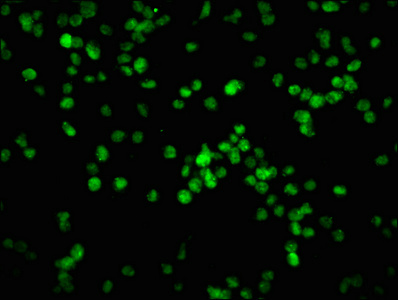
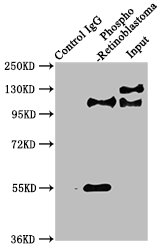
Validation across multiple platforms demonstrates genuine experimental flexibility. Immunohistochemistry performed on paraffin-embedded human breast cancer tissue reveals clear staining patterns, supporting studies in clinical and translational oncology contexts. Immunofluorescence analysis in K562 cells confirms utility for examining phospho-RB1 localization in cultured human cell models. Immunoprecipitation from HeLa whole cell lysates demonstrates the antibody's capacity for enriching phosphorylated RB1 from complex protein mixtures, enabling downstream biochemical characterization.
For researchers investigating cell cycle regulation, tumor suppressor pathway dysfunction, or therapeutic responses to CDK4/6 inhibition, this antibody provides a reliable tool for detecting this functionally significant phosphorylation event across tissue sections, fixed cells, and biochemical applications.
There are currently no reviews for this product.





