
Call us
301-363-4651 (Available 9 a.m. to 5 p.m. CST from Monday to Friday)

| Code | CSB-RA001553MA1HU |
| Size | $49.9 |
| Order now | |
| Promotion |

|
| Image |
|
| Have Questions? | Leave a Message or Start an on-line Chat |
| Application | Recommended Dilution |
|---|---|
| IF | 1:50-1:200 |
| FC | 1:50-1:200 |
AKT1, also known as Protein Kinase B alpha, serves as a central node in the PI3K/AKT signaling pathway, orchestrating critical cellular processes including survival, proliferation, metabolism, and growth. As a proto-oncogene frequently dysregulated in human cancers, AKT1 represents an essential target for researchers investigating oncogenic transformation, metabolic disorders, and therapeutic resistance mechanisms.
This recombinant monoclonal antibody, clone 8G7, offers the reproducibility and consistency that demanding research applications require. Generated using recombinant technology with a sequence-defined approach, this antibody eliminates the lot-to-lot variability inherent in traditional hybridoma production. Researchers can confidently design long-term studies knowing that antibody performance will remain constant across experiments and reorders.
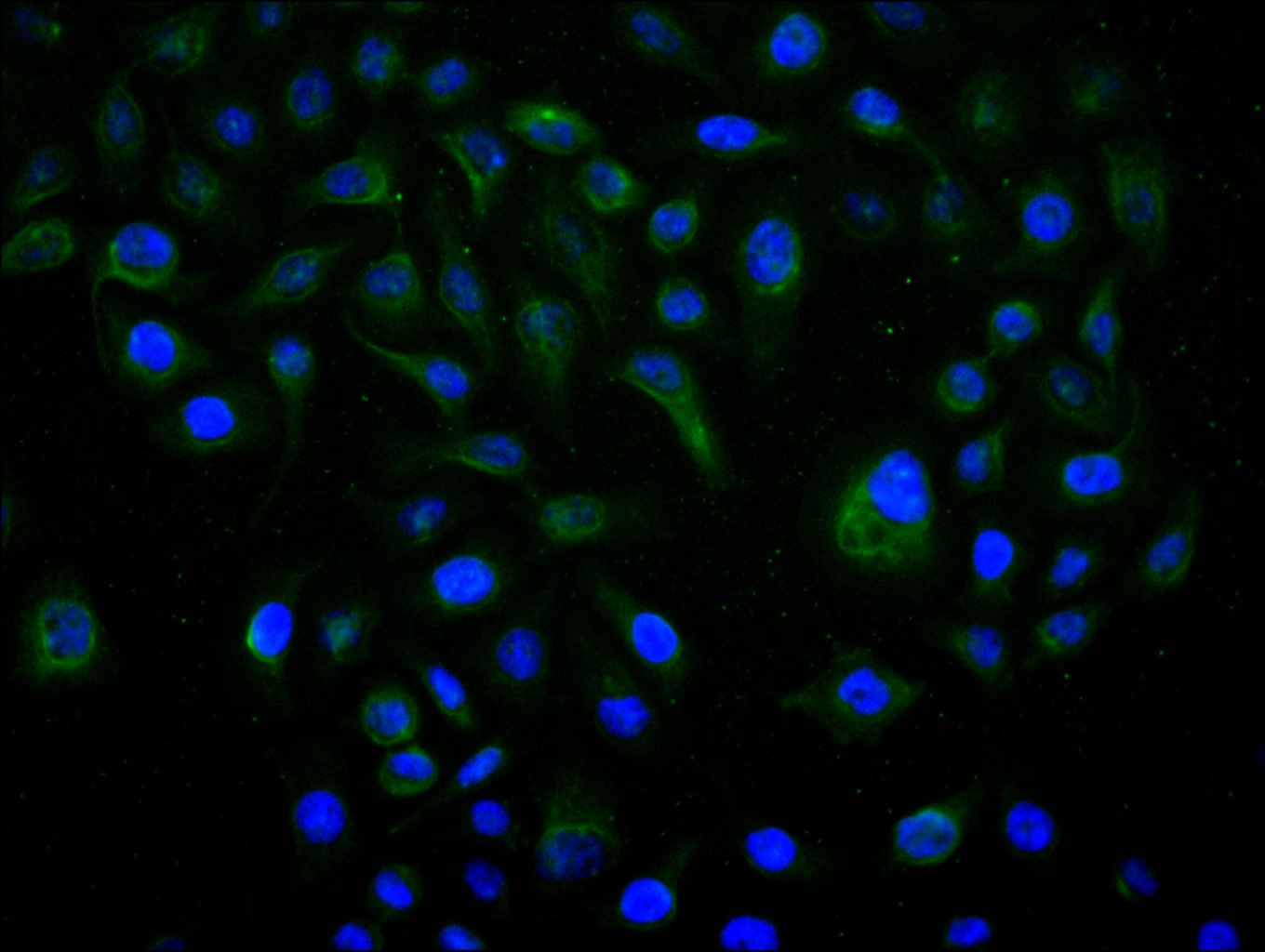
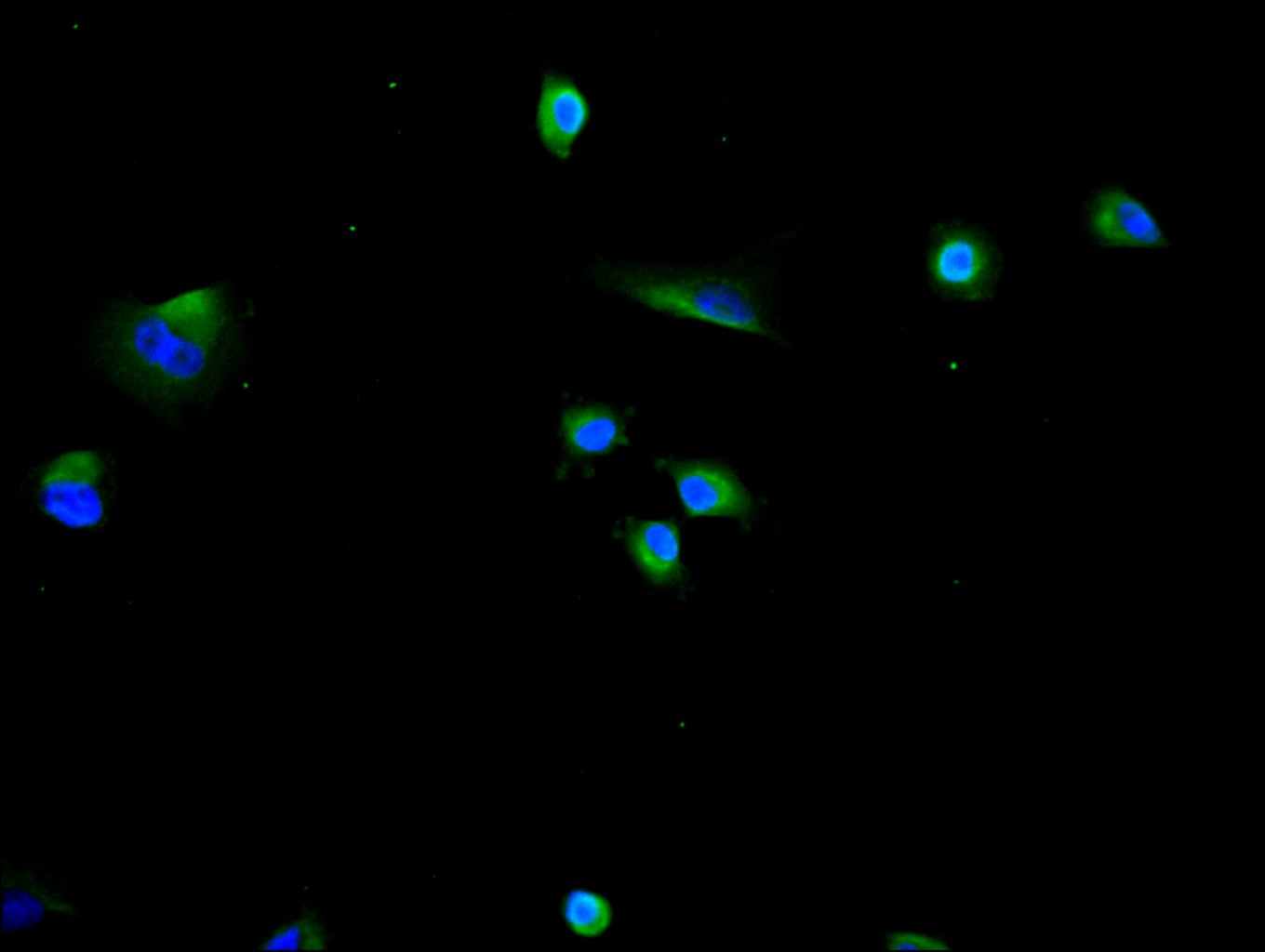
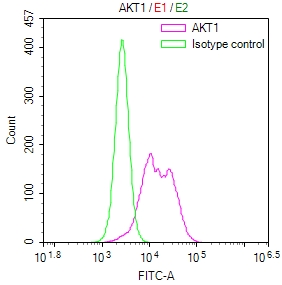
The antibody has been validated for immunofluorescence and flow cytometry applications, providing flexibility for researchers examining AKT1 expression and localization. Immunofluorescence studies have demonstrated clear cytoplasmic staining patterns in both HeLa and A549 cell lines at dilutions of 1:30, with overnight incubation at 4°C following standard fixation and permeabilization protocols. Flow cytometry validation using PC-3 prostate cancer cells confirms robust detection with distinct separation from isotype control, supporting quantitative analysis of AKT1 expression at the single-cell level.
Supplied in a glycerol-based PBS buffer optimized for long-term storage stability, this unconjugated antibody accommodates diverse secondary detection systems. The human IgG1 isotype format ensures compatibility with widely available anti-human secondary reagents.
This antibody serves researchers exploring AKT signaling in cancer biology, metabolic disease, and cell survival pathways, providing a reliable tool for characterizing this pivotal kinase across multiple experimental platforms.
There are currently no reviews for this product.





