
Call us
301-363-4651 (Available 9 a.m. to 5 p.m. CST from Monday to Friday)

| Code | CSB-RA917625A0HU |
| Size | US$210 |
| Order now | |
| Image |
|
| Have Questions? | Leave a Message or Start an on-line Chat |
| Application | Recommended Dilution |
|---|---|
| WB | 1:500-1:5000 |
| IHC | 1:50-1:200 |
| IF | 1:20-1:200 |
AKT1, also known as protein kinase B alpha, serves as a central node in the PI3K/AKT signaling pathway, orchestrating critical cellular decisions involving survival, proliferation, and metabolism. As a serine/threonine kinase frequently dysregulated in cancer, AKT1 represents an essential target for researchers investigating oncogenic signaling, metabolic regulation, and therapeutic intervention strategies.
This recombinant monoclonal antibody, generated against a synthetic peptide derived from human AKT1, offers the reproducibility and consistency that demanding experimental workflows require. Because recombinant antibodies are produced from defined genetic sequences, you can expect identical performance across lots, eliminating the variability that can compromise longitudinal studies or multi-site collaborations. The rabbit IgG format, purified by affinity chromatography, ensures high specificity for your target.
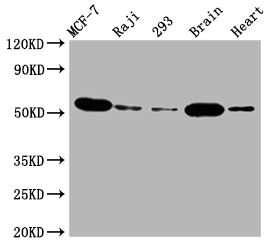
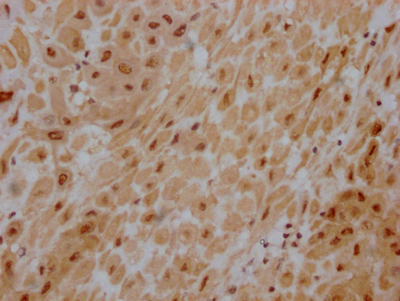
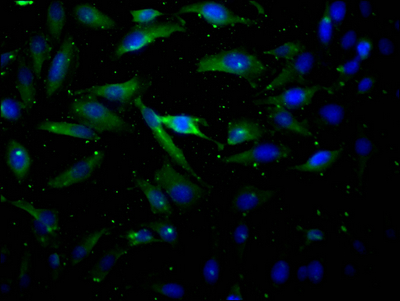
Validation across multiple platforms demonstrates this antibody's versatility in your research toolkit. Western blot analysis confirms robust detection at the expected 56 kDa molecular weight across diverse sample types, including MCF-7, Raji, and 293 human cell lysates, as well as mouse brain and rat heart tissues, supporting cross-species reactivity for human, mouse, and rat samples. Immunohistochemistry performed on paraffin-embedded human placenta tissue shows clear staining using standard citrate buffer antigen retrieval, while immunofluorescence studies in HeLa cells demonstrate compatibility with fixed cell imaging applications.
The broad working dilution ranges across western blot, immunohistochemistry, and immunofluorescence provide flexibility to optimize conditions for your specific experimental system. Whether you're exploring AKT1's role in tumor progression, metabolic signaling, or epigenetic regulation, this antibody delivers the reliable, reproducible detection essential for generating publication-quality data.
There are currently no reviews for this product.





