
Call us
301-363-4651 (Available 9 a.m. to 5 p.m. CST from Monday to Friday)

| Code | CSB-RA240597A0HU |
| Size | US$210 |
| Order now | |
| Image |
|
| Have Questions? | Leave a Message or Start an on-line Chat |
| Application | Recommended Dilution |
|---|---|
| WB | 1:500-1:5000 |
| IHC | 1:50-1:200 |
Programmed cell death protein 1, commonly known as PD-1 or CD279, serves as a critical immune checkpoint receptor that modulates T cell activation and peripheral tolerance. This inhibitory receptor has become central to cancer immunology research, as tumor cells frequently exploit the PD-1 pathway to evade immune surveillance. Understanding PD-1 expression patterns and signaling dynamics remains essential for researchers investigating immune regulation, tumor microenvironment interactions, and immunotherapy mechanisms.
This recombinant monoclonal antibody, clone 8E9, offers the reproducibility and consistency that demanding experimental workflows require. Because recombinant antibodies are produced from defined genetic sequences rather than traditional hybridoma methods, researchers benefit from lot-to-lot uniformity that supports reliable data across extended studies and multi-site collaborations. The rabbit host origin provides high affinity binding characteristics, while affinity chromatography purification ensures minimal background interference.
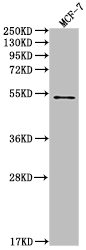
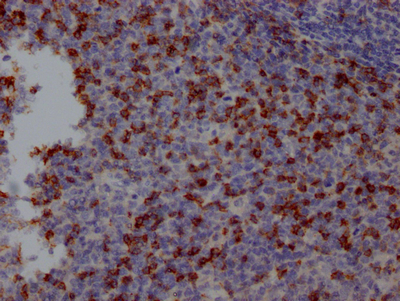
Validation studies confirm robust performance across multiple detection platforms. Western blot analysis of MCF-7 whole cell lysate demonstrates specific detection at the predicted molecular weight of 32 kDa, with effective working dilutions ranging from 1:500 to 1:5000. For tissue-based investigations, immunohistochemistry validation in paraffin-embedded human tonsil tissue reveals clear staining patterns using heat-mediated antigen retrieval in citrate buffer, with recommended dilutions between 1:50 and 1:200. The antibody is also validated for ELISA applications, providing flexibility for quantitative studies.
This antibody supports research spanning cancer biology, immunology, and cell signaling, making it particularly valuable for investigators studying checkpoint inhibitor mechanisms, T cell exhaustion phenotypes, or PD-1 expression in human tumor samples and cell line models.
There are currently no reviews for this product.





