
Call us
301-363-4651 (Available 9 a.m. to 5 p.m. CST from Monday to Friday)

| Code | CSB-RA013456A185phHU |
| Size | US$210 |
| Order now | |
| Image |
|
| Have Questions? | Leave a Message or Start an on-line Chat |
| Application | Recommended Dilution |
|---|---|
| WB | 1:500-1:5000 |
| IHC | 1:50-1:200 |
| IF | 1:20-1:200 |
The ERK1/2 signaling cascade represents one of the most extensively studied pathways in cell biology, serving as a critical integration point for growth factor signals, stress responses, and differentiation cues. Phosphorylation of MAPK3 (ERK1) at threonine 202 and MAPK1 (ERK2) at threonine 185 marks the activated state of these kinases, making detection of these specific phospho-epitopes essential for researchers investigating signal transduction dynamics, particularly in neuroscience contexts where ERK signaling influences synaptic plasticity and neuronal survival.
This recombinant monoclonal antibody, clone 2D5, offers the reproducibility advantages inherent to sequence-defined antibody production. Unlike traditional hybridoma-derived antibodies that can drift over time, recombinant technology ensures that each lot delivers identical binding characteristics, providing the experimental consistency demanded by longitudinal studies and multi-site collaborations.
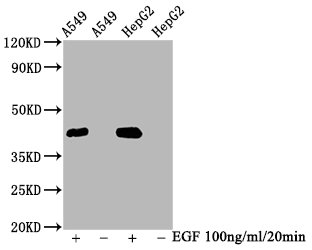
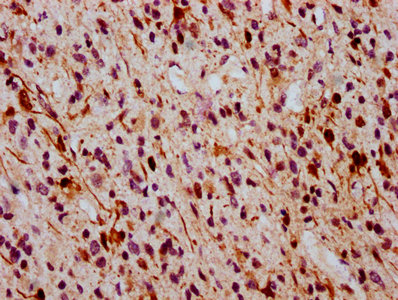
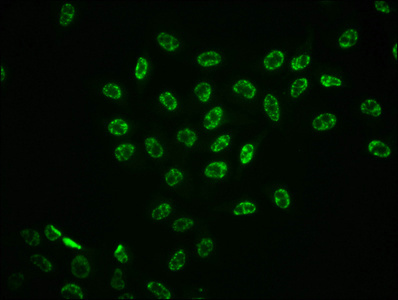
Validation data demonstrates robust performance across multiple applications. Western blot analysis confirms specific detection at the expected 42 kDa molecular weight in A549 whole cell lysates and HepG2 cells, with the latter tested under both basal and EGF-stimulated conditions to verify phospho-specific recognition. Immunohistochemistry staining has been validated in paraffin-embedded human glioma tissue sections, while immunofluorescence studies in HeLa cells reveal clear signal with appropriate subcellular localization patterns.
The antibody's versatility across ELISA, western blot, immunohistochemistry, and immunofluorescence workflows provides researchers with flexibility to interrogate ERK activation status through complementary experimental approaches. For investigators studying MAPK pathway dysregulation in cancer biology, neurological disease models, or growth factor signaling mechanisms, this phospho-specific antibody delivers the specificity and consistency needed to generate reliable, publication-quality data.
There are currently no reviews for this product.





