
Call us
301-363-4651 (Available 9 a.m. to 5 p.m. CST from Monday to Friday)

| Code | CSB-RA213310A0HU |
| Size | US$210 |
| Order now | |
| Image |
|
| Have Questions? | Leave a Message or Start an on-line Chat |
| Application | Recommended Dilution |
|---|---|
| IHC | 1:50-1:200 |
CTLA4, also designated CD152, functions as a critical immune checkpoint receptor that downregulates T cell activation by competing with CD28 for binding to B7 ligands on antigen-presenting cells. This inhibitory role makes CTLA4 a central focus in immuno-oncology research, where blocking its function has proven transformative for cancer immunotherapy, as well as in studies of autoimmune disease and transplant tolerance.
This recombinant monoclonal antibody, clone 3B10, offers researchers the reproducibility advantages inherent to recombinant production. Because the antibody sequence is defined and expressed consistently, you can expect uniform performance across experiments and over time, eliminating the lot-to-lot variability that can complicate long-term studies or multi-site collaborations. Raised in rabbit against a synthetic peptide derived from human CTLA4, this clone delivers the specificity needed for reliable target detection in human samples.
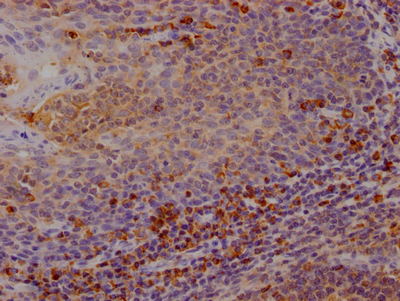
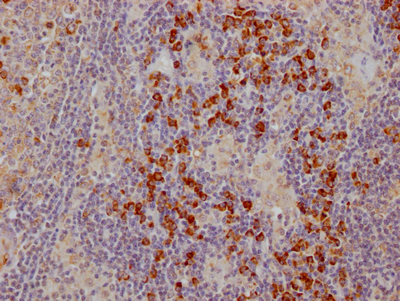
Validation through immunohistochemistry demonstrates robust performance in paraffin-embedded human tissues. Testing in both tonsil and lymph node sections at 1:100 dilution using citrate buffer antigen retrieval and HRP-polymer detection confirms the antibody's utility for examining CTLA4 expression in lymphoid compartments where this checkpoint molecule plays its regulatory role. The recommended working range of 1:50 to 1:200 provides flexibility for optimization across different tissue preparations and detection systems. Additional compatibility with ELISA extends its utility for quantitative applications.
Supplied in a glycerol-containing buffer for stability at frozen storage, this affinity-purified antibody serves researchers investigating immune checkpoint biology, T cell regulation, and the broader immunology and stem cell fields where understanding CTLA4 function informs both basic discovery and translational applications.
There are currently no reviews for this product.





