
Call us
301-363-4651 (Available 9 a.m. to 5 p.m. CST from Monday to Friday)

From the moist surface of the eye to the vast lining of the digestive tract, a crucial "protective coat" covers the various tracts of our body. The primary component of this protective layer is a class of high-molecular-weight glycoproteins known as mucins (Mucins). They not only provide a physical barrier for our organs but also play deep roles in physiological processes such as cell signaling and immune regulation. Abnormalities in mucin function are often closely linked to the development and progression of various diseases, including cancer and inflammatory bowel disease. This article systematically introduces the Mucin (MUC protein) family to help you quickly understand its core members, key functions, and related research tools.
The Mucin (Mucin, abbreviated as MUC) family is a group of highly glycosylated proteins characterized by tandem repeat domains rich in proline, threonine, and serine, which serve as the primary attachment sites for O-glycans. Dense O-glycosylation confers high hydrophilicity and resistance to protease degradation, enabling mucins to form functional mucus gels or cell surface protective layers [1].
Currently, over 20 members have been identified, including MUC1, MUC2, MUC4, MUC5AC, MUC5B, MUC6, and MUC16. Based on their structural and functional characteristics, they are primarily classified into two major types: Secreted Mucins and Membrane-Bound Mucins.
These are transmembrane glycoproteins anchored to the epithelial cell membrane, featuring a heavily glycosylated extracellular domain, a single transmembrane region, and a cytoplasmic tail capable of participating in signal transduction. They not only constitute a physical barrier on the cell surface but also regulate cell proliferation, polarity, and immune responses by interacting with growth factor receptors (such as HER2/EGFR) or the cytoskeleton. In various cancers, these MUCs are often abnormally overexpressed or undergo altered glycosylation, making them important diagnostic markers and therapeutic targets.
Secreted mucins are synthesized by goblet cells or mucous gland cells and released into the lumen or onto body surfaces. As the main components of mucus gels, they are responsible for lubrication, hydration, and pathogen trapping, playing a key role in innate immunity. Based on their ability to polymerize, they are divided into two categories:
● Gel-forming: These can self-assemble into a three-dimensional network structure via disulfide bonds to form a stable mucus barrier. Representative members include MUC2, MUC5AC/MUC5B, MUC6, and MUC19.
● Non-gel-forming: These exist as monomers and do not form gels but possess antimicrobial or reproductive-specific functions, such as MUC7, MUC8, and MUC9.
| MUC Member | Primary Tissue Distribution | Major Physiological Functions | Associated Diseases |
|---|---|---|---|
| MUC1 | Breast, pancreas, respiratory tract, stomach, colon, duodenum, esophagus, gallbladder, cervix, kidney, middle ear epithelium | Cell signaling, immune regulation, anti-adhesion; involved in epithelial cell proliferation and differentiation | Breast cancer [2], Lung cancer [3], Pancreatic cancer [4], Ovarian cancer [5], Colorectal cancer [6] |
| MUC2 | Colon, small intestine, respiratory tract, eye, middle ear epithelium | Main component of the intestinal mucus layer; forms a physical barrier against gut microbiota invasion; maintains intestinal homeostasis | Ulcerative colitis [7], Crohn's disease [8], Colorectal cancer [9] |
| MUC3A | Colon, small intestine, duodenum, gallbladder, middle ear epithelium | Maintains intestinal barrier function; involved in epithelial cell repair and regeneration | Cholangiocarcinoma [10], Colorectal cancer [11], Non-small cell lung cancer [12], Lung adenocarcinoma [13] |
| MUC3B | Colon, small intestine, duodenum, gallbladder, middle ear epithelium | Maintains intestinal barrier function | - |
| MUC4 | Respiratory tract, stomach, colon, cervix, eye, middle ear epithelium | Involved in cell proliferation and differentiation; interacts with EGFR/HER2 to regulate cell signaling pathways; anti-adhesion effect | Pancreatic cancer [14], Breast cancer [15], Ovarian cancer [16], Non-small cell lung cancer [17], Colorectal cancer [18] |
| MUC5AC | Respiratory tract, stomach, cervix, eye, middle ear epithelium | Main component of gastric mucus layer and airway mucus; protects epithelium from gastric acid and pathogen damage | Pancreatic cancer [19], Asthma [20], Colorectal cancer [21], Dry eye syndrome [22], Gastric cancer [23] |
| MUC5B | Respiratory tract, salivary glands, pancreas, gallbladder, cervix, semen, middle ear epithelium | Component of airway mucus and saliva; involved in lubrication and protection of oral and ocular surfaces | Nasopharyngeal carcinoma [24], Interstitial lung disease [25], Pulmonary fibrosis [26] |
| MUC6 | Stomach, duodenum, pancreas, gallbladder, cervix, semen, middle ear epithelium | Forms gastric mucosal protective layer; may inhibit Helicobacter pylori colonization; involved in pancreatic duct protection | Gastric cancer [27], Liver cancer [28] |
| MUC7 | Salivary glands, respiratory tract, middle ear epithelium | Antimicrobial activity; involved in oral and respiratory mucosal protection; maintains oral moisture | Sjögren's syndrome [29] |
| MUC8 | Trachea, cervix, endometrium, placenta, testis | Involved in respiratory mucosal protection; may participate in reproductive tract functions | Sialolithiasis [30] |
| MUC9 (OVGP1) | Fallopian tube | Involved in fertilization process; maintains fallopian tube microenvironment | Ulcerative colitis [31] |
| MUC12 | Colon, small intestine, stomach, pancreas, lung, kidney, prostate, uterus | Involved in cell signaling; maintains epithelial barrier function | Renal cell carcinoma [32], Colorectal cancer [33] |
| MUC13 | Colon, small intestine, stomach, trachea, kidney, appendix, middle ear epithelium | Regulates epithelial cell tight junctions; maintains intestinal barrier function; cell signaling | Ovarian cancer [34], Pancreatic cancer [35], Colorectal cancer [36], Hepatocellular carcinoma [37], Ovarian cancer [38] |
| MUC14 | Heart, lung, kidney | Involved in vascular endothelial cell function; maintains vascular integrity | Lung adenocarcinoma [39] |
| MUC15 | Breast, lung, spleen, thymus, lymph nodes, tonsils, bone marrow, fetal liver, prostate, testis, ovary, colon, middle ear epithelium | Involved in cell adhesion and signaling; may participate in hematopoiesis and immune regulation | Esophageal squamous cell carcinoma [40], Pancreatic cancer [41], Renal cell carcinoma [42] |
| MUC16 | Peritoneal mesothelium, reproductive tract, respiratory tract, eye, middle ear epithelium | Forms cell surface protective layer; involved in immune regulation; maintains corneal moisture | Ovarian cancer [43], Gastric cancer [44], Pancreatic cancer [45], Triple-negative breast cancer [46] |
| MUC17 | Colon, small intestine, duodenum, stomach, middle ear epithelium | Involved in intestinal barrier function; promotes epithelial cell repair; regulates intestinal epithelial cell proliferation | Gastric cancer [47], Pancreatic cancer [48] |
| MUC19 | Sublingual gland, submandibular gland, respiratory tract, eye, middle ear epithelium | Involved in tear film and saliva formation; maintains ocular surface and oral moisture | EB virus infection [49] |
| MUC20 | Kidney, stomach, duodenum, colon, lung, liver, prostate, placenta, middle ear epithelium | Regulates Met receptor signaling pathway; involved in kidney development and epithelial cell differentiation | Renal fibrosis [50], Clear cell renal cell carcinoma [51], Esophageal cancer [52] |
| MUC21 | Lung, large intestine, thymus, testis | Cell surface protection; immune regulation | Lung adenocarcinoma [53], Glioblastoma [54] |
| MUC22 | Lung, placenta, testis | Cell surface protection | Non-small cell lung cancer [55] |
As the most extensively studied transmembrane mucin, MUC1 is abnormally overexpressed in various epithelial tumors and exhibits unique glycosylation modifications (such as the Tn antigen). It not only promotes tumor metastasis and chemoresistance but also constructs an immunosuppressive microenvironment by inhibiting T cell function.
Recent research focus has shifted from traditional antibody-drug conjugates (ADCs) to novel bispecific antibodies and MUC1-targeted CAR-T/TCR-T cell therapies. Latest preclinical data indicate that vaccines targeting specific epitopes in the MUC1 intracellular domain can effectively activate specific CD8+ T cells, significantly extending survival in pancreatic cancer models, making it a key breakthrough for overcoming resistance to immunotherapy in solid tumors.
Synthesized and secreted by intestinal goblet cells, MUC2 serves as the primary structural scaffold of the intestinal mucus layer. It forms massive networked polymers via disulfide bonds, constructing a dual-layer mucus barrier with a dense, sterile inner layer and an outer layer accommodating commensal bacteria, which is crucial for maintaining intestinal homeostasis. When MUC2 expression is downregulated or its structure is abnormal, the intestinal barrier is compromised, leading to bacterial translocation and triggering sustained inflammatory responses.
Clinical studies confirm that MUC2 expression is significantly reduced in patients with ulcerative colitis and Crohn's disease, and its glycosylation changes are closely correlated with disease activity. In colorectal cancer, MUC2 expression status is associated with tumor differentiation and prognosis. Currently, intervention strategies using specific probiotic strains to upregulate MUC2 expression have shown potential in alleviating symptoms of ulcerative colitis in clinical studies.
MUC4 is the most structurally complex member of the membrane-bound mucins, with its extracellular region containing multiple functional domains such as NIDO, AMOP, and vWD. Recent studies have found that MUC4 expression is significantly upregulated in pancreatic cancer, where it interacts with HER2/EGFR to activate downstream signaling pathways, promoting tumor cell proliferation, invasion, and chemoresistance. MUC4 overexpression is closely linked to poor prognosis in pancreatic cancer patients and is becoming an important candidate marker for pancreatic cancer targeted therapy and liquid biopsy.
MUC5AC is a key effector molecule linking chronic airway inflammation to epithelial malignancies. In asthma and COPD, driven by inflammatory cytokines such as IL-13, airway epithelial goblet cells undergo hyperplasia and secrete large amounts of MUC5AC, forming viscous mucus plugs that are difficult to clear, directly leading to airway obstruction, decreased ventilation function, and increased risk of acute exacerbations. In malignant tumors such as gastric and pancreatic cancers, the abnormal overexpression of MUC5AC and its specific glycosylation modifications promote tumor cell invasion and distant metastasis.
Latest clinical research is focusing on utilizing specific mucin-degrading enzymes or ADC drugs targeting MUC5AC glycans, aiming to disrupt this protective matrix and thereby restore tumor sensitivity to immunotherapy and chemotherapy.
Also known as CA125, MUC16 is the most widely used serum tumor marker in the clinical management of ovarian cancer. During tumor development, MUC16 interacts with selectins and galectins via glycan structures in its extracellular domain, mediating tumor cell immune evasion, adhesion, and peritoneal metastasis. Meanwhile, its intracellular domain participates in the regulation of downstream signaling pathways, promoting tumor cell proliferation and chemoresistance.
In the field of targeted therapy, Oregovomab—a murine monoclonal antibody targeting MUC16—is the most advanced candidate. By binding to MUC16, it activates anti-tumor immune responses. Its combination with chemotherapy significantly extended progression-free survival in Phase II clinical trials for advanced ovarian cancer. The Phase III clinical trial (FLORA-5) is currently underway, holding promise as a new option for ovarian cancer immunotherapy.
With a deepening understanding of the mechanisms by which the MUC family functions in tumors, inflammation, and infectious diseases, high-quality research tools have become key to driving progress in this field. Addressing the unique glycosylation modifications and complex structures of MUC proteins, CUSABIO provides a series of strictly validated recombinant proteins, antibodies, and ELISA kits for MUC family members to empower your research breakthroughs.
Code: CSB-MP704410HU3c7
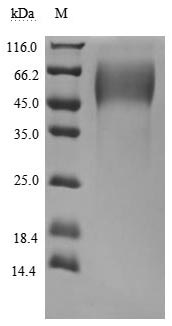
(Tris-Glycine gel) Discontinuous SDS-PAGE (reduced) with 5% enrichment gel and 15% separation gel.
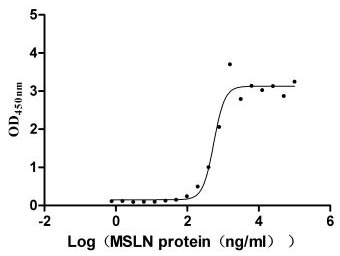
Activity: Measured by its binding ability in a functional ELISA. Immobilized MUC16 at 10 μg/ml can bind MSLN(CSB-MP015044HUc9), the EC50 is 460.7-662.2 ng/ml.
Code: CSB-E11040m
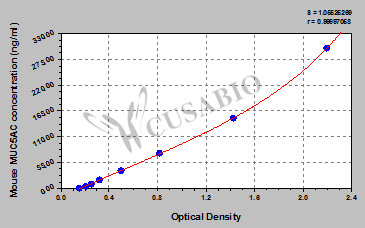
These standard curves are provided for demonstration only. A standard curve should be generated for each set of samples assayed.
Code: CSB-RA887973MA1HU

The Binding Activity of Human MUC13 with Anti-MUC13
recombinant antibody
Activity: Measured by its binding ability in a functional
ELISA. Immobilized Human MUC13 (CSB-YP887973HU) at 2 μg/mL can bind Anti-MUC13
recombinant antibody. The EC50 is 2.592-2.923 ng/mL.

The purity of MUC13 was greater than 95% as determined by SEC-HPLC
| Target | Code | Product Name | Source |
|---|---|---|---|
| MUC1 | CSB-EP015215HU | Recombinant Human Mucin-1 (MUC1) | E.coli |
| MUC1 | CSB-MP015215HU3-B | Recombinant Human Mucin-1 (MUC1), partial, Biotinylated | Mammalian cell |
| MUC1 | CSB-MP015215HU2 | Recombinant Human Mucin-1 (MUC1), partial | Mammalian cell |
| Muc1 | CSB-EP312543MO | Recombinant Mouse Mucin-1 (Muc1), partial | E.coli |
| Muc1 | CSB-YP312543MO | Recombinant Mouse Mucin-1 (Muc1),partial | Yeast |
| MUC2 | CSB-EP015222HU | Recombinant Human Mucin-2 (MUC2), partial | E.coli |
| MUC2 | CSB-EP015222HUa0 | Recombinant Human Mucin-2 (MUC2), partial | E.coli |
| MUC2 | CSB-YP015222HU | Recombinant Human Mucin-2 (MUC2), partial | Yeast |
| Muc4 | CSB-EP816958MO | Recombinant Mouse Mucin-4 (Muc4), partial | E.coli |
| Muc5ac | CSB-EP1722MO | Recombinant Mouse Mucin 5, subtypes A and C, tracheobronchial/gastric (Muc5ac), partial | E.coli |
| MUC5B | CSB-EP875718HU | Recombinant Human Mucin-5B (MUC5B), partial | E.coli |
| MUC7 | CSB-YP851529HU | Recombinant Human Mucin-7 (MUC7) | Yeast |
| MUC13 | CSB-YP887973HU | Recombinant Human Mucin-13(MUC13), partial (Active) | Yeast |
| MUC13 | CSB-MP887973HU | Recombinant Human Mucin-13 (MUC13), partial (Active) | Mammalian cell |
| MUC13 | CSB-YP887973HU1 | Recombinant Human Mucin-13(MUC13), partial | Yeast |
| MUC13 | CSB-MP887973HU1 | Recombinant Human Mucin-13 (MUC13), partial | Mammalian cell |
| MUC16 | CSB-EP704410HU3 | Recombinant Human Mucin-16 (MUC16), partial | E.coli |
| MUC16 | CSB-MP704410HU3 | Recombinant Human Mucin-16 (MUC16), partial | Mammalian cell |
| MUC16 | CSB-MP704410HU3c7 | Recombinant Human Mucin-16 (MUC16), partial (Active) | Mammalian cell |
| MUC16 | CSB-MP704410HU3j7-B | Recombinant Human Mucin-16 (MUC16), partial, Biotinylated | Mammalian cell |
| Target | Code | Product Name | Tested Applications |
|---|---|---|---|
| MUC1 | CSB-RA015215MA1HU | MUC1 Recombinant Monoclonal Antibody | ELISA, IHC |
| MUC1 | CSB-PA003334 | MUC1 Antibody | WB, IHC, IF, ELISA |
| MUC1 | CSB-PA010263 | Phospho-MUC1 (Y1229) Antibody | WB, IHC, IF, ELISA |
| MUC1 | CSB-PA010272 | Phospho-MUC1 (Y1243) Antibody | IHC, ELISA |
| MUC1 | CSB-PA010274 | Phospho-MUC1 (S1227) Antibody | IHC, ELISA |
| MUC1 | CSB-PA010276 | MUC1 Antibody | IHC, ELISA |
| MUC1 | CSB-PA010277 | MUC1 Antibody | IHC, IF, ELISA |
| MUC1 | CSB-PA010279 | MUC1 Antibody | IHC, IF, ELISA |
| MUC1 | CSB-PA006277 | MUC1 Antibody | WB, ELISA |
| MUC1 | CSB-PA015215GA01HU | MUC1 Antibody | ELISA, WB, IHC |
| MUC1 | CSB-PA141385 | MUC1 Antibody | ELISA, IHC |
| MUC1 | CSB-PA114224 | MUC1 Antibody | ELISA, WB, IHC |
| MUC1 | CSB-PA692815 | MUC1 Antibody | ELISA, WB, IHC |
| MUC1 | CSB-PA941558 | MUC1 Antibody | ELISA, IHC |
| MUC1 | CSB-PA064912 | MUC1 Antibody | ELISA, IHC |
| MUC1 | CSB-PA555678 | MUC1 Antibody | ELISA, IHC |
| MUC1 | CSB-PA583379 | MUC1 Antibody | ELISA, IHC |
| MUC1 | CSB-PA150023 | Phospho-MUC1 (Tyr1229) Antibody | ELISA, WB, IHC, IF |
| MUC1 | CSB-PA11319A0Rb | MUC1 Antibody | ELISA, IHC, IF |
| MUC1 | CSB-PA11319B0Rb | MUC1 Antibody, HRP conjugated | ELISA |
| Target | Code | Product Name | Detection Range | Sensitivity |
|---|---|---|---|---|
| MUC2 | CSB-E15066p | Pig Mucin-2,MUC2 ELISA Kit | 7.8 ng/mL-500 ng/mL | 1.95 ng/mL |
| MUC2 | CSB-E13122h | Human Mucin 2(MUC2) ELISA Kit | 3.12 ng/mL-200 ng/mL | 0.78 ng/mL |
| MUC2 | CSB-E15065m | Mouse Mucin-2,MUC2 ELISA Kit | 31.25 pg/mL-2000 pg/mL | 7.81 pg/mL |
| MUC4 | CSB-EL015227HU | Human Mucin-4(MUC4) ELISA kit | 0.625 ng/mL-40 ng/mL | 0.156 ng/mL |
| MUC4 | CSB-EL015227RA | Rat Mucin-4(MUC4) ELISA kit | 0.78 ng/mL-50 ng/mL | 0.195 ng/mL |
| MUC5AC | CSB-E10109h | Human mucin-5AC (MUC5AC) ELISA kit | 15.6 ng/mL-1000 ng/mL | 3.9 ng/mL |
| MUC5AC | CSB-E11040m | Mouse Mucin-5 subtype AC,MUC5AC ELISA Kit | 4.688 ng/mL-300 ng/mL | 1.172 ng/mL |
| MUC5AC | CSB-E16223r | Rat Mucin-5 subtype AC(MUC5AC)ELISA Kit | 62.5 pg/mL-4000 pg/mL | 15.6 pg/mL |
| MUC5B | CSB-E11201h | Human mucin-5 subtype B,MUC5B ELISA kit | 7.8 ng/mL-500 ng/mL | 1.95 ng/mL |
| MUC5B | CSB-E15067m | Mouse mucin-5 subtype B,MUC5B ELISA Kit | 1.25 ng/mL-80 ng/mL | 0.31 ng/mL |
| MUC7 | CSB-E11853h | Human Mucin-7,MUC7 ELISA Kit | 18.75 ng/mL-1200 ng/mL | 4.68 ng/mL |
| MUC15 | CSB-EL015218HU | Human Mucin-15(MUC15) ELISA kit | 125 pg/mL-8000 pg/mL | 31.25 pg/mL |
[1] Dhanisha SS,Guruvayoorappan C,Drishya S, et al. Mucins: Structural diversity, biosynthesis, its role in pathogenesis and as possible therapeutic targets. Crit Rev Oncol Hematol. 2018;122:98-122.
[2] Li Z,Yang D,Guo T, et al. Advances in MUC1-Mediated Breast Cancer Immunotherapy. Biomolecules. 2022;12 (7):.
[3] Cui H,Yu Q,Xu Q, et al. EGFR and MUC1 as dual-TAA drug targets for lung cancer and colorectal cancer. Front Oncol. 2024;14:1433033.
[4] Ozawa H,Takahashi K,Jacobi J, et al. Targeting KRAS Inhibitor-Resistant Pancreatic Cancer with an MUC1-C Antibody-Drug Conjugate. Clin Cancer Res. 2025;31 (24):5246-5260.
[5] Ma Q,Song J,Wang S, et al. MUC1 regulates AKT signaling pathway by upregulating EGFR expression in ovarian cancer cells. Pathol Res Pract. 2021;224:153509.
[6] Li W,Zhang N,Jin C, et al. MUC1-C drives stemness in progression of colitis to colorectal cancer. JCI Insight. 2020;5 (12):.
[7] Yao D,Dai W,Dong M, et al. MUC2 and related bacterial factors: Therapeutic targets for ulcerative colitis. EBioMedicine. 2021;74:103751.
[8] Hanski C,Born M,Foss HD, et al. Defective post-transcriptional processing of MUC2 mucin in ulcerative colitis and in Crohn's disease increases detectability of the MUC2 protein core. J Pathol. 1999;188 (3):304-11.
[9] Raynaud CM,Jabeen A,Ahmed EI, et al. MUC2 expression modulates immune infiltration in colorectal cancer. Front Immunol. 2024;15:1500374.
[10] Feng B,Su W,Hu L, et al. MUC3A promotes the progression of cholangiocarcinoma through the MAPK/ERK pathway. Discov Oncol. 2025;16 (1):493.
[11] Su W,Feng B,Hu L, et al. MUC3A promotes the progression of colorectal cancer through the PI3K/Akt/mTOR pathway. BMC Cancer. 2022;22 (1):602.
[12] Luo Y,Ma S,Sun Y, et al. MUC3A induces PD-L1 and reduces tyrosine kinase inhibitors effects in EGFR-mutant non-small cell lung cancer. Int J Biol Sci. 2021;17 (7):1671-1681.
[13] Zhao W,Xie Y. KIAA1429 promotes the progression of lung adenocarcinoma by regulating the m6A level of MUC3A. Pathol Res Pract. 2021;217:153284.
[14] Gautam SK,Kumar S,Dam V, et al. MUCIN-4 (MUC4) is a novel tumor antigen in pancreatic cancer immunotherapy. Semin Immunol. 2020;47:101391.
[15] Rowson-Hodel AR,Wald JH,Hatakeyama J, et al. Membrane Mucin Muc4 promotes blood cell association with tumor cells and mediates efficient metastasis in a mouse model of breast cancer. Oncogene. 2018;37 (2):197-207.
[16] Ponnusamy MP,Lakshmanan I,Jain M, et al. MUC4 mucin-induced epithelial to mesenchymal transition: a novel mechanism for metastasis of human ovarian cancer cells. Oncogene. 2010;29 (42):5741-54.
[17] Majhi PD,Lakshmanan I,Ponnusamy MP, et al. Pathobiological implications of MUC4 in non-small-cell lung cancer. J Thorac Oncol. 2013;8 (4):398-407.
[18] Lu S,Catalano C,Huhn S, et al. Single nucleotide polymorphisms within MUC4 are associated with colorectal cancer survival. PLoS One. 2019;14 (5):e0216666.
[19] Henry KE,Shaffer TM,Mack KN, et al. Exploiting the MUC5AC Antigen for Noninvasive Identification of Pancreatic Cancer. J Nucl Med. 2021;62 (10):1384-1390.
[20] Boomer J,Choi J,Alsup A, et al. Increased Muc5AC and Decreased Ciliated Cells in Severe Asthma Partially Restored by Inhibition of IL-4Rα Receptor. Am J Respir Crit Care Med. 2024;210 (12):1409-1420.
[21] Pothuraju R,Pothuraju R,Krishn SR, et al. Molecular implications of MUC5AC-CD44 axis in colorectal cancer progression and chemoresistance. Mol Cancer. 2020;19 (1):37.
[22] Chao C,Golebiowski B,Stapleton F, et al. Conjunctival MUC5AC+ goblet cell index: relationship with corneal nerves and dry eye. Graefes Arch Clin Exp Ophthalmol. 2018;256 (11):2249-2257.
[23] Kim SM,Kwon CH,Shin N, et al. Decreased Muc5AC expression is associated with poor prognosis in gastric cancer. Int J Cancer. 2014;134 (1):114-24.
[24] Wang H. MUC5B regulates alterations in the immune microenvironment in nasopharyngeal carcinoma via the Wnt/β-catenin signaling pathway. Discov Oncol. 2025;16 (1):27.
[25] Ottaviani S,Oka S,Buendía-Roldán I, et al. MUC5B Promoter Variant and Rheumatoid Arthritis with Interstitial Lung Disease. N Engl J Med. 2018;379 (23):2209-2219.
[26] Seibold MA,Wise AL,Steele MP, et al. A common MUC5B promoter polymorphism and pulmonary fibrosis. N Engl J Med. 2011;364 (16):1503-12.
[27] Sohn SH,Sul HJ,Kim B, et al. Tepotinib Inhibits the Epithelial-Mesenchymal Transition and Tumor Growth of Gastric Cancers by Increasing GSK3β, E-Cadherin, and Mucin 5AC and 6 Levels. Int J Mol Sci. 2020;21 (17):null.
[28] Lee HL,Chien YC,Wang HL, et al. Analysis of MUC6 Genetic Variants on the Clinicopathologic Characteristics of Patients with Hepatocellular Carcinoma. J Cancer. 2022;13 (11):3251-3257.
[29] Chaudhury NM,Proctor GB,Karlsson NG, et al. Reduced Mucin-7 (Muc7) Sialylation and Altered Saliva Rheology in Sjögren's Syndrome Associated Oral Dryness. Mol Cell Proteomics. 2016;15 (3):1048-59.
[30] Schicht M,Reichle A,Schapher M, et al. The Translational Role of MUC8 in Salivary Glands: A Potential Biomarker for Salivary Stone Disease?. Diagnostics (Basel). 2021;11 (12):.
[31] Yamamoto-Furusho JK,Mendivil EJ,Fonseca-Camarillo G. Reduced expression of mucin 9 (MUC9) in patients with ulcerative colitis. Inflamm Bowel Dis. 2012;18 (3):E601.
[32] Zhang W,Zheng Z,Mao W, et al. piRNA-1742 promotes renal cell carcinoma malignancy by regulating USP8 stability through binding to hnRNPU and thereby inhibiting MUC12 ubiquitination. Exp Mol Med. 2023;55 (6):1258-1271.
[33] Matsuyama T,Ishikawa T,Mogushi K, et al. MUC12 mRNA expression is an independent marker of prognosis in stage II and stage III colorectal cancer. Int J Cancer. 2010;127 (10):2292-9.
[34] Ren AH,Filippou PS,Soosaipillai A, et al. Mucin 13 (MUC13) as a candidate biomarker for ovarian cancer detection: potential to complement CA125 in detecting non-serous subtypes. Clin Chem Lab Med. 2023;61 (3):464-472.
[35] Dhasmana A,Dhasmana S,Agarwal S, et al. Integrative big transcriptomics data analysis implicates crucial role of MUC13 in pancreatic cancer. Comput Struct Biotechnol J. 2023;21:2845-2857.
[36] Chen X,Tu J,Yang M, et al. RUNX1-MUC13 Interaction Activates Wnt/β-Catenin Signaling Implications for Colorectal Cancer Metastasis. Int J Biol Sci. 2024;20 (12):4999-5026.
[37] Kang Q,Tingting W,Bingzi D, et al. GCNT3 regulated MUC13 to promote the development of hepatocellular carcinoma through the GSK3β/β-catenin pathway. Dig Liver Dis. 2024;56 (9):1572-1581.
[38] Ren AH,Filippou PS,Soosaipillai A, et al. Mucin 13 (MUC13) as a candidate biomarker for ovarian cancer detection: potential to complement CA125 in detecting non-serous subtypes. Clin Chem Lab Med. 2023;61 (3):464-472.
[39] Li X,Li M,Huang S, et al. MUC14 suppresses lung adenocarcinoma via integrin α8β6/PI3K/AKT/MAPK modulating cisplatin response and immunity. Sci Rep. 2026;16 (1):.
[40] Fei X,Wang AL,Wu H, et al. MUC15 acts as a tumor suppressor gene which correlates with prognosis and immune infiltration in esophageal squamous cell carcinoma. Int J Med Sci. 2025;22 (8):1905-1915.
[41] Qin T,Zhu Z,Song Y, et al. MUC15 loss promotes perineural invasion in pancreatic cancer by activating the IGF1R/STAT3/NGF pathway. Cancer Lett. 2026;645:218362.
[42] Yue Y,Hui K,Wu S, et al. MUC15 inhibits cancer metastasis via PI3K/AKT signaling in renal cell carcinoma. Cell Death Dis. 2020;11 (5):336.
[43] Mack KN,Samuels ZV,Carter LM, et al. Interrogating the Theranostic Capacity of a MUC16-Targeted Antibody for Ovarian Cancer. J Nucl Med. 2024;65 (4):580-585.
[44] Li X,Pasche B,Zhang W, et al. Association of MUC16 Mutation With Tumor Mutation Load and Outcomes in Patients With Gastric Cancer. JAMA Oncol. 2018;4 (12):1691-1698.
[45] Fan K,Yang C,Fan Z, et al. MUC16 C terminal-induced secretion of tumor-derived IL-6 contributes to tumor-associated Treg enrichment in pancreatic cancer. Cancer Lett. 2018;418:167-175.
[46] Chaudhary S,Appadurai MI,Maurya SK, et al. MUC16 promotes triple-negative breast cancer lung metastasis by modulating RNA-binding protein ELAVL1/HUR. Breast Cancer Res. 2023;25 (1):25.
[47] Park S,Ho CE,Birocchi F, et al. CAR-T cell therapy targeting MUC17 in gastric tumors. J Immunother Cancer. 2025;13 (11):.
[48] Menyhárt I,Veréb Z,Kemény L, et al. MUC17 Is a Potential New Prognostic Biomarker and Promotes Pancreatic Cancer Progression in Obstructive Jaundice. Oncology. 2025;103 (8):725-741.
[49] Yu J,Wang Y,Liu Q, et al. Genome-wide mapping of EBV-induced genomic variations identifies the role of MUC19 in EBV latency. mBio. 2025;16 (11):e0205525.
[50] Huang J,Chen Z,Zhong F, et al. MUC20 alleviates kidney fibrosis by modulating pyroptosis through the MET/RAS/STING axis. Theranostics. 2026;16 (8):4374-4393.
[51] Xue B,Guo WM,Jia JD, et al. MUC20 as a novel prognostic biomarker in ccRCC correlating with tumor immune microenvironment modulation. Am J Cancer Res. 2022;12 (2):695-712.
[52] Li M,Feng Z,Han R, et al. Paclitaxel promotes mTOR signaling-mediated apoptosis in esophageal cancer cells by targeting MUC20. Thorac Cancer. 2023;14 (31):3089-3096.
[53] Yoshimoto T,Matsubara D,Soda M, et al. Mucin 21 is a key molecule involved in the incohesive growth pattern in lung adenocarcinoma. Cancer Sci. 2019;110 (9):3006-3011.
[54] Wang L,Zhang X,Liu J, et al. MUC21 induces the viability and migration of glioblastoma via the STAT3/AKT pathway. Exp Ther Med. 2022;23 (5):331.
[55] Lin S,Tian C,Li J, et al. Differential MUC22 expression by epigenetic alterations in human lung squamous cell carcinoma and adenocarcinoma. Oncol Rep. 2021;45 (5):.


