
Call us
301-363-4651 (Available 9 a.m. to 5 p.m. CST from Monday to Friday)

| Code | CSB-RA776663A0HU |
| Size | US$210 |
| Order now | |
| Image |
|
| Have Questions? | Leave a Message or Start an on-line Chat |
| Application | Recommended Dilution |
|---|---|
| WB | 1:500-1:5000 |
| IHC | 1:50-1:200 |
Tissue factor, encoded by the F3 gene, serves as the primary initiator of the coagulation cascade and plays a central role in hemostasis, thrombosis, and vascular biology. Beyond its classical function in blood clotting, tissue factor has emerged as a significant player in cancer progression, inflammation, and metabolic signaling pathways, making it a compelling target for researchers investigating cardiovascular disease mechanisms and metabolic disorders.
This recombinant monoclonal antibody, generated against a synthetic peptide derived from human tissue factor, offers the reproducibility and sequence-defined consistency that demanding experimental workflows require. Because recombinant production eliminates the batch variability inherent in traditional hybridoma methods, researchers can confidently compare results across extended studies without concerns about antibody drift affecting their data.
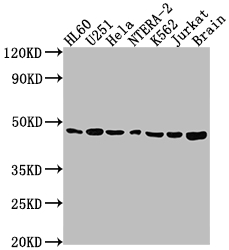
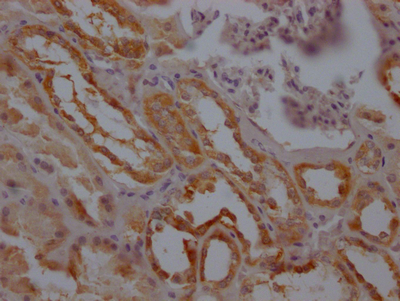
Validation studies demonstrate robust performance across multiple applications and sample types. In western blot analysis, the antibody successfully detects tissue factor in a diverse panel of human cell lines including HL60, U251, HeLa, NTERA-2, K562, and Jurkat cells, as well as rat brain tissue, confirming cross-species reactivity between human and rat samples. The observed band at 46 kDa runs higher than the predicted molecular weight of 28-34 kDa, which reflects the extensive glycosylation characteristic of this membrane-bound protein in its native cellular context. Immunohistochemistry validation in paraffin-embedded human kidney tissue further demonstrates the antibody's utility for examining tissue factor expression patterns in fixed specimens.
Whether investigating coagulation pathway regulation, exploring tissue factor's non-hemostatic functions, or examining its role in disease pathology, this antibody provides a reliable tool for cardiovascular and metabolism research applications.
There are currently no reviews for this product.





